The IRG often talks about purpose as a crucial component of humanizing growth, but as inflation rises around the world, we recommend you to read this piece by Chris Burggraeve about the importance of the P of Price. Chris is the former Global CMO of AB InBev, future space traveler (no joke), and nowadays on a mission to upgrade the financial acumen of marketing leaders. As such, Chris is a regular contributor to the IRG100 program in which he shares the essentials of his two books.
Inflation is an acid test for how excellent a company really is in terms of marketing. The more a brand can demonstrate sustainable pricing power underpinning cash flows, the stronger it will be perceived. Pricing power is defined as the ability of a brand to systematically raise its prices at or above inflation (CPI) over time as a reflection of its growing brand equity, at constant or growing volume.
Chris makes the case that although purpose is essential as you enter the water, pricing power is your swimsuit. To have a transformational impact for all stakeholders, both price and purpose are at the core of how marketing contributes to society. Sometimes, hard choices involve saying “or,” but in this case, the hard choice may actually be to say “and.”
Inspired by Chris Burggraeve, the former global CMO of AB InBev, former president of the World Federation of Advertisers (WFA) and regular contributor to the IRG programs. Read his full article here.

Siew Ting Foo, IRG participant 2021 & CMO Greater Asia at HP, shares her insights on the power of positivity.
“Since the new year has started, I have been trying to practice new rituals and habits. Starting the day and week with acts of gratitude and celebration of how far we have come. I have not only practiced this for myself, I am also starting to introduce this with my 1.1 conversations with my team and with working teams. I realized the power of reframing is critical to guide self-leadership but also the leadership of teams in this pandemic. Do you agree?”
Inspired by Siew Ting Foo, IRG participant 2021 & CMO Greater Asia at HP
Cindy Tervoort, IRG participant 2021, is the CEO of Beerwulf, the subscription-based e-commerce platform of Heineken.
“January is all about starting well with New Year’s resolutions and the intent for 2022. I shared with the Beerwulf team that there are two intentions I would like to set together in 2022. They are to be both ‘daring’ and ‘caring.’
Daring means taking our business further than ever before. More innovation, challenge, and risk-taking. But also daring to be vulnerable when things go wrong and to let things go that don’t serve us anymore.
Caring, then, is the complementary counterpart. Whether it’s caring for colleagues who may be struggling or for ourselves by turning an empathetic eye inwards to our own mental and physical health, great ambition and success cannot exist if we don’t look out for each other.
It is realistic to assume this year will still be unpredictable; it’s the new normal. Therefore I am happy to experience in the first weeks of the year a lot of ‘daring’ in target setting and ambitious planning, going hand in hand with the honesty & vulnerability to share difficult moments and challenges together.”
Inspired by Cindy Tervoort, IRG participant 2021 & CEO of Beerwulf – Heineken
Beyond the expected call for more sustainable investing Fink highlights the crucial role of attracting talent. Enter diversity and inclusion. Themes close to the hearts of talent. And to CMOs.
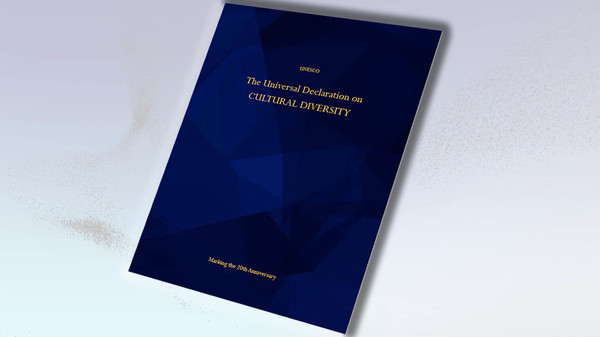
Waqas Ahmed, IRG participant of 2021, who recently edited the UNESCO Universal Declaration on Cultural Diversity 20th anniversary book, has unveiled some important insights. The volume is a compilation of articles from 35 leading artists, activists, scholars, and leaders of international organizations. Together, they form a powerful, interdisciplinary synthesis which provides three key lessons.
1. Be creative: Everyone has a uniquely multifarious experience of life – and that needs not only to be appreciated, but also harnessed for the sake of innovation.
2. Be open: The majority of the world’s cultures are poorly understood. Truly connecting with customers means marketers need people with different worldviews and cultural perspectives.
3. Be real: To ensure that Diversity and Inclusion efforts are authentic, pay as much attention to “inner” diversity as outer – aim for a diversity of perspectives, rather than of identities.
The book is published by the Khalili Foundation in collaboration with UNESCO. The IRG also wrote an article. More information can be found here.
Inspired by Waqãs Ahmed, IRG participant of 2021, author of The Polymath and founder of The DaVinci Network

After spending 20+ years in the world of large corporations, Arun Sinha, IRG100 participant 2022, moved his career to grow start-ups, both as an investor as well as an advisor. We had a conversation on how large organizations can infuse a bit of the well-known and aspired entrepreneurial skill of nimble adaptation. This would be much necessary to drive innovations in the era of stakeholder capitalism.
As marketing evolved, many CMOs are now the stewards of growth. The way corporations and start-ups collect data and how they define their growth strategies is much the same. What differs is how nimble they act upon their insights and strategies. Let’s take two well-known concepts and explore the how.
Competitiveness. A new entrant might not feel as threatening for a large corporation as it does for a small start-up. Nor would it feel as much a proof of the potential of the business model. It’s the mindset and the way data is interpreted that make a start-up more adaptive and responsive. This means the perception of a company is relative to its size. To be as nimble as a start-up? Step out of the ivory tower, make yourself smaller, and be humble enough to take signals as seriously as start-ups.
Collaboration. A nimble start-up would consider a new entrant, a successful player in an adjacent market, or patent from a competitive player to be much more of an opportunity to collaborate. Time to align, worries about cannibalization and fear of experimentation all stand in the way of acting nimbly as a corporation. See if you could drop one or two of these nimble-killers.
Today’s world is changing too fast, and challenges for society are too big to be left to a slow traditional corporate mindset. Surely, the cost of failure for a start-up is not as high as it is in a large organization. Still, anyone’s ability to test and learn is so much better, faster, and cheaper nowadays.
Inspired by Arun Sinha, IRG100 participant 2022, advisor and Global Chief Marketing Officer.

To understand what has the greatest potential to unlock growth in 2022 and how well-equipped marketers feel to take that on, the IRG ran a poll with its founding partner WPP. Much of what came back was as expected: digital transformation, omnichannel sales, metaverse, and a connected, smart customer experience. But what was surprising, was where Employee Experience (EX) came in the poll – second only to digital transformation and ahead of eight other potential growth drivers. In a world of brand activism, the great resignation, and hybrid working, EX is now sharply in the minds of CMOs. However, EX is the growth driver that the poll indicated CMOs feel least well equipped to tackle – only 50% feel equipped in any way.
WPP suggests three simple ways to make EX work as a multiplier, positively impacting business growth:
1) EX as a driver of talent retention and acquisition
2) EX as a driver of cultural change
3) EX as a driver of customer and brand experience
Read the full article here.
Inspired by Lindsay Pattison
Chief Client Officer, WPP | IRG Partner

Suriname, Bhutan and Panama have gone beyond the pledge for net-zero. They are “carbon negative”, absorbing more climate-changing emissions each year than they produce through human activity. What they have in common is strong protection of their carbon-absorbing forests alongside increasingly tough measures to hold down climate-changing emissions, including efforts to reuse, recycle and renew whatever helps to protect the climate. These countries achieved their status through national effort and national sacrifice.
How would this translate to businesses? Being net-positive as a business is about having a positive impact on all stakeholders through the operations and products and services of the business. Just as for the aforementioned countries, this will take hard work and commitment, and just like the participants at the IRG, you might well have your values and purposes in place to start your journey.
To find out if you are truly ready for the net-positive journey we recommend Paul Polman’s Net Positive Readiness test.
Inspired by Frans-Jan van Rongen
Global VP Marketing & Branding, Wavin | IRG100 Participant, 2021

In a recent LinkedIn post, Kees Kruythoff, Chairman & CEO LIVEKINDLY Collective, shows what’s on the mind of a true business leader. “After COP26 and as the world is still recovering from the pandemic, private-sector leadership could not be more pivotal to help solve societal challenges. As my friend and business partner Paul Polman has put it: ‘Many of us are working in this vein, and this is the moment to accelerate.’ I was inspired to read his recently launched book, Net Positive, which is a practical guide to building a company that profits by confronting and mitigating the problems that plague our planet. It’s a powerful message—not only to those leading multinational organizations but to all private-sector company owners and leaders out there.
I agree with Paul Polman that in order to transform systems, the world needs an inspiring new wave of leaders. This is how we truly transform the notion of leadership — what it is, what it entails, how it can actually change the world around us. I dare all leaders out there to ask themselves: Do you have a forward-thinking purpose that’s hard-wired into the DNA of your business? This critical question can make or break your success as both leader and businessperson. Sales, funding, followers, and future outlook will follow if you, as a leader, stay true to the mission of fixing the world’s problems instead of creating them.”
Inspired by Kees Kruythoff – Chairman & CEO LIVEKINDLY Collective
Guest on our Humanizing Growth Series – watch his conversation here
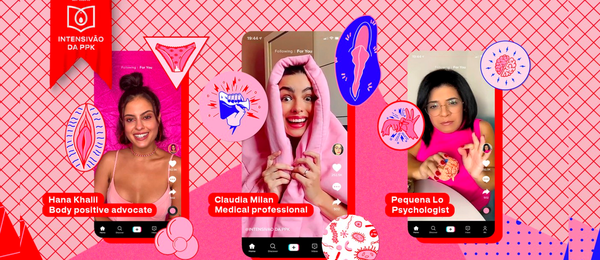
IRG100, 2021 participant Patricia Corsi’s efforts to amplify Bayer’s Consumer Health brand portfolio’s values have included several programs designed to bust taboos and bring important health conversations to the forefront. One remarkable example is the ‘Vagina Academy.’ A digital education program was introduced in Brazil to host open conversations about intimate female health. The brand initiative invited experts on vaginas, psychology, and body positivity to deliver engaging, stigma-shattering lessons about intimate health on TikTok. From a consumer perspective, this is tackling a sensitive topic in the face of government censorship and prioritizing women’s safety over playing it safe. From a marketing perspective, this is an excellent case in point of balancing performance marketing with purposeful brand building.
Inspired by Patrica Corsi – CDMO at Bayer Consumer Health
IRG100 Participant 2021
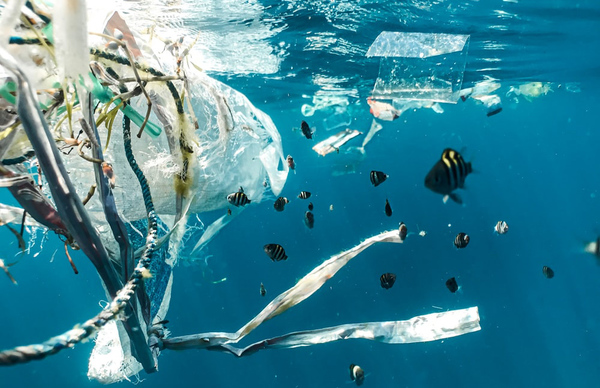
Unilever made a pledge to shift to 100% renewable or recycled carbon in all its home care product formulations by 2030. To get there, Unilever collaborates across the entire ecosystem and innovates for consumers without compromising on price and performance. Last week Andreea Sapunaru, Global Sustainability Marketing Director of Fabric Cleaning at Unilever and IRG100 participant 2022, was invited to speak at the Parliamentary & Scientific Committee’s webinar on the subject. Here are five takeaways from the presentation that can offer guidance and inspiration to any marketer that wishes to create more sustainable brands:
1. Climate change is the top global issue and consumer concern: as much as 71% of consumers consider climate change as serious as Covid-19.br>
2. So-called Eco Actives – shoppers who are highly concerned about the environment and are making the most of actions to reduce waste – now make up 29% of all consumers and this group is expected to grow to 50% in 2027.br>
3. Many consumers believe governments (40%) and manufacturers (36%) are responsible to drive change when it comes to environmental damage.br>
4. To counter the famous intention-behavior gap, brands need to be uncompromising on price and performance.
5. To remove fossil fuels from products, brands need pioneering start-ups as well as the big chemical companies i.e. the whole ecosystem.
Inspired by Andreea Sapunaru, IRG100 participant 2022, Global Sustainability Marketing Director of Fabric Cleaning at Unilever.