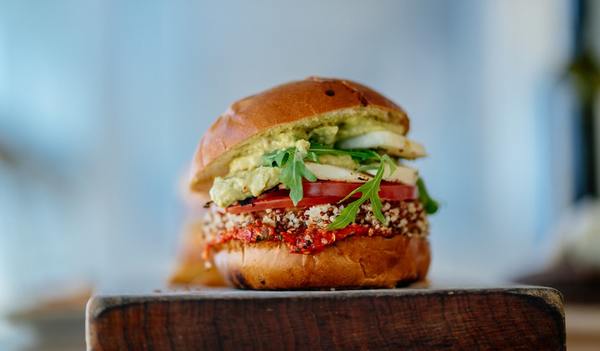
Many industries are being challenged by new players who offer more sustainable alternatives; think Oatly, Tesla, and Patagonia. Now, imagine you work for a big multinational brand – like most of the IRG participants do – how would you go about competing against the challengers, expanding your brand portfolio, pivoting from, or capitalizing on the brand heritage and strength gained over the years. Recently, some IRG participants debated how to go about the strategic growth opportunity of meat alternatives. Should you hunt for flexitarians or vegans?
We talked to Tatiana Lemos, IRG100 participant of 2022 with 14 years of Unilever and 8 years of Nestle under her belt.
“The biggest opportunity for big multinationals is not to go for vegetarians or vegans, but to offer uncompromisable alternatives for the flexitarians. This way brands enable mass consumers to flirt with meat reduction. Today 75% of consumers claim to be flexitarians, meaning they still eat meat but are open to alternatives and meat-less meals or meat-less days. Many of them are not even willing to take the burden of changing their favorite recipes, but they are open to just changing one ingredient for a product that mimics it. In this sense, going for flexitarians seems more customer-centric.”
Arguably, from a humanized growth perspective, persuading 75% of people to eat less meat instead of catering to 25% who eat no meat creates more sustainable impact. Lemos offers great food for thought on questions like – what’s the strategic growth opportunity?
Inspired by Tatiana Lemos, IRG Participant 2022,
CMO at Oritain
Never before has the question of what a sustainable business is and how it can be achieved been more important or urgent. Still, today’s predominant economic system is failing to deliver innovations that maximize sustainable well-being for all, undermining the social and environmental value on which it intrinsically depends. At this point, you might think these are the words of the IRG, but this is Dr Victoria Hurth speaking at our interview. She is a fellow at The University of Cambridge Institute for Sustainability Leadership where she runs a new 8-week executive online course on Sustainable Marketing, Media and Creative. In our conversation, we explored what businesses and marketers need and the challenges participants in both our programs face when trying to deliver sustainability within their organizations.
“Marketers sit at the tension between what kind of value the organization thinks it wants to deliver versus what it sets up to deliver. Organizations are often hamstrung to prioritize financial value for the company or its members. That means that marketers – even if the organization has a good purpose and strong intent to deliver on it – are often confronted with a lack of organizational leadership and the firm’s self-interest that pervades thinking and action”
“However, business is society’s innovation nerve center. Marketers are central to making sure the economy works to do this well – and the opposite has been happening. What’s needed urgently are firms where long-term well-being for all (sustainability) becomes the point of innovation – the prioritized value, delivered with healthy financial flows, happy stakeholders, and, vitally, within healthy social and environmental thresholds. Having this clear, meaningful, and sustainable basis for strategy unlocks marketing creativity and innovation.”
Like us, Victoria is seeing a whole wave of energized marketers come through the course: “These marketers are innovation fire-starters – energized by results that actually matter to them. Hence, they are becoming experts in the whole value network landscape; expanding their sphere of influence within and beyond the firm; active in strategic stakeholder evolution, and overcoming roadblocks that traditionally would have stopped them. ”
”It is the spirit of marketing that is changing. This is what gives me hope. When talented creative people move from being hemmed in by a dull profit motive to being unleashed to guide and co-create genuine sustainability, I know we are starting to get somewhere.”
Inspired by Dr Victoria Hurth, contributor to the IRG and Fellow at The University of Cambridge Institute for Sustainability Leadership,
After 20 years of working in innovation across technology, product, marketing, and e-commerce, Alice Fournier, IRG100 participant in 2022, is now the CIO for ISS’s Americas division. ISS is a true B2B brand that provides workplace experiences through cleaning, technical services, and catering to businesses in 30 countries. Considering her new role and deep experience in driving digital and technology strategies to promote growth outcomes, we asked her how CMOs can best connect and collaborate with their colleagues from IT.
“Nowadays, digital and technology touch every part of the business. That means marketers need to be skilled in having the right conversations with their technology counterparts. Having seen both sides, it is clear that marketers and IT leaders have much to learn from each other. They contribute very different skill sets, and the intersection of those skills is critical to driving growth and leading innovation.
For marketers, there is a key role in supporting their IT peers in considering a multi-stakeholder approach, as well as better selling ideas and products, internally and externally. For marketers, there is an opportunity to engage with technology leaders to better understand how to leverage data and analytics for impact and to align on a roadmap to successful digital transformation.
Collaboration between functions is critical to keep the organization safe, as marketers onboard new software and agencies. Every CMO would do well by understanding the technical side. But conversations are not just content-driven; they’re also a get-together of two brains. Truly listening and taking the time to understand each other’s realm, remit, and strengths are key to succeed.”
Inspired by Alice Fournier, IRG100 participant 2022, CIO at ISS Americas.
Running the IRG program now for the fourth year, we have seen firsthand how much interest and attention CMOs pay to understanding how to have the right conversations with their CFOs. To finance marketing plans, CMOs need to collaborate with their CFO closely. But how?
A great source of inspiration on this topic is Cynthia Chu, IRG100 participant 2022, who is both Chief Financial and Growth Officer at Audible, a subsidiary of Amazon, and the market leader for premium audio storytelling, audiobooks, and podcasts. At IRG’s annual summit in Cannes, Cynthia shared some key reflections on where marketing and finance can meet.
Growth. The big uniting question for CMOs and CFOs is – how do we strategically find ways to grow? Cynthia views marketing as a tool and investment to reach new customers and to grow the business. Data is a critical factor linking both functions, especially for a membership-based service like Audible.
Pricing and Go-To-Market. The company had to create a differently priced and structured membership tier when launching Audible Plus. The genesis of the new membership was a pricing study, which led to a reassessment of the product line. In commissioning and translating such a study, marketing and finance join forces.
Balancing long and short-term. A big priority is delivering value to existing customers and retaining them. That is, first and foremost, as a recurring revenue business model. Next, the CFO and CMO need to consider the future and where to find the next generation of consumers. Focusing on generating long-term value for customers will ultimately bring downstream economic output for a company.
Inspired by Cynthia Chu, IRG100 participant 2022, CFO and Growth Officer at Audible
From now on, this newsletter will also provide inspiring and insightful stories, insights, learnings, innovations, and experiences from the CMOs & Growth Leaders of the IRG Community. Enjoy!

Nineteen children and two teachers are dead in Uvalde, Texas, massacred by a teenager too young to buy beer yet old enough to purchase an assault rifle. Guns are now the leading cause of death among American children. Not car crashes. Guns.
I’m not someone who leads with anger, frustration or despair. But like so many of you, these feelings consume me now—chief among them, a deep sadness for the grieving parents, families and community of Uvalde.
I confess I’m also surprised. As a Nordic living and working in America, I don’t pretend to understand every nuance of American political and cultural dynamics. It simply feels as if the only sane response is to treat gun violence and its underlying causes as the national emergency that it is.
The United States swiftly responded to the 9/11 attacks, implementing new travel measures to help secure our safety. Why not swift action now, after Uvalde and the other 540 school shooting incidents since 2012?
Time and again, polls show that “the overwhelming majority of Americans support some restrictions of firearms,” with around 90 percent supportive of background checks for firearm sales. Yet certain elected officials continue to reject common sense gun regulation, and the gun lobby persists in putting profit ahead of the lives of innocent schoolchildren and selfless teachers.
We hear a lot of talk about freedom. What is freedom without safe schools and communities?
As CEO to a global collective of business and civil society leaders, I hesitated to write about the need for gun reform in America. But this isn’t about politics to me, really and truly. This is about common sense, leadership and common values.
In business as in government, common sense measures shouldn’t necessitate bravery or courage. But on gun violence (and climate action, for that matter), I get that some bravery may be required. So let’s be brave on behalf of the health, safety and future of every child.
The duty of elected leaders is to the wellbeing of the constituents and communities they serve. Taking care of employees is the first responsibility of a business leader. After yet another unthinkable, avoidable tragedy, we must lead with our humanity, and with urgency. Amid rising threats and despair, we have to place humanity at the heart of policymaking and business purpose.
And everything, every time, returns to values—the mobilizing power of universal values. What do we stand for? What future are we building for the next generation, who will care for this world and carry it forward? What present and future do they seek? Will our kids be proud of us?
Imagine common sense emerging as a governing philosophy. Humanity at the heart of leadership. A future built upon common values.
It’s on each and every one of us to make it so.
From Halla Tomasdottir – CEO and Chief Change Catalyst at the B-Team and guest on the Humanizing Growth Series.
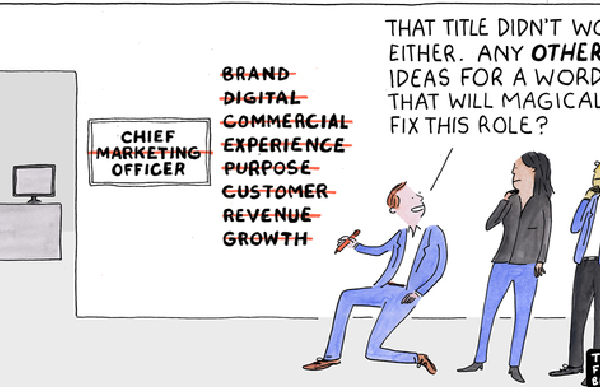
In this edition of the Seeds of Growth, we elaborate on the role of the CMO and how we can align expectations with actual responsibilities. As CMOs are often the window to the world, we are also sharing insights and foresights from Meta to help CMOs antic

The IRG keeps a continuous tap on its community of world-class CMOs and other growth leaders. This week the IRG has curated some insightful thinking from the CMDO of L’Oréal’s UK & Ireland that might make you nervous.

The number of marketers in the IRG program who are driving sustainability has been increasing over the years. Evidently, being the eyes and ears of the organization, CMOs are well-positioned to speak for their stakeholders and encourage their organizations to tackle the climate crisis. One of them is Paula Alexander, IRG participant 2022 and Sr. Director of Sustainability at the Clorox Company. The company ranks the second most sustainable company in America and has set ambitious sustainability goals like reducing virgin materials in their packaging by 50% by 2030. To get there, the company has also introduced new mechanisms, such as implementing refills, so the company relies less on plastic and consumers waste less. Paula recently shared an empowering article from marketingweek, which elaborates on the potential role of CMOs on climate change.
“Companies can no longer treat climate change solely as a matter of corporate responsibility or a branding opportunity. Responding to and preparing for climate change is a fundamental business problem and those companies that do not prepare will face shareholder and stakeholder risks.
Results from the February 2022 edition of The CMO Survey show that only one-third of surveyed companies have incorporated climate change issues into their brand strategies or have specific marketing goals related to climate change. Strikingly, nearly 40% of companies are taking no climate-related marketing actions.
Marketers can help lead companies by providing research and case studies on how adopting climate metrics leads to business innovation, operational efficiency, and other forms of competitive advantage. This effort will be meaningful to consumers and other stakeholders, as well as elevate marketing’s role in the company.
Studying the long-term concerns among stakeholders and building a stronger understanding of how companies can work together with these individuals and organizations is an important role for marketers because they have the strongest connection to the external world.
The sooner companies adapt their marketing strategies to the reality that there is no planet B, the better off they and our environment will be.”
Inspired by Paula Alexander, IRG participant 2022,
Sr Director Sustainability at The Clorox Company.

This week’s Seeds of Growth features three exceptional marketing leaders on their take on finding new growth opportunities and balancing green investments with inflation. We interviewed Katie Williams, CMO Haleon US, on how to find growth opportunities. Nicola Buck, CMO at BP, elaborated on their partnership with Uber, and Luca Zerbini, CEO of Una Terra shared his vision on how to balance green investing with inflation.
Haleon, formerly GSK, the global leader in consumer health, became a newly independent company with a focused strategy to deliver better everyday health with humanity, sustainable above the market growth and attractive returns to shareholders.
The company’s ambition is to deliver annual organic sales growth of 4-6% in the medium term. We interviewed Katie Williams, CMO Haleon, US about where and how to find growth opportunities.
In finding those growth opportunities Katie and her team ‘decoded the world’: making sense of what’s going on by leveraging insights and foresights. The IRG and Katie had a conversation on proactive wellbeing, reaching new demographics and moving from self-care into the customer arena of self-optimization. Uncovering three big learnings that serve as inspiration for anyone looking to systematically decode the world and find new growth opportunities.
1. Analytics and empathy
Connect a culture of analytics to a culture of empathy. Definition of empathy: curiosity (ask why) x humility (truly understanding ‘other’ people).
2. Learning is growing
To grow, you need to learn. When innovating, don’t over-focus on instant business success but rather on key learnings. Did we learn something about a target group, about a channel, etc.?
3. Follow the behavior
To identify new growth opportunities, look at the whole customer (health) journey to define the inner space, core space, complementary adjacencies and potential areas of expansion.
Inspired by Katie Williams, IRG Participant 2022, CMO Haleon, US