The last few years has seen a boom in ESG-labeled investment products, which will likely be worth an astonishing $41 trillion by the end of this year. That’s almost one-third of globally managed funds. Of more than 2,000 academic studies, according to management consultants McKinsey, around 70% found a positive correlation between ESG scores and financial returns – whether measured by equity returns, profitability, or valuation multiples. Still, the concept of ESG is under scrutiny. According to the United Nations, the critics of ESG have a point.
The confluence of crises, dominated by COVID-19, climate change, and conflicts, are creating spin-off impacts on food and nutrition, health, education, the environment, and peace and security, affecting all the Sustainable Development Goals (SDGs). Actions do not match the ambition and pace needed to achieve the UN’s SDGs by 2030. To rescue the SDGs and deliver meaningful progress for people and the planet by 2030 the UN is introducing a new enhanced global reporting system. It will enable members of the UNGC to assess themselves against their peers and learn from each other. The UNGC will be able to learn from the feedback it gets to assess and track by industry, sector, and principle area.
The new report delivers a concrete means for CMOs who want to drive Humanized Growth and create value for all stakeholders. It helps to adopt measurable goals and targets and as such enables CMOs and their companies to demonstrate tangible progress on the commitments to the SDGs.
Inspired by Sanda Ojiambo, assistant secretary-general, executive director, and CEO of the UN Global Compact, guest on IRGs Humanizing Growth series
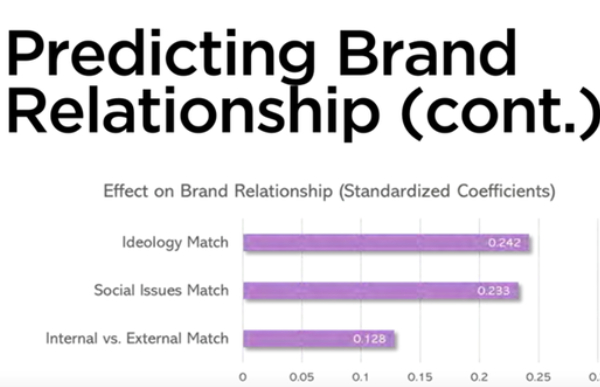
A US based study from NYU demonstrates the importance of Humanizing Growth and aligning with stakeholder values. Consumers have a stronger relationship and affinity to brands with social values and purpose that are perceived as matching their own rather than interacting with brands based on product attributes and offerings alone. Drawing on a representative sample of 2,500 US consumers, this study provides insights across 75 brands spanning 12 individual product and service categories. Toyota, LG, and General Electric are brands that have the highest total match with US consumers.
Traditionally, brands have earned customers by simply delivering quality products and offerings. “In today’s market, companies are looking to take a more purpose-driven approach to their businesses, as evidenced by the recent decision of Patagonia’s founder to donate his entire company to fight climate change,” said Michael Diamond, clinical assistant professor in the NYU SPS IMC program. “A brand’s social value and purpose are now more important than ever in activating a consumer’s sense of value and meaning. Identifying which of the brand’s values resonate and how they line up with a consumer’s values has become more critical to the work of growing brands with greater consumer loyalty, stronger brand trust, and higher financial returns.”
Inspired by Michael Diamond, clinical assistant professor in the NYU and partner of the Institute for Real Growth and guest on the Humanizing Growth series
Many companies are dealing with two disruptive forces that seem to call for completely different strategies: climate change and inflation. How can companies catalyze green investments while responding to the cost-of-living crisis?
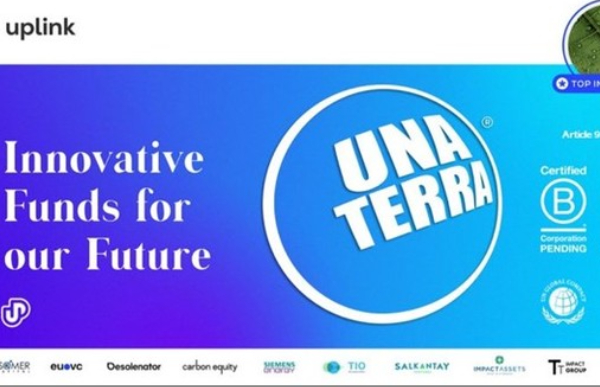
We spoke to Luca Zerbini, IRG Participant 2021 and founder of Una Terra, an investment fund focusing on Climate Change and Biodiversity Loss. Recently Una Terra was selected as one of the top innovative funds investing in purpose-driven start-ups around the world. UpLink is the World Economic Forum’s open innovation platform sourcing innovative solutions for the world’s most pressing problems. Una Terra is targeting 2Gtons of CO2e emissions and 1Mtons of plastic waste per year by 2030, investing €300m in 20-30 scale-ups and growth companies, across all sectors having the most significant impact on our environment.
“I don’t think there is a more important objective than protecting people and all human beings on Earth from our own mistakes of the past, while also generating significant value for. Each industry deals with inflation in its own way, but based on our experience in the world of green investments, we see an opportunity to use this time of increasing prices as an opportunity to accelerate the transition to more sustainable solutions. Energy is the area where price increases have been highest (30-40% YoY) due to Ukraine’s invasion by Russia and related supply constraints.
The response of the Western world has been to accelerate the move to solar, wind and water, which not only are completely free energy sources (as they are “not fuels”) and “not owned” by any country, but also are typically distributed, so less at risk of political decisions or terroristic attacks. Transportation will benefit in a similar way over time from the transition to electrification, while food inflation has been particularly high for meat, a transition to plant-based and more local choices would also be beneficial. Overall, while at first glance we may think sustainable development and inflation are at a trade-off, in reality, higher prices of existing solutions reduce the “green premium” favoring the transition to more sustainable choices.”
Inspired by Luca Zerbini, IRG Participant 2021 – CEO and founder of Una Terra
As we enter the era of sustainable mobility, bp is organizing itself around its new purpose: to reimagine energy for people and our planet. With 20,500 bp retail sites worldwide bp is moving into a new world where people will be coming to bp to charging their electric vehicles (EVs). This could take between 20-40 minutes – very different to todays experience – creating the need for new offers and services. We talked to Nicola Buck, CMO at bp, about exploring new growth opportunities and scaling innovations
In the current environment, one of our customers’ biggest pain points is the need to queue when paying! To tackle this, bp set out to redesign the CX and introduced a series of digital solutions that enhanced our customer experience by allowing our customers to both pay for products in-app, thereby negating the need to queue, as well as delivering pre-order functionality for food and coffee, creating the ultimate “to go” experience. Once we had this pre-order and payment functionality, new opportunities emerged including the “what if I could order late-night snacks for my movie night, without even leaving my couch” concept … and so the Australian home delivery experiment was born.
“Nicola commented: “Surprisingly, this pilot concept revealed some interesting data points – we had a surge of orders for luxury ice cream – especially on Saturday nights! (10 pm orders of Ben & Jerry’s.) That’s the moment when our marketers knew they were on to something. All of a sudden the new opportunity of on-the-go food had opened up. The team quickly created an offer called “Couchfood”. Customers loved it! We were reaching our customers in a different time frame – early morning or late evening – making the growth opportunity absolutely incremental.”
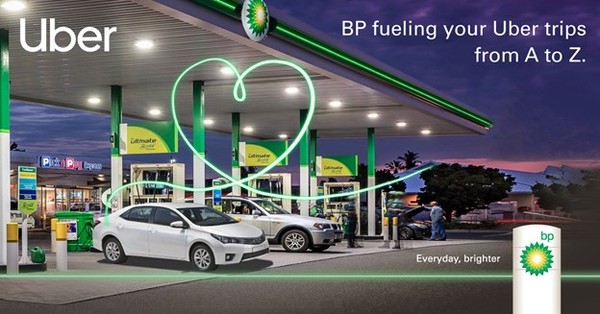
bp’s retail network is perfectly situated to service communities. With retail sites on motorways, in cities, towns, and villages, 550 million customers live within 20 minutes of a bp retail site. In particular, during covid our retail sites and convenience stores remained open, ensuring many people were still able to have fresh milk, produce and even their dinner, delivered to their homes. To drive rapid scale, bp has entered into a global agreement with Uber, a company that has shared goals for putting the customer first.
Nicola said: “As marketeers, we were curious about customer behaviour – how do new offers impact existing buying patterns? To our delight, we found we were appealing to new customer missions and therefore the delivery offer was highly incremental. Digitalization actually boosted sales in the shop. Of course, digital sales are data rich. By combining our own sales data with the Uber data, we found insights on popular products that helped shape our customer offer. Now we can run experiments in a digital world to see if customers respond. We have developed at pace and can make decisions based on consumer behaviour”.
Inspired by Nicola Buck, IRG Participant 2022, SVP Customer Value Proposition and Experience at BP

It’s not often that two CEOs of competing brands co-author an article in the Financial Times.But it is exactly what Unilever’s Alan Jope and Nestle’s Mark Schneider felt urgent to do. Both Unilever and Nestlé recognize that net-zero is a central goal for the global economy. Food and energy security and sharply rising commodity prices are impacting both companies. Alongside these, the effects of climate change are rippling across their value chains.
According to both CEOs, four things must happen, urgently.
1. Demonstrate how their business models and value chains can be made consistent with a net-zero world,
2. Embracing regenerative agriculture to develop “nature positive” supply chains,
3. Harness the potential of technology to track, improve, and report on progress,
4. Governments, multilateral institutions, and development banks in partnership with private banks, investors, and businesses must help accelerate forest finance ahead of the COP27 summit in November.
Ending deforestation is a necessary condition of achieving net-zero by delivering benefits for consumers, communities, and companies alike.
Inspired by Alan Jope, CEO Unilever, guest on the Humanizing Growth Series
Accoring to Jeremy Gilley, founder of Peace One Day “peace and sustainability are inextricably linked; you can’t have one without the other.” That is why Peace One Day organized a virtual show called Climate Action Live. Leading international activists, speakers, actors, and musicians joined Climate Action Live to raise awareness of climate change and manifest climate action around the world. The show set out to inform, inspire, and engage with practical action points for individuals and organizations to join Climate Action.
Anyone can watch highlights from the broadcast on Peace One Day’s social media or at peaceoneday.org. Amongst many other extraordinary contributions, these would be the ones to watch for CMOs:
– Interview with Rebecca Marmot, Unilever’s Chief Sustainability Officer
– Interview with Carlos Slim Domit, Chairman of the board of Telmex, Grupo Carso, Grupo Sanborns, and America Móvil & Philanthropist
– Panel Discussion, ‘Protecting Our Future Agenda,” with Luisa Neubauer (Climate Justice Activist), Dr. Kumi Naidoo (Global Ambassador, Africans Rising), and Dr. Andrea Hinwood (Chief Scientist, United Nations Environment Programme).
The shows are and will be made available on the website and social channels of Peace One Day
Inspired by Jeremy Gilley, IRG Participant 2020, and founder Peace One Day

As a female leader in the alcohol industry, Natasha is on a journey to tackle female-based violence and alcohol harm in South Africa. Based on her belief that alcohol can exist in a balanced and safe manner, she is starting two brand initiatives. Firstly, in the short term, Natasha has set out to build an online platform empowering women to share their experiences. Inspired by the platform, Distell is offering help in building safe spaces for women at taverns and bars in underdeveloped areas. Help comes in concrete forms like basic lighting, transportation options at night, and security patrols. In the long term, the brand initiative will empower female bar owners in the industry with commercial training and coaching.
Through these initiatives, Natasha aims to create shared value as women are empowered by our brands and vice versa. In response, Natasha credited the IRG for helping her connect her personal purpose with the company’s purpose and values. She shared, “Through the IRG I was able to connect my personal passion and drive to the commercial objectives of the company I work for. Leading our brand’s portfolio to deliver brands with purpose, we will continue to uplift South African women”
Inspired by Natasha Maharaj, IRG100 participant 2022, Marketing Director Distell South Africa

GSK consumer health, soon to be Haleon, shared that the organization has a unique opportunity to build a new company rooted first and foremost in its purpose: to deliver better everyday health to humanity. This means Haleon aims to make everyday health effective for both people and the planet with new sustainability initiatives. While building it into the DNA of the company, Katie has spent the last year embedding this purpose throughout the organization. This is how Katie explains the impact of the IRG.
“Through the IRG listening and benchmarking process, we discovered that while almost 90% of our colleagues had a clear understanding of our new purposes strategy and culture. Just 70% believed we could actually achieve this purpose. It was in this gap between understanding and believing that I found my humanizing growth opportunity, to focus our US marketing team on a path from purpose saying to purpose doing. We begin by building our purpose agenda into our commercial planning process.”
Acting on its purpose is working as the company is growing its share by more than 70% of its sales and its increasing penetration with younger and more diverse consumers.
“What I learned from the IRG100 is that purpose cannot be achieved through nature alone. As leaders, we must continue to nurture a culture that puts purpose into action”
Inspired by Katie Williams – IRG participant 2022, CMO at GSK Consumer Health / Haleon.

Over the last few months, you may have heard reports on extreme heatwaves in Pakistan and India. In India, the month of March, was the hottest ever recorded. Pakistan saw nearly 50 °C in temperatures. There was 71% less rain in India and 62% less in Pakistan. Some European countries are expected to see 40 °C in the next few weeks.
Truth is, these are no longer extreme events—as the climate crisis worsens, these events become more and more frequent. This summer would be the coolest summer of the rest of our lives.
And with the heat, the world will surely become harder and harder to live in. According to IPCC, drought-related yield losses have occurred in about 75% of the global harvested area. A global food crisis is at the gates.
All this chaos reaffirms the fact that we have no option but to advance decarbonization efforts worldwide.
A key strategy is ensuring energy efficiency, which the IEA calls as ‘the first fuel’. Only four product groups –electric motors, air conditioners, refrigerators, and lighting – account for 40% of global electricity consumption. The technology is already available to make a difference, while we still explore ways to make carbon sequestration affordable. If we can curb that energy consumption, we can take a monumental step towards a low-carbon, climate resilient world.
These are crucial areas of impact that the business community must take the lead in. Companies must get ahead of the curve and opt to be early movers. Governments are enormous but slower mammoths—businesses possess the agility and adaptiveness that can truly transform these regions.
A net-zero economy is not a fable or a dream. It is an achievable exit route that we must take, or else, the problems of today will appear miniscule compared to the crisis we will be facing tomorrow. It’s this, or nothing. Absolute, apocalyptic nothing. Because we have only one Earth.
Read the full article of Hakan Bulgurlu – CEO of Arcelik, author of A Mountain to Climb and guest on the Humanizing Growth Series

…When we run large multinationals we have the extraordinary privilege of representing giant institutions with a huge turnover that bring together thousands of people. With this power comes responsibility.
Today’s business leaders are being pushed back in this direction–and that’s a good thing. CEOs can and should use their position to speak up for their constituencies on questions that affect our societies and the prospects of our planetary survival. These constituencies may otherwise be marginalized in unrepresentative political systems or silenced by established power. It’s not so-called liberal bias. It’s a vital function of any inclusive and dynamic democracy and it can help heal and strengthen politics when it falters.
This does, of course, put business leaders under new and challenging scrutiny. Corporate statements must be followed by action. From the murder of George Floyd and now the horrific Buffalo attack to the January 6th insurrection and Roe v Wade, activists routinely expose businesses whose public positions are at odds with their political donations. Firms that condemned Moscow’s brutal invasion of Ukraine while continuing to do business with Russia have been denounced in the court of public opinion. A company may have the best targets on emissions, diversity, or human rights but if its trade associations are lobbying against environmental protections or voting rights, or if these firms ignore poverty and oppression in their value chain, there’s an ever-growing chance of being called out.
The best and the only defense is consistency. A company doesn’t have to be perfect, but it should be striving to improve all the time. Companies that go beyond getting their own houses in order, working to address our biggest shared systemic problems, such as money in politics and runaway climate change, stand to reap more rewards.
These are the inescapable realities of running a corporation in today’s world. The politicians who try to silence corporate leaders ignore the role business must play in thriving and vibrant democracies. CEOs everywhere will need to find their voice.
Read the full article of Paul Polman – CEO Unilever (2009 – 2019), author of ‘Net Positive: how courageous companies thrive by giving more than they take’ and guest on the Humanizing Growth Series.