How Winning Global Brands Are Actually Built
The three characteristics that separate global brands that last, and the five organizational drivers that decide whether a sound marketing strategy ever reaches a market.

The three characteristics that separate global brands that last, and the five organizational drivers that decide whether a sound marketing strategy ever reaches a market.
Marketing’s credibility problem inside its own company: what colleagues actually think of marketers, why the old defense of unmeasurable spend expired, and what leaders did about it.
Optimism is not believed and pessimism is not heard. This piece argues for hope as the third option, and sets out four ways to make it tangible.
Time spent alone rose sharply between 2010 and 2023, and researchers find the shift is largely voluntary. This essay argues that brands helped remove the friction that used to force people together, and that they can help put some of it back.
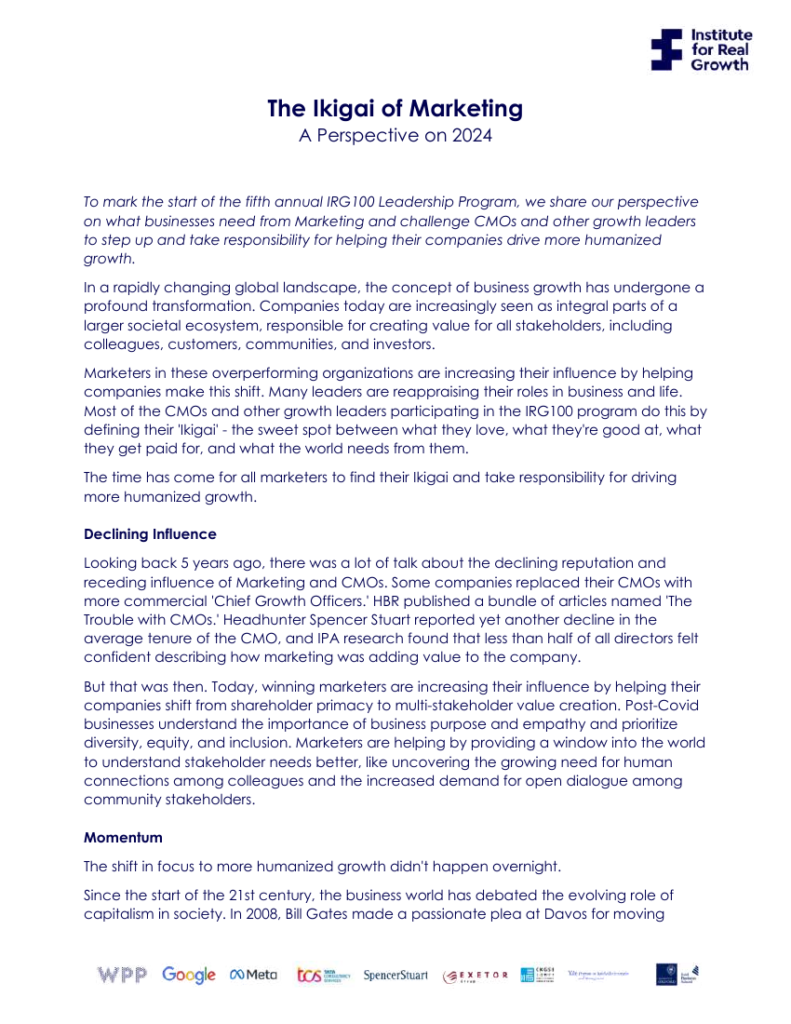
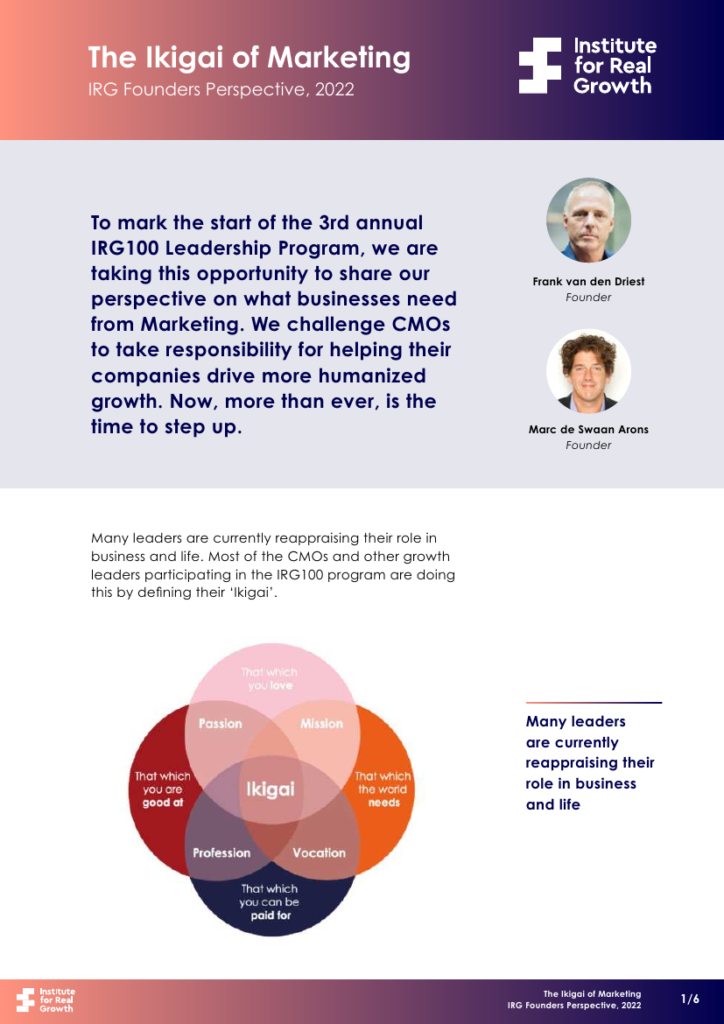
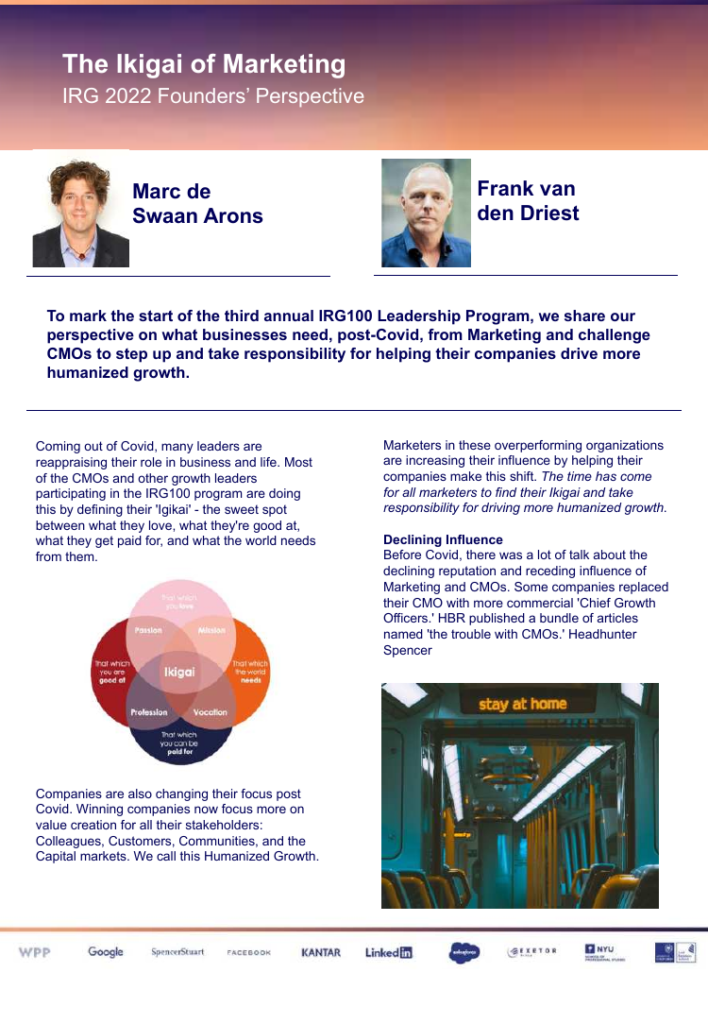
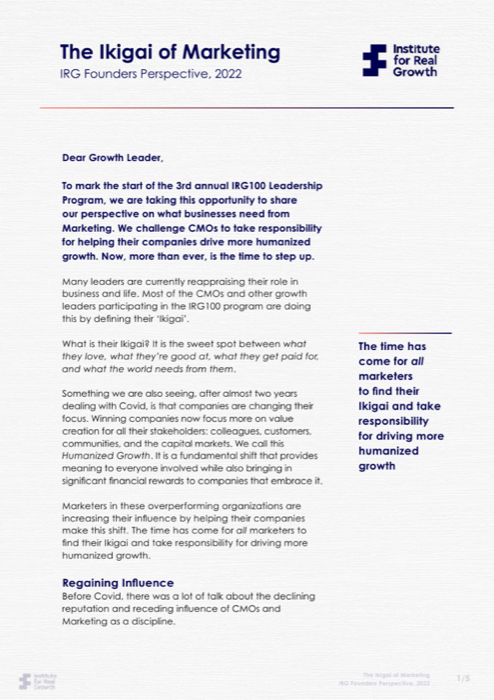
IRG’s founders argue that the conversation about marketing’s declining influence is out of date, and that what the world now needs lines up with what marketers are trained to do.
IRG’s founders argue that what the world now needs from business is exactly what marketers are trained to do, and that this is the moment to take responsibility for it.
The IRG founders argue that what the world now needs and what marketers can offer have converged, and that this is the function’s Ikigai.
The published letter from IRG’s founders to the growth leaders starting the third IRG100 program, arguing that marketing’s moment has arrived and that the case for it is now financial as well as moral.
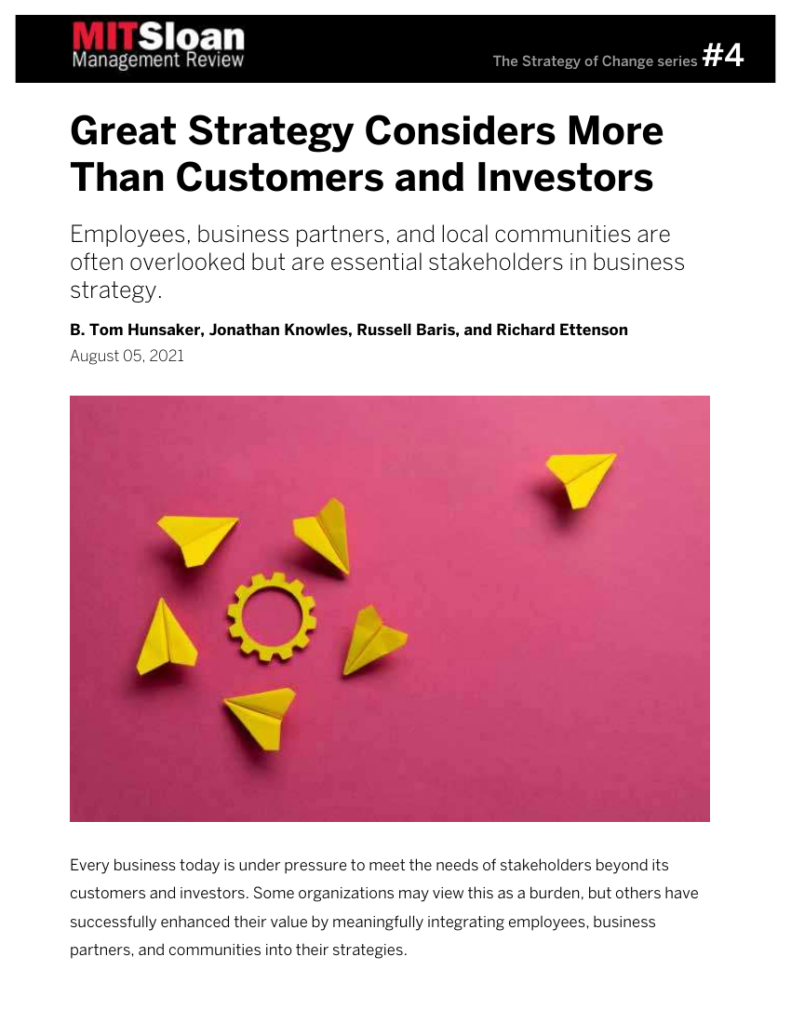
A strategy article arguing that companies are social entities in an ecosystem of value exchange, with worked examples from suppliers, distributors and communities.
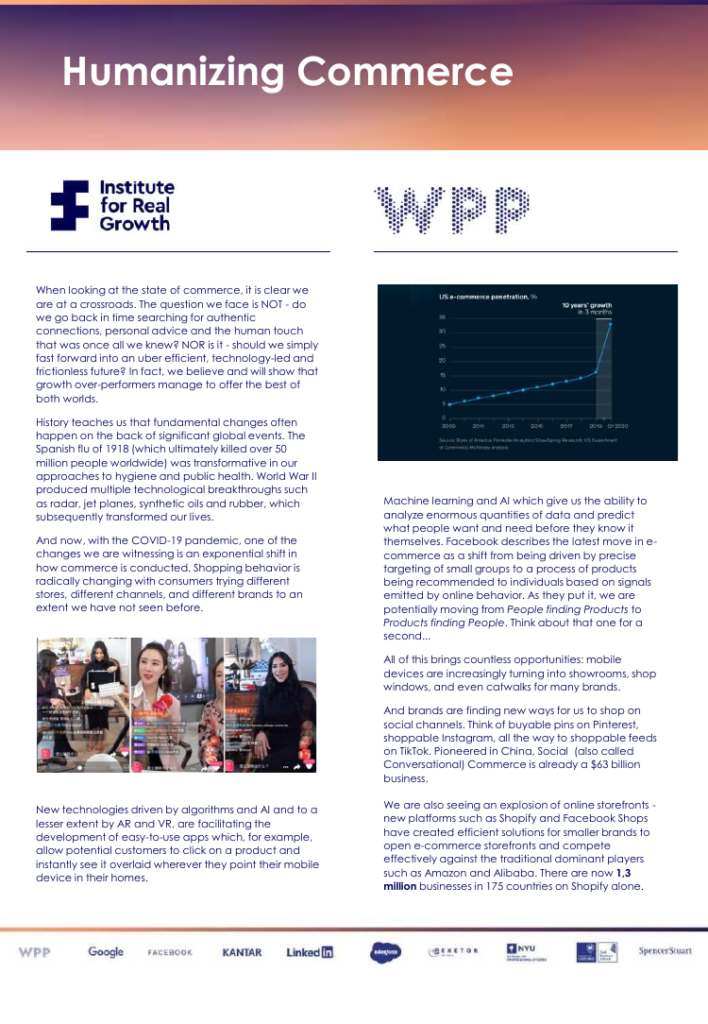
An argument that the choice in commerce is not between the human touch of the past and a frictionless technological future, with three dimensions of a humanized experience and five things a brand can do about it.