You Kill Creativity by Saying No
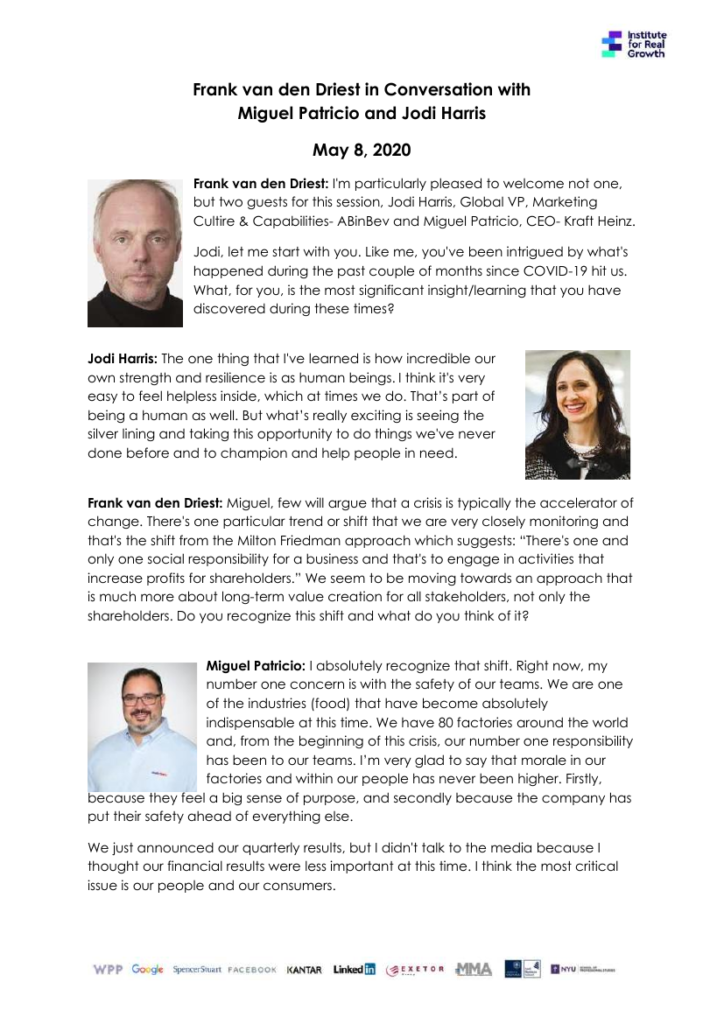
Miguel Patricio and Jodi Harris on zero-based budgeting misunderstood, the four things that made one company creative, and why marketing is the natural path to the chief executive’s chair.
Miguel Patricio and Jodi Harris on zero-based budgeting misunderstood, the four things that made one company creative, and why marketing is the natural path to the chief executive’s chair.
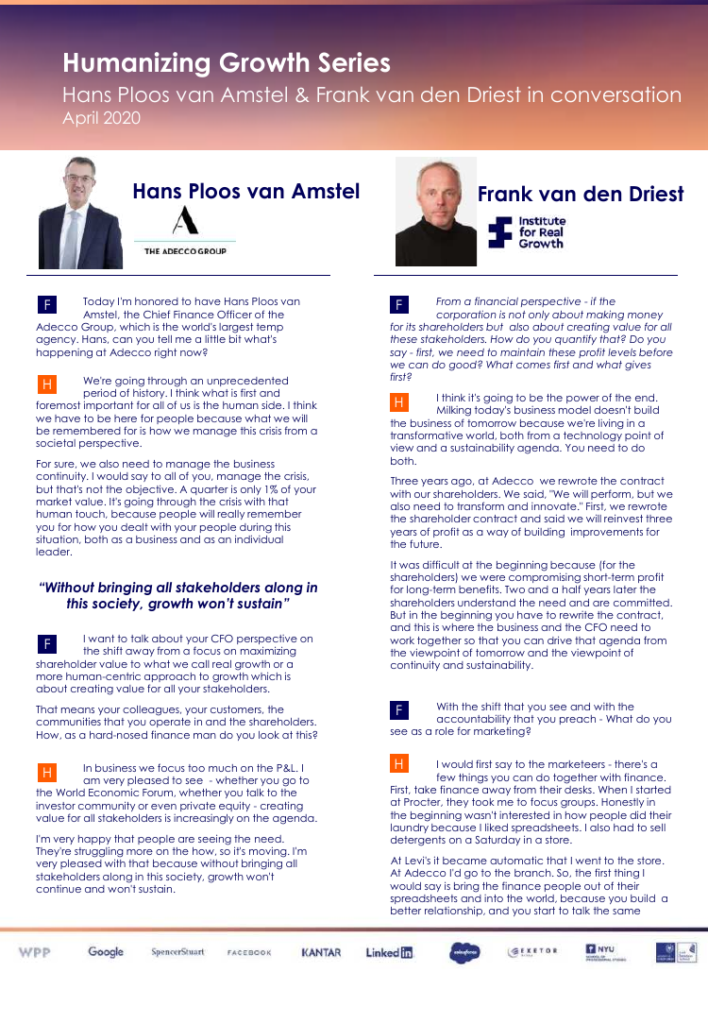
Hans Ploos van Amstel talks to Frank van den Driest about reinvesting three years of profit, agile budgets, and getting finance people out of their spreadsheets.
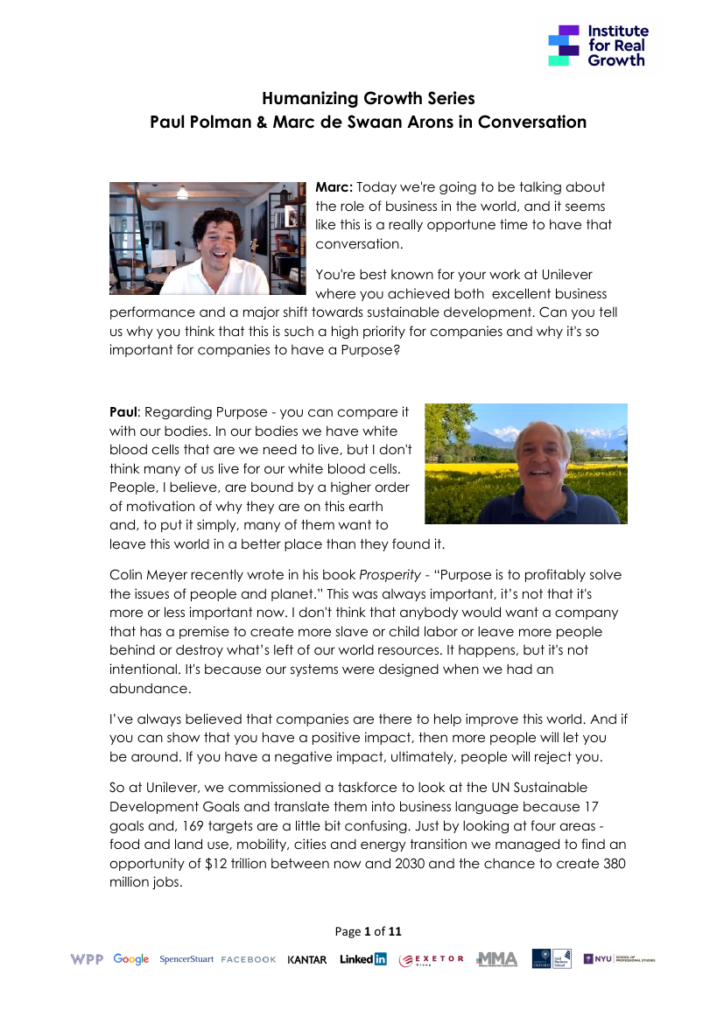
A long conversation on turning Unilever toward multiple stakeholders, why purpose-led brands grew faster, and what Polman thinks marketing leaders owe the world.
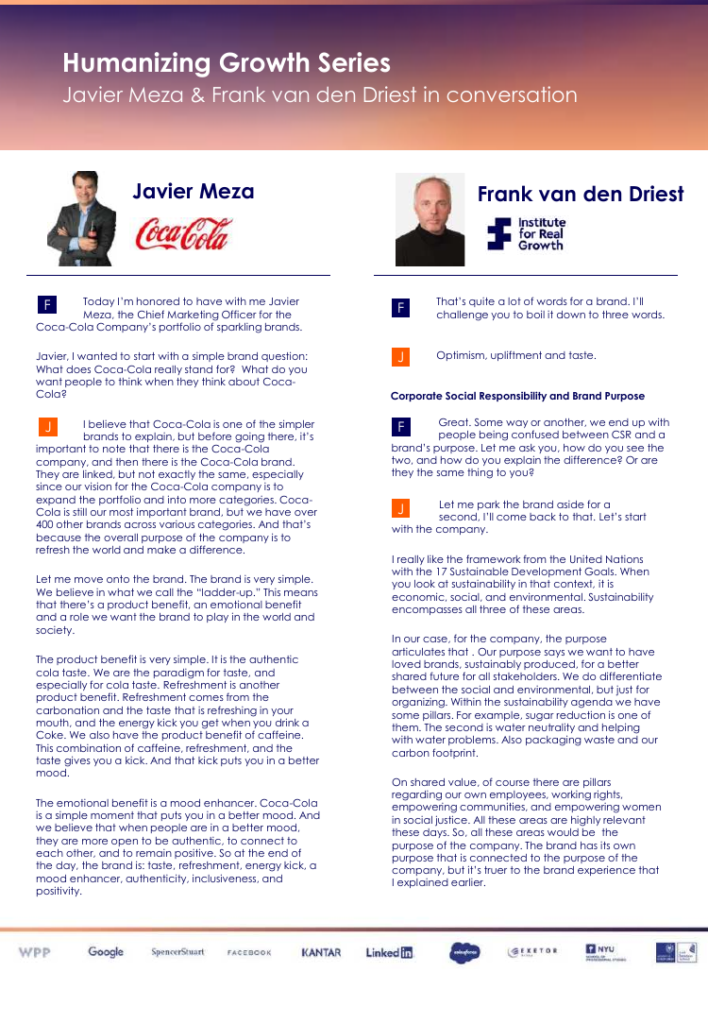
The CMO of Coca-Cola’s sparkling brands on the difference between company purpose and brand purpose, and on running global brands without either chaos or paralysis.
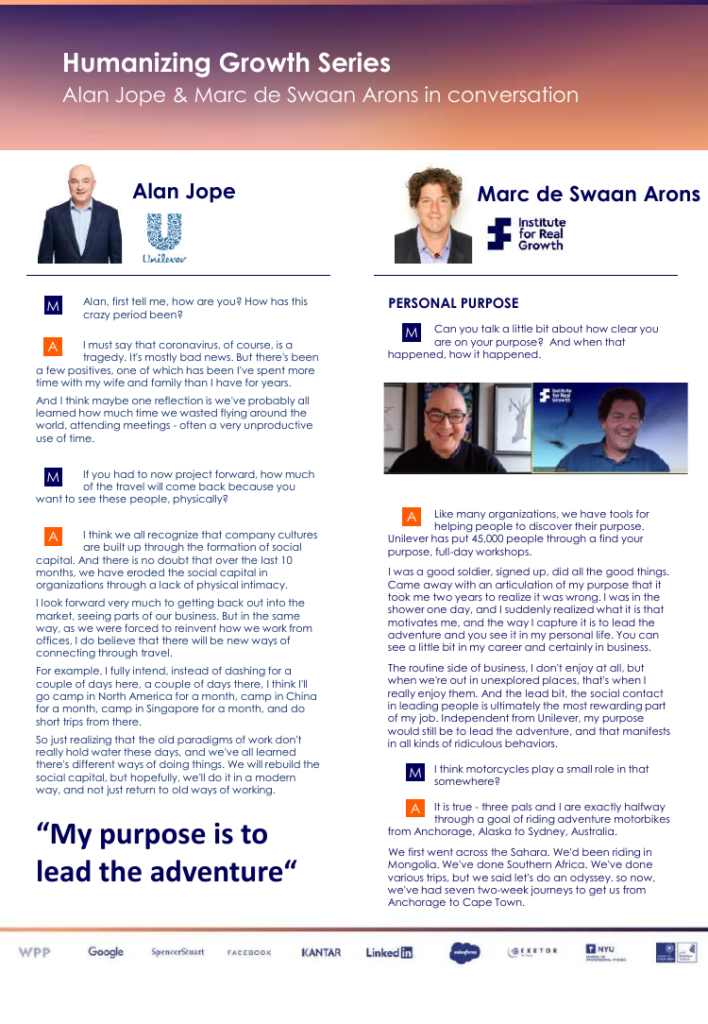
The Unilever chief executive on purpose that has to be earned, the difference between political issues and party politics, and why none of it is driven by altruism.
Marc de Swaan Arons explains the 2014 acquisition that created Millward Brown Vermeer: the reasoning, the scale it bought, and the name.
Marc de Swaan Arons argues that growth is only in conflict with sustainability while it is defined for one stakeholder. Redefined across all of them, and measured on a dashboard that is coming whether companies want it or not, it becomes a marketing question.
Marketing leaders describe why they joined IRG’s leadership program and what they took from it.
Marc de Swaan Arons sets out the Institute for Real Growth’s findings on sustained growth: overperformers define their markets abundantly, run more than one business model at a time, and measure growth in human terms as well as financial ones.
Dolf van den Brink explains the decision to stop selling the Heineken brand in Russia, why he ranks consumers, customers, and employees ahead of shareholders, and why he declines the activist CEO role.