Paul Polman
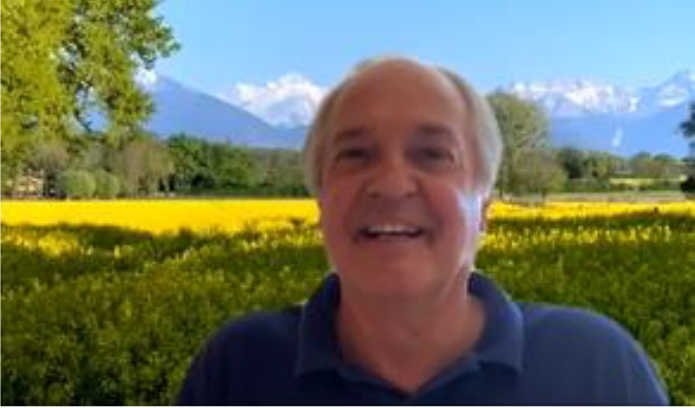
Paul Polman is the former CEO of Unilever and now founder of Imagine. Polman is also a former Chair of the World Business Council for Sustainable Development and board member of the UN Global Compact
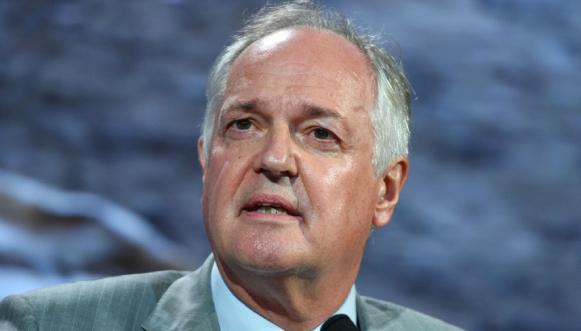


Paul Polman is the former CEO of Unilever and now founder of Imagine. Polman is also a former Chair of the World Business Council for Sustainable Development and board member of the UN Global Compact
 Download PDF
 Read online
 Marc: Today we're going to be talking about
the role of business in the world, and it seems
like this is a really opportune time to have that
conversation.
Marc: Today we're going to be talking about
the role of business in the world, and it seems
like this is a really opportune time to have that
conversation.
You're best known for your work at Unilever where you achieved both excellent business performance and a major shift towards sustainable development. Can you tell us why you think that this is such a high priority for companies and why it's so important for companies to have a Purpose?
 Paul: Regarding Purpose - you can compare it
with our bodies. In our bodies we have white
blood cells that are we need to live, but I don't
think many of us live for our white blood cells.
People, I believe, are bound by a higher order
of motivation of why they are on this earth
and, to put it simply, many of them want to
leave this world in a better place than they found it.
Paul: Regarding Purpose - you can compare it
with our bodies. In our bodies we have white
blood cells that are we need to live, but I don't
think many of us live for our white blood cells.
People, I believe, are bound by a higher order
of motivation of why they are on this earth
and, to put it simply, many of them want to
leave this world in a better place than they found it.
Colin Meyer recently wrote in his book Prosperity - “Purpose is to profitably solve the issues of people and planet.” This was always important, it’s not that it's more or less important now. I don't think that anybody would want a company that has a premise to create more slave or child labor or leave more people behind or destroy what’s left of our world resources. It happens, but it's not intentional. It's because our systems were designed when we had an abundance.
I’ve always believed that companies are there to help improve this world. And if you can show that you have a positive impact, then more people will let you be around. If you have a negative impact, ultimately, people will reject you.
So at Unilever, we commissioned a taskforce to look at the UN Sustainable Development Goals and translate them into business language because 17 goals and, 169 targets are a little bit confusing. Just by looking at four areas - food and land use, mobility, cities and energy transition we managed to find an opportunity of $12 trillion between now and 2030 and the chance to create 380 million jobs.
One of the biggest challenges coming out of this COVID crisis will be social cohesion, job creation and inequality. And here we have this wonderful plan - I've always believed, like many other people, that if we are fortunate enough to work for a company like Unilever, that actually has products to solve these problems, there is no better way than putting those solutions at the center of our company. And that's really why we have such a strong Purpose statement, The Unilever Sustainable Living Plan, and that’s how we've been successful in making it come alive.
Marc: In our IRG research, we found that most great companies were created by founders who wanted to make a difference not just a profit. Is this about going back to the roots for most companies?
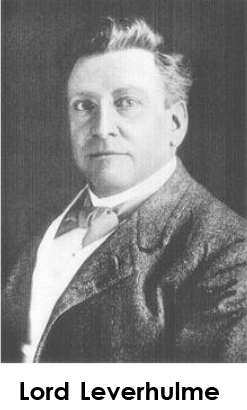 Paul: You're right. If you go back to the founders, you might find answers that
we've sometimes forgotten. In Jim Collins’s book From Good to Great, he talks
about nurturing the core before you stimulate progress, and that's
why it was so important that we went back to the core of Lord
Lever, because over time and with the pressures of all the other
things that were happening to the company, some of his business
values had gotten lost. Obviously CMOs can play an incredible
role in that re-discovery, because CMOs are the stewards of
brands. They're the stewards of corporate cultures. They're
stewards of history.
Paul: You're right. If you go back to the founders, you might find answers that
we've sometimes forgotten. In Jim Collins’s book From Good to Great, he talks
about nurturing the core before you stimulate progress, and that's
why it was so important that we went back to the core of Lord
Lever, because over time and with the pressures of all the other
things that were happening to the company, some of his business
values had gotten lost. Obviously CMOs can play an incredible
role in that re-discovery, because CMOs are the stewards of
brands. They're the stewards of corporate cultures. They're
stewards of history.
What we did with The Unilever Sustainable Living Plan was to put these world problems, as they related to our business, smack in the middle of everything we did. We actually put the people that we represent, the people for whom we are here (who are often the poor, the ones left behind), put them in the middle and at the table during all of our discussions.
There are some values in life that don’t change and that is also important for CMOs. And it's important for companies - if we don't operate on the principles of dignity and respect for everybody, if we don't operate on the principle of equity for everybody, of equal opportunity, and if we don't have a certain level of compassion, then the world is not going to function.
And if companies internalize these values, then they are also more aligned with what is needed. And all of us will probably find the answers to most of the challenges that are out there.
Towards a Multi-stakeholder Orientation
Marc: Let’s say you come into an organization (like Unilever), and you take stock of this rich organization that has a beautiful heritage. And, at the same time, is struggling financially. Maybe it has lost its way a little bit? How do you pick up the journey of orienting a company to goals that are much more multi
stakeholder oriented? Can you talk a little bit about your own journey as you came into Unilever?
Paul: The most important thing is always people, and Unilever has good people and always has had good people. I don't think we could have gotten the results if it were not for the outstanding quality and motivation of the people. The company is too big and too complex to just depend on one or two people to even set a direction. You need to co-create that, and you need to be sure that there's enough critical mass. You might not get everybody on board. But you certainly need to work on getting a critical mass to move a machine like that in a certain direction.
People want to succeed. They don't want to work for something that is ultimately not getting results. People want to be valued and they want to know where their efforts are leading to. These are normal human motivations. And if you can create an environment that allows for that, you can unlock a storehouse of creative energy. So we concentrated first and foremost on getting the right people on board.
If you want to grow, which was really the mission that Unilever had, it is absolutely important to put the right people in the right jobs. We needed to get a growth mentality back into the company and then we needed to bring back what it really was all about. When companies shrink, people become a little bit more self-centered and sometimes not as effective and efficient as they should be. When you bring the outside world in, I think you need the right leadership.
So we spent a disproportionate amount of time in the first years on leadership development. Bill George is a good friend of mine. He had written this book with Peter Sims called True North, and I said, “Let's do a training program. First for our top hundred people on finding their purpose, and then the next year on making your purpose influence others, and the third year to really to get results.”And we rolled it out progressively throughout the organization
I think that was probably one of the best training courses we did. It gave us an opportunity to see and develop the talent, but also to have people be satisfied with what we were trying to do as a company. If your values or your purpose are aligned with those of a company, you're going to be more motivated and energized.
And that’s what we saw play out in Unilever. Fast forward through the next 10 years, and Unilever became the most desirable employer brand in most markets that we operated in. And that's probably our biggest and best statistic.
Then the second thing you have to do is to clearly articulate your strategy. The strategy itself is not that difficult. We've all done that. It's the implementation of the strategy that is important. Here again, the CMO has an incredible role to play to ensure that he or she understands what is happening out there. In my opinion, you cannot be a successful marketer or CMO if you don't care about people. You need to actively go out there.
This attitude was a little bit absent when I joined Unilever. We started with home visits, then with retail visits and these visits then set an example andbecame the norm. Bit by bit these brands brought back what they were originally created for. It sent the message to marketers that they have to pick this up.
You could see the difference even within Unilever. Brands that had internalized that stronger purpose, which for us was about half the business, grew 50 or 60% faster than the rest of the brands, and were also more profitable. So it created a little bit of a momentum and a race to the top that we benefited from, but it could not have happened were it not for the right people and having a basic sound strategy.
Building a Strategy around your Purpose
Marc: I want to focus specifically on one aspect, because I think that one of the things you did in the Unilever strategy, and also the specific brand strategies, was that you invited brands to align themselves with actual sustainable development goals. If I am a marketer or I'm a leader of a company and I want to do the right thing, how do I find out where it makes most sense for me to engage socially, economically, environmentally? And how do I find the right partners to then do that?
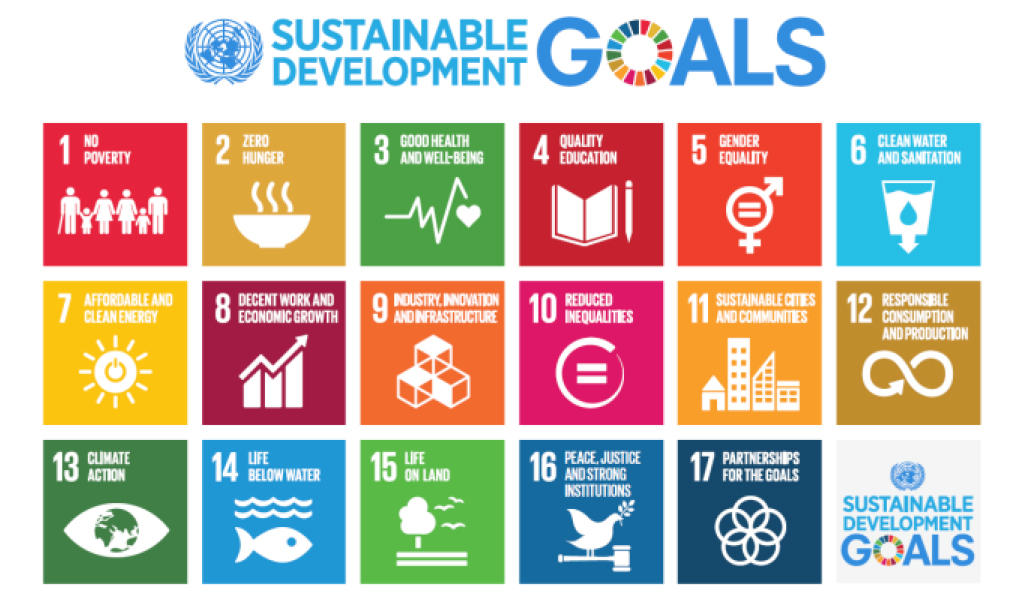
Paul: I would say the strategy is easy. If you are a brand manager and you're responsible for your brands, you have to keep your brands at a certain quality,
and you have to keep a certain price for that quality. You have to work on having your brands in the right place at the right time. You have to think of a certain level of customer service. You have to make your value chain work. That is not going to change whatever word we put on top of it. But many companies forget that. So the first thing we did was create a compass, which many people worked on, that basically said: We're not going to compromise on these things.
So here's the overriding purpose for our company. But that purpose alone doesn't pay your salary if you can't execute it and make it come alive. There are some basics in the business that you shouldn't forget. Then on top of that, you’re adding your points of differentiation, which is where you get to the question of purpose. Whatever business you're in, you must be there for a certain purpose. That purpose is to make something better. Otherwise you will not be needed. If you’re there for a certain purpose, you will most likely, by definition, be linking to one of the sustainable development goals.
Marc: If you look back, what would you do now If you were in charge of Proctor?
Paul: These companies are built to last, not built to sell. And the reason that they're built to last is that they have strong values that are embedded into their organizations, perhaps most of all, that people are important. So they spend a lot of money on training and development, but also they work for their multiple stakeholders. These companies invented (long before the word was popular) the multi-stakeholder model.
If you are at Nestle or Unilever or P&G, you might have different aspects of cultures because it depends where they originated and the influences of the different philosophies of their founders, but they broadly share something that Lord Lever called ‘shared prosperity.’ They broadly believe that everybody that is involved in your business, be it your own employees, the citizens that buy a product, the value chain that you work with, the NGOs that care about your company or the governments of the countries where you operate, these are all stakeholders that you have to satisfy.
If you do that well, then the shareholders ultimately will benefit as well. So these companies actually don't believe in keeping them all at the same level. They actually believe that shareholder return is a result of doing all the other things well.
So my first step, very practically, is to understand the goals. Then once you understand the goals, you internalize it into your strategies. Then when you internalize it into your strategies, you have to take, by definition, the responsibility for your total value chain. Too many companies still think that their only responsibility is towards their direct impact, which is basically what CSR is. It
doesn't work anymore. If you are in the world, you have to take responsibility for your impact on the world.
For Unilever that meant getting out of deforestation, food loss, obesity and the poor small farm holder who still can't make a living. All of these things become important and offered tremendous opportunities.
Marketeers have an enormous responsibility towards making this society function. The world cannot function without responsible marketeers because marketing is really about driving the right habits towards what is needed to make a more sustainable and inclusive world for everybody.
So you are, in fact, responsible for the world, not just for the company that you work for. I was very sad to read a statement the other day where someone said, “I work for this company. Now they converted the lines from alcohol to help produce hand sanitizers. All of a sudden I'm very motivated to be here.” Or “I used to work for this big pharma company and I was kind of lost because we were charging such high prices, but now we're all together making our patents available to find a vaccine for COVID. I feel very motivated. “Why can't we make that the norm in companies? Why can’t we nlock the enormous amount of energy in people? Leadership, at the end of the day, is not about giving energy to people. It's about unlocking energy.
Creating Space to Drive Change
Marc: What we hear so often is that people aren't being given the space, that somehow the market is dictating to us. It has taken out the redundancies in the systems, and zero-based budgeting has been used to catch everything out. Basically people in senior leadership and their perceived investors are saying, “We don't want you to focus on this because it's different to doing good business.” Now, you've made a very strong case that this stance is not true, but as a leader how do you create the necessary space?
Paul: I've never felt that in my life, Marc. I've never felt throughout my career that I didn't have the space. All the marketeers that are listening are educated and probably financially independent. They made it past the age of five. They didn't have issues of nutritional stunting. They got free education from their governments. Don't tell me that you have limitations. You belong to the 5% of the world population that have won the lottery ticket of life.
We're talking about putting ourselves to the service of the other 95%. Don't give me that your boss or CEO doesn't care. If it's really that bad – leave the company! That's why companies that don't get it, go out of business. Don't spend your time there because you won't develop yourself in line with your values. If that is the case, find the companies that reflect your own values. Life is too short.
Marc: You created space for the organization by saying we're not going to be reporting on the quarterly basis, or at least we are changing the way we're reporting. I've had a few questions about, your style as a leader. In the IRG program, we talk about servant leadership. We talk about getting the best out of people and, at the same time, enabling their growth. Talk about your role as you came into this company and thought about the right leadership role to reorientate it back to its roots.
Paul: The best leaders at all levels in society create that space for themselves and drive the changes. We've seen the health community step up. We've seen communities get together to help the elderly, to provide food and take care of the sick. COVID has shown that the real leaders are in all parts of society and they are not held back by any system or the financial markets. They were driven by a strong sense of purpose that is not expressed in just your own self-interest or in monetary terms
We need to get out of this concept that self-worth is measured by net worth. It doesn't work. The real leaders are people that first and foremost put themselves in the service of others, and by doing so, they're better off themselves as well. If you don't get to that point, you'll never be a great leader.
With the COVID crisis, we've discovered that nature, health, climate change and the economy are closely linked. We've discovered that our system leaves too many people behind. We have a social contract that is awful, especially for the people that we need most. We've also finally discovered that science counts. And we've also learned about the need to work together globally. We are first and foremost citizens of planet Earth. The COVID crisis doesn't know any boundaries. These are enormous learnings that we now need to harness as marketeers to build them into plans for the future.
One of the biggest issues we're going to have is job creation - unemployment is going through the roof especially for young people. The social cohesion issues that we did not address during the financial crisis, which we actually made
worse, has resulted in populism and nationalism at the polls and the current crisis that we're going through.
Please marketeers. Let's not make the same mistake twice and go for the easy ‘ready to go’ projects, to think that where we came from was better than where we are now. Let's design it right - each of us has that responsibility in our own lives and to the companies that we represent, which is an amalgamation of the human beings that work there. We then also need to see what other things we can influence.
It would be very surprising to me if a new approach doesn’t lead to a plan that is better than where we came from. This is actually a wonderful opportunity to not just to restart an economy, but to redesign it. I'd love to be a millennial right now. I'd love to enter the workforce right now with these ideas. Building bike paths, moving to green energy like wind and solar, happens to create a new economy with better and more jobs. These types of jobs are actually more secure because they’re the jobs of the future.
This is where the marketeers come in - to change the global narrative, because often it is the narrative that drives human behavior. Behavior changes and boundaries will change and that leads to the system changes that we need.
Becoming a Courageous CMO
Marc: Thank you for the challenge there. You're clearly
motivating people to change, but since you've left
Unilever, you created a new organization called
Imagine. As I understand it, you are working with
‘courageous CEOs’ who represent multiple sectors to change how business is
done, how strategies are run in those sectors. And I would love to just hear a
little bit about what you're seeing around t heir key growth steps as leaders and
then as they engage with their organizations. Could you perhaps draw some
parallels for the courageous CMOs that are listening to this conversation?
Paul: I don't think they're that different, the CMO and CEO. At the end of the day, many of CMOs end up in CEO jobs. II would say that the CMO jobs themselves are great jobs, and they're important, if you assume the right level of responsibility. It used to be that the CMOs were able to bring the consumers to a certain type of behavior that actually resulted in a better society. However, I think we have just become complacent and we've missed that responsibility of continuing to be ahead of what matters to people.
Now you see consumers are far ahead on plastics and plastics in the ocean than most companies. Consumers are farther, ahead on climate change than most companies. Ninety percent of the consumers in Britain now say, I don't want to go back to where I came from before. I want this cleaner air. I want this more inclusive society.
As a CMO you have a responsibility, and you need to carry that responsibility. Then the profession becomes a very good one. In my opinion, the profession is not seen that positively in many places versus what it deserves to be. But if we get back on top and lead and lead responsibly with transparency, with accountability, it's one of the most important jobs you could aspire to. There's no question about that. I’m not just saying that to motivate you. That's why these things were created in the first place.
For me, we are all marketeers in that sense. If you define marketing as guiding the collective behavior - to move in a direction that gives us a better planet, better global cooperation and protects all of us in providing opportunities now and for generations to come, I want to be part of that movement.
At the end of the day, we're fighting for a better world and one that is more inclusive for everybody. Otherwise it's not going to function. There is no CEO who doesn't want that. It's just that they don't know how to get there. Now that we have that critical mass, we can actually drive these systemic changes.
CMOs Uniting around Key Issues
Marc: We have roughly 100 hundred senior marketeers and growth leaders here today. These people have all signed up for the premise of driving an understanding that multi-stakeholder growth strategies will also deliver better business results, and that there is no trade off.
What would be some of your challenges and encouraging thoughts to this network called the Institute for Real Growth?
paul: The two most burning issues that we now have are wealth inequality and climate change. You see a lot of the symptoms coming out of these two issues are wellcaptured in issues that we're currently facing.
So why don't you together as a group, embrace some of those things and say, what can we do with our voices? With our companies, with our combined scale to move some of these things forward?
Change happens, not because politicians think about it in a vacuum or wake up one morning and have this bright idea. They happen because groups of people get together at critical mass to give the politicians the confidence to make these changes. What are the two or three areas where you could have your collective strengths? I would say focus on the areas of climate change and inequality as the most important ones.
The Courageous CMO
Marc: You have made an appeal to people's personal strength, personal conviction before they get caught up in the rat race of the quarterly numbers and everything else, but let me, just for the purpose of this exercise, push back on you and say: You’ve done this with strength and conviction that very few
people can parallel. Please, can you take a step back and observe yourself and talk about your journey arriving to that conviction? Not everybody is as strong and clear in their convictions as you are. You also have a few more years than many of the leaders in this program. What, how can people learn from your journey, your personal journey?
Paul: Well, first of all, don't mimic anybody. We are all unique and that’s what makes it so exciting. We need the combined strength of us all, our different backgrounds, our different dimensions.
In life, you will have certain crucibles and you will have certain moments of reflection. So use these defining moments to discover the things that are important in life. I know there is a certain level of financial or material security that we need to provide for our families, but that should not drive us. Study after study shows that financial security is also something that doesn’t necessarily motivate us. Instead why not say to ourselves - we're in a position, more than the other 95% of people out there, to make a difference and to touch other people. During this COVID crisis, many are going beyond the call of duty to help others in many different ways.
Why not muster that energy or harness those individual strengths that you have inside of you to do a little bit more? Courage is misinterpreted. Courage comes from the French word coeur which actually means ‘heart.’ The people that have courage start with the heart.
It is not surprising that in this COVID crisis, the countries that are managing it best are countries like Germany, New Zealnd, Taiwan, Denmark, Iceland, Norway and Finland.
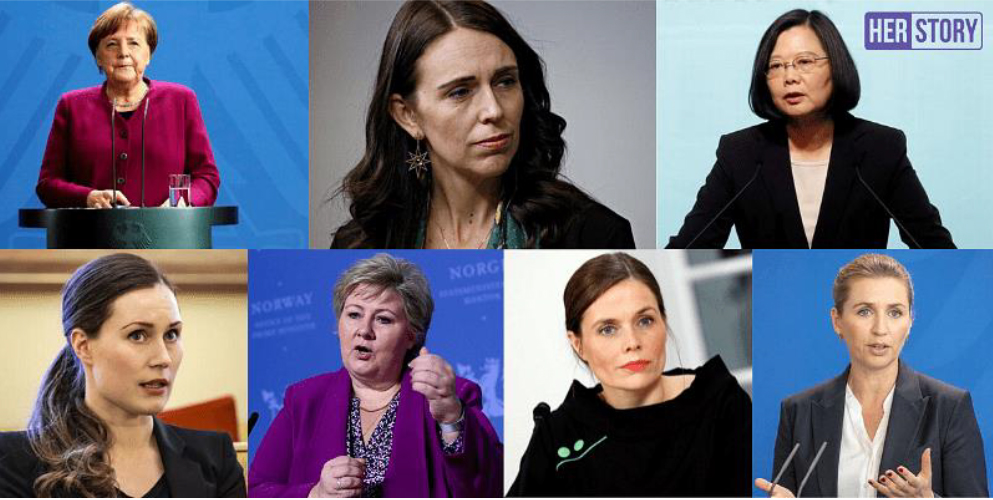
It happens to be that all these countries are run by female prime ministers. And there is something in the female values that is worth studying. Values like being driven by a higher purpose, having q better sense of partnership, and being more multigenerational. They put the interest of others ahead of their own. These are the more human values. Think compassion and empathy.
Now comes the question, how can we get that into the marketing community? How can you lea d that? The money that you spend in your advertising alone is tremendous. We found out that we had to portray women differently in
advertising. We were as guilty as anybody else for showing a man sitting on the couch with his feet on the table, waiting for his tea to be served by a woman. And then we said, “Here’s Lipton Tea. Buy us.” That just doesn't work anymore.
Reflect that human need into your communication and all you do, and you will unlock human behavior. That's probably your biggest potential. Are there two or three things you can do together? Because you might not have these possibilities alone or you might not feel ready to take a certain level of risk alone. I understand that. That's not bad at all, but then go into the collectiveness of numbers.
We have five years of data. ESG funds are doing very well. Governments are increasingly saying, we need to move in that direction. Technology has moved, the youth of shouting for it. They're all purpose driven. The job to be done now is different. I wouldn't say it's easier, but it's different.
And a lot of these boundaries that we had to deal with have gone away. So muster your boldness, your braveness by coming together.
People say you must have compromised a lot in Unilever during the 10 years. You know, I don't care about numbers, I will never be remembered for the numbers at Unilever. I will never be remembered for 300% shareholder return or profitability or growth. People will forget that. We will be remembered for having touched over a billion more lives and making people's lives better, for showing that multi-stakeholder, long-term business models are better than the narrow focus on shareholder primacy.
Would you like to stay up to date on future IRG webinars?
Leave your email address to receive notifications