F It's 39 years ago that you started at Procter &
Gamble? Can you remember that very first
day that you walked into one of the P&G offices?
M I remember it like it was yesterday. In fact, I
was at a strategy meeting in that same
building about a week ago. I started in what was
called the paper division at the time, which is our
products - Charmin, Bounty, and Puffs, as well as
Pampers, Loves, and Always. And I remember the first
day because my boss, his name was Stan Boric, he said
some things at the very beginning. He said, "We're a
company that does the right thing. And we do what's
right." It just stuck with me. The values of our company
were introduced to me on day one.
It's one of the distinguishing characteristics of our
company - we have a purpose to improve the lives of
the world's consumers with superior products and
services that lead us to leadership results, but that are
not only good for our shareholders, but they're good
for, first and foremost consumers as well as for our
employees and the communities in which we live and
work.
I remember that from the very beginning with my boss
saying, "We do what's right. We focus on the consumers
we serve. We have high integrity." I literally have a
badge that has our values on it, of integrity, leadership,
ownership, teamwork. That's why I remember it so well.
F Humanized growth is the term that we use at
the IRG for multi-stakeholder value creation
over the long term. And we focus very specifically on
four Cs, as we call them: colleagues, consumers and
customers, communities, and capital markets. And
what I noticed when you just were talking was that you
left out one stakeholder group, the capital markets?
M I should not have, because our superior results
do deliver superior shareholder returns. But we
tend to start with consumers, employees, retailers or our
customers, communities, and shareholders. So, yes,
capital markets, which are our shareholders. We're a
for-profit business, so it is absolutely in that purpose.
A FORCE FOR GOOD AND A FORCE FOR GROWTH
F One of the indicators that I use to see to what
extent people really embrace the multistakeholder agenda is look at, for example, town hall
meetings. Do you talk only about consumers? only
about growth and profit? only about purposeful work?
Can you tell us a little bit about how you try to strike a
balance?
M The way we balance, is we like to think about
what we do as being a force for good and a
force for growth. It's important that you do both
because as a company that has shareholders, as a
public company, if you're a force for good without
growth and value creation, then you're a philanthropy.
And we're not a philanthropy. We're a for-profit
business.
But if you're a force for growth without any good, then
the consumers that we serve are increasingly viewing
companies like that, as mercenary. So you've got to do
both. And that's the way we think about it. You can do
good for, obviously, consumers first and foremost. Our
job is to make their lives better every day with our
household and personal care products and healthcare
products. That's job one, and that makes a big
difference in people's lives.
And then, beyond that, we then focus on how we do
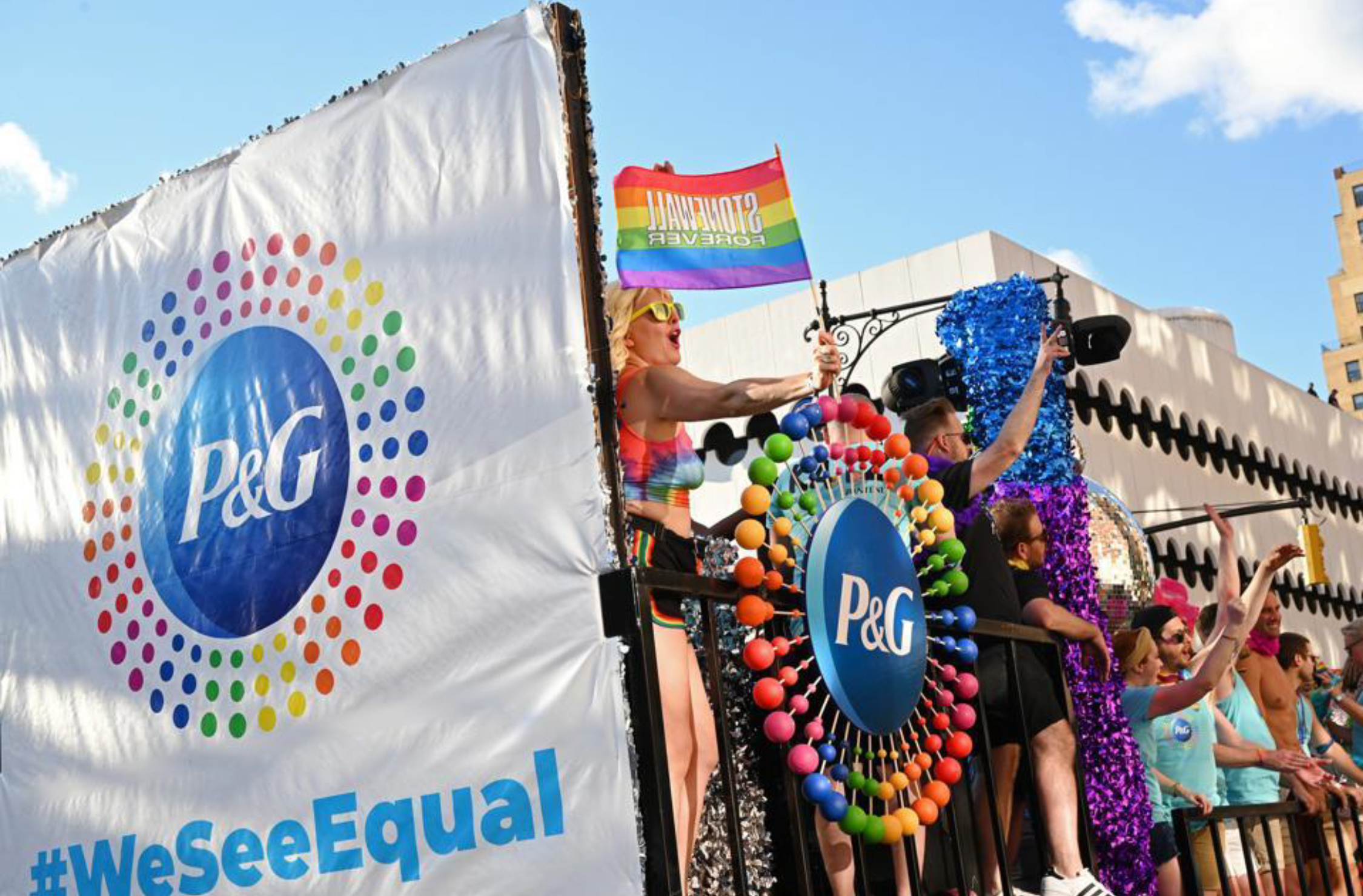
that. And we do that through equality and inclusion.
We do that in a way that is sustainable. We do that in a
way that helps communities in need. All of those things
then lead to growth in value creation, not only for our
businesses, but for the economy and for the
communities in which we live and work. So that's the
way we talk about it. Force for good, force for growth.
It's a circular and an iterative approach to how we
view humanizing growth.
F It's almost a self-perpetuating system if you get
it right?
M It's sustainable then. I remember about 15
years ago, when I was starting to work and
starting to get into some of this work. In this case, we
have one of our signature programs called ‘Children's
Safe Drinking Water’.
There's literally still almost a billion people who don't
have access to clean water, many of whom are in
places where they must walk six miles a day to be able
to get water. And often, that water is so dirty, it creates
illness. We have these little packets (and have now
donated about 16 billion of these packets) that can
take horribly dirty and infested water and clean it
completely. It literally saves lives.
I remember talking to some of the NGO partners at the
beginning, and I said, "Look, let's figure out how we
might be able to work with P&G and some of our
brands." They're like, "Oh, no, no, no. We can't do that."
I said to them, "What do you mean? Why not?" "Well,
we're a nonprofit and we don't want to look like we're
selling out and being too commercial.“
My response was, "Well, that's one way to look at it. The
other way to look at it is that if you work with a
company like P&G, and you work with our brands, what
that can allow us to do is to be able to find a way to
make it both a force for good and a force for growth,
which will make it far more sustainable than the money
that we could donate to you. We may donate $50,000.
But we can help you get millions of dollars of worth of
awareness and contribution if we work together." And
that's really the way we think about it internally and the
way we think about it externally with our partners.
PROFIT CHALLENGES TO HUMANIZED GROWTH
F One of the questions regarding humanized
growth that comes up every so often is – We
believe it, we want it, but then a crisis happens, or our
share price goes down, or whatever it is, and then
everything goes out of the window and it's back to,
"We’ve got to make a profit." How do you deal with
those kinds of pressures?
M
It's such an important point because that’s
right. If it is viewed as this effort, we call it
citizenship, but humanizing growth is a way to think
about that. If that is viewed as a separate, bolted-on
effort that you do in times of good, it will never last.
Instead, what we focus on is building it in, building
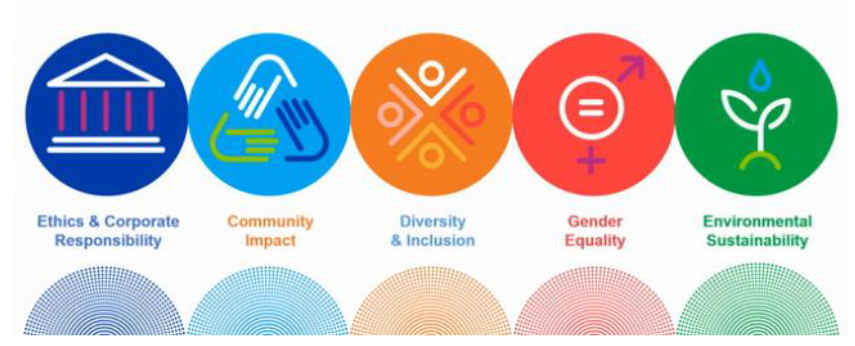
it into how we do business. So we do identify, as I
mentioned, our core priority areas, equality and
inclusion, environmental sustainability, community
impact. And then the foundation of that is just ethics
and corporate responsibility.
But by building it into how we do business, then it
becomes part of the business model. So, sustainability,
building in innovations that are superior performing
product innovations, that are also sustainable, will
make that last.
Tide and cold water are a great example. Most
of the carbon emissions in use for laundry detergent
come from heating the water for the washing machine.
So, when you turn the dial down to 30 degrees Celsius,
or even lower, then that allows us to wash and get your
clothes clean in a superior way. Which by the way, is
better for the clothes because it's less heat, so there's
less damage. And it reduces the energy load and the
carbon emissions by 80% for that laundry load. So that is
an innovation that is built into how we do business. We
do the same thing on Cascade and Fairy automatic
dishwasher because when you use a dishwasher, it uses
less water than when you wash by hand, because the
water, the four gallons, are recycled. When you wash
by hand, you're pouring out four gallons every two
minutes.
So that then leads you to it's a built-in innovation.
That's why we do that. Then it's something that's
sustainable. If things get rough, then we're already
after it and we're already on it.
If you think even about just basic productivity. When
you reduce energy, reduce waste, reduce water in
your operations, that saves money. That's good for
business because you're spending less on resources. So
same thing on equality and inclusion. We build equality
and inclusion into our everyday advertising. As the
world's largest advertiser, our voice in advertising makes
a huge difference.
The images in advertising embed memories into
people's minds. So how you portray people can create
bias, particularly if it's stereotyped, objectified,
diminished, or whatever the case may be. Our number
one job is to make sure we have the accurate portrayal
of every person in our advertising, regardless of gender,
race, ethnicity, sexual orientation, gender identity,
disability or ability, religion, body type, age.
Because when you have the accurate portrayal, it
helps eliminate bias, helps promote equality, and by
the way, we have demonstrated when you do that, it
builds the business. There's a #SeeHer GEM study that
was done, a gender equality measure study, that
showed when you have the accurate portrayal of
women and girls, it increases trust by 10%, and
purchase by 20%. So therefore, it becomes part of how
you do business.
F 39 years ago, you were told on your very first
day, by your boss, that this was a purposeful
business. I can tell you many of the people in our
program do not work in companies where on their first
day, they are told that. They are told what is going to
be the turnover and what's going to be the profit. Do
you have any advice for these leaders, these CMOs,
that work in a company that is really dominated by
financial targets, mostly short term?
M Key advice, for me, would be to start with the
consumers you serve, or whoever your
constituents are, start by understanding what they
want. What's really interesting is today, 9 out of 10
consumers feel better about a brand if it supports a
social or environmental causes. More than half of
consumers now, and it's even higher than that, closer to
70-plus-percent, among millennials and gen-z. More
than half, though, expect brands to take a stand, to
make a difference, to do something for good for the
environment or for equality.
I mean, that really happened in the last year when
people, during the pandemic and the racial and social
injustice. So start there. And then start to figure out what
you can do on your business that makes the most sense
to advance your product or service. And then as we
have done, as the largest advertiser ask - How do we
best do that? Well we can definitely portray people in
an accurate way and periodically take a stand against
bias. And that makes sense for us. We're a large
advertiser.
The environmental examples that I provided to
you innovate in such a way that delivers that
sustainability, but then you must make the case for
growth. As I was describing, it took some time for us, but
making the case that if we have the accurate
portrayal, if we do that consistently, it'll help drive our
business, and then we proved it over and over again.
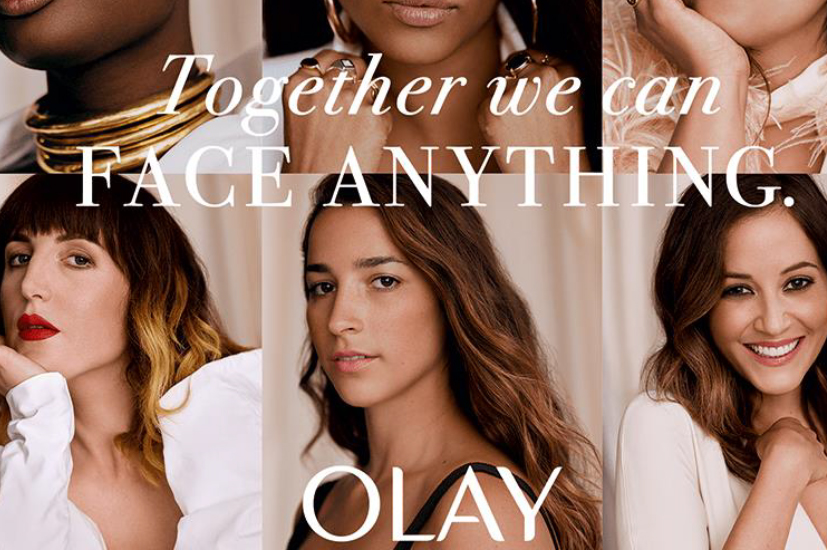
We proved it with Always ‘Like A Girl’, with Always ‘End
Period Poverty’, with Olay ‘Face Anything’, with SKII
‘Change Destiny’, with Ariel ‘Share the Load’, with Vicks
‘Touch of Care’.
When we started proving that you could do
humanized growth, and that business grows, then we
started to shine the light on those situations. And then
people started getting excited about it. And then it
became a creative exercise. So you really have to go
back to the fundamentals. What do your consumers
want? What makes sense for your business? How do
you do that in such a way that actually helps grow the
brand or the service that you have, and then shine the
light on it? And then eventually, it starts to become part
of the way you do business. That's my advice.
F Clear advice. You make it sound so easy.
M It's not. It takes time. It really does. The other
thing I would say is, it was 1989 when our
president at the time, John Pepper, convinced our then
CEO, John Smale, to write a diversity policy. And at the
time, our company was largely white, cisgender men,
particularly in the management ranks. And John
Pepper knew that it was going to take a generation to
really make good progress on this, not just from a
gender standpoint, but also from a race standpoint.
Eventually, we added LGBTQ+. But he knew it was
a generation because our company tends to recruit
people straight out of university, and then advances
them. So, we did a lot of work inside to ensure that we
had a foundation that reflected what we were going
to say. It wasn't until 2014 that we really went out with
our voice. And that was with Always ‘Like A Girl’, which
was the groundbreaking gender equality message. But
we had, at the time, made enough internal progress.
In fact, right now, 48% of our managers are women. So
we're very close to 50/50 gender equality at every level.
And the brand marketing organization that I have
responsibility for, it is 50/50 at every level. Actually,
maybe five short, five promotions short of getting it
50/50 at the very, very top level. So I say that because
what's important is you got to make sure you do the
work inside before you start going outside.
F You used a quota inside?
M No. What we do is we set aspirations.
F it's an interesting tension between meritocracy
and quota. How do you feel the tension and
how do you deal with it?
M What our views are, is that when you set the
aspiration and the expectation and set the
goal, and then make the case for why it's the right thing
to do, both for society and for the business, you'll make
more progress and it'll be lasting.
What happened with this CEO statement of diversity, it
was three years later that our then CEO Ed Artzt made a
statement to include sexual orientation in our EO policy.
And then later on, we formed affinity groups for gender
and for LGBTQ+. And eventually, over time, for different
races, people with disability and what not. But the
expectation from leadership was consistent. And while
we didn't set quotas, we did set goals, and in some
cases, aspirations. We're not there yet. We're shooting for
this. And we're very open about it. And then what we
have found is that when you do that, people rise to the
occasion because they see why it's the right thing to do,
they seize the expectation. A quota forces compliance.
And what happens then is that something could change
in the company and that objective goes out the door.
THE ROLE OF LEADERSHIP IN SETTING HUMANIZED GROWTH
AGENDAS
F How do you respond to the people that don’t
respond in a way you would hope regarding
these aspirations? There will always be people that don't
come on board. How do you deal with yours?
M That's leadership's job. Our job as leadership is
to set the expectations and hold people
accountable. Our CEO, David Taylor, set very specific,
in this case, goals. And we first set them for 2020. Then
he set them for 2025. Now we're setting them for 2030.
But the goals were set and broken down by business
unit. And then he made that clear, "This is my
expectation for what you need to do."
And what we've done then is we put systems in place,
and we take action to make the adjustments. At least
in this case, I'm talking about for equality and equal
representation. If over time, somebody doesn't make it,
the first thing you ask is, "Why aren't you making this?
Give me the analysis." Like any business goal, why is it
happening. Then if over time you see that they're not
interested in it... That the cause is their lack of
leadership or lack of action, and they don't take
remedial action, then they're held accountable for
that.
it either holds them back from a promotion, or there's
consequences from compensation. There's other
consequences. If it's really a problem, then they're
removed.
But by and large, we've found that doesn't happen
mostly because of what I told you about day one
people that come into our company are inculcated
with those purpose, values, and principles from the
beginning, and it cascades. So by the time you're in a
senior leadership position, you live and breathe those
principles. By and large, when there's an expectation,
people deliver.
F There's one other tension that I find in this
same space. You talk about diversity, and we
know that more diverse perspectives lead to better
decision making. You probably don't need to convince
a lot of people of that. On the other hand, you're
carrying a badge with the values of the company. So
with these values being so dominant, isn't that at odds
with diversity of perspective?
M On the contrary. I would say that these values
drive respect, and drive respect for
differences. And there's also a set of principles around
how we operate too.
F Can you give an example?
M The principles around what we're shooting for
is in terms of respecting individuals, but also
respecting differences. And actually, creating and
developing a diverse and inclusive workforce that
drives innovation. So those things, diversity, equity, and
inclusion, really drive the opportunity to drive more
innovation. And we're a company that innovates.
We're a company that absolutely has to innovate.
F What you're saying is diversity is part of our
values. So it's one, basically.
M It becomes part of how we operate,
absolutely correct. And then as I mentioned,
those citizenship priorities that I provided you, equality,
and inclusion, that we build into how we operate, it
becomes part of how you operate. There's always
going to be differences of opinion. What's important is
differences of opinion are valued, because differences
of opinion can drive to better outcomes.
We did some training once around the better
third way. It was actually Roger Martin, who's from the
University of Toronto. He's been a consultant with us for
probably 30 years. He gave us this thing about there's
always two ways, and there are two options that
people have. And people will gravitate toward this
one, or that one. And it's either right or wrong. No. How
about there's a third way? And often, when we’re at
odds on something, and we can't figure something out,
we say, "Is there a better third way here? Can we
consider just a different way we might be able to do
this?" And that's the definition of innovation.
MAKING A DIFFERENCE AS A MARKETING LEADER
F Going back those 39 years, let's talk about
interventions that you remember that you feel
really made a difference.
M The first one, which was ... I would say it was
probably the most profound one for me
personally was over 20 years ago, when I was running
our Cover Girl business. My wife, Betsy, and I, and our
three daughters who were all under the age of 10,
were at a spiritual ranch in Colorado.
And at this ranch, the spiritual leader, who was a
minister, came up to me. And he said, "I hope you
know the good you can do because you're in business.
And business will someday be the greatest force for
good in the future. It won't be governments. It won't be
clergy. It won't be laws. It'll be business. If you choose to
do so, you could really do a lot of good."
And it was a blinding moment of clarity for me. I was
like, "Whoa. Wow. That's a big point." And at the time,
we had just created the ‘Easy Breezy Beautiful’ Cover
Girl campaign, which I’m happy to say is still alive. But
we had created it in such a way that we were getting
feedback that our spokespeople were too young, too
thin, too white. It was a stereotypical, and even
somewhat objectified, standard of beauty. And I
realized that. And I thought, "We have got to do
something about that“.
I looked at my three young daughters and I said, "You
know what? They cannot grow up thinking that that's
the definition of beauty." And we changed. And we
changed the whole thing. And we actually went to
much more of an inside/outside beauty. We brought in
many more diverse spokespeople, like Queen Latifah,
ultimately Ellen DeGeneres. It was a transformation.
And I realized that has a huge impact on how people
see themselves.
The Always team were inspired by that campaign, and
they then created ‘Like A Girl.’ And it literally changed
the meaning of the phrase, ‘Like a girl’ was a negative
phrase, and it turned into a positive phrase as a result
of that. Again, a profound impact. And that's when we
declared, as the world's largest advertiser, we are
going to use our voice as a force for good.
Then we had, as I mentioned, ‘Face Anything’,
‘Change Destiny’, the Ariel ‘Share the Load’, which in
India and other parts of the world got men to step up
and do laundry, because laundry is not just for women.
Laundry can be done by men.
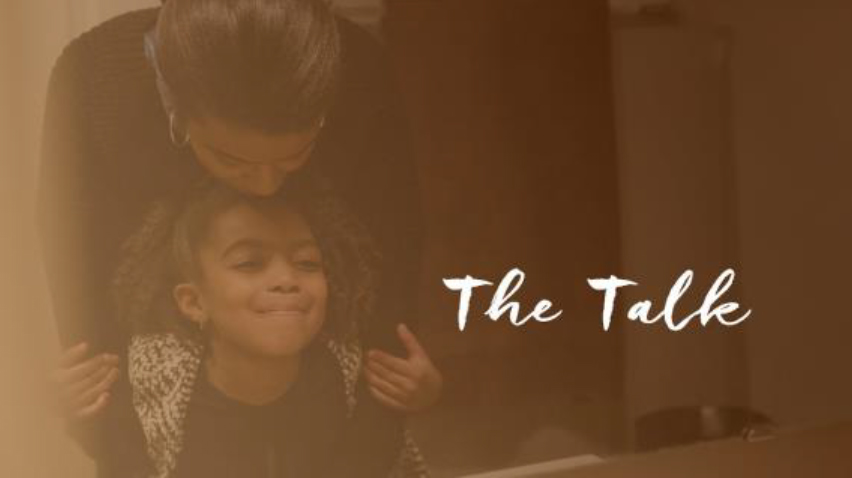
Here in the United States, we did ‘The Talk’, which
shined a light on the talk that Black parents have with
their children about the prejudice they'll face.
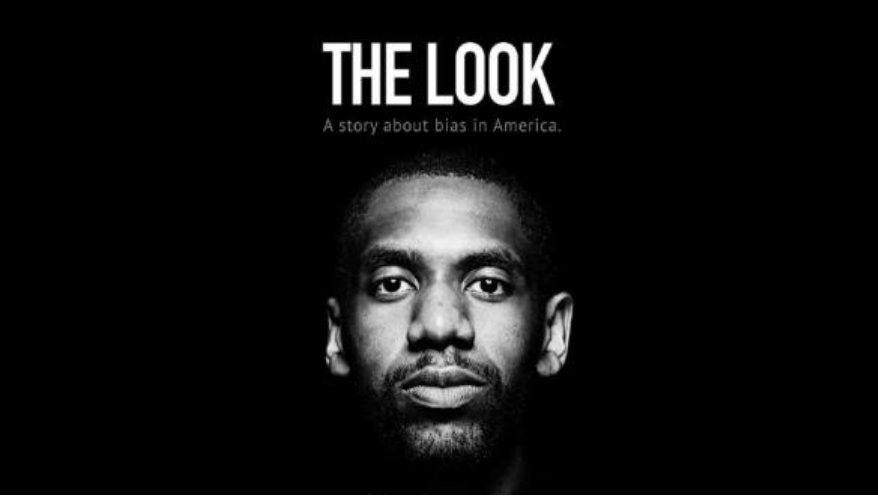
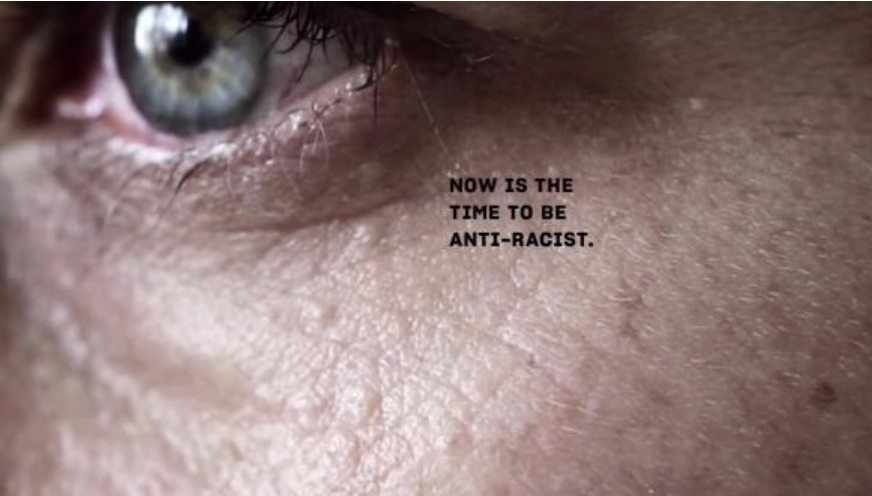
Then ‘The Look’, which shined a light on how Black men
face racism on a daily basis.
And then last year, ‘The Choice’, which really,
really, after George Floyd was killed, concentrated on
getting the white community to step up.
And these were moments that we look at as
milestones of making a difference and being that force
for good. Last year when the pandemic hit, the
expectation of companies stepping up was so, so big.
We converted our disaster relief work. Typically, and
very quietly for the past 25 years, whenever there's a
disaster, a hurricane, a tornado, a flood, an
earthquake, we donate products to help people get
back on their feet. We converted nearly all of that to
help people who had needs during the COVID
pandemic. And it was tens of millions of dollars, very
quietly, no headlines, just did it to help communities in
need.
These are moments that I really look back on and
think they were big moments. They made a
difference... And they've helped many people around
the world, and helped our company.
DEALING WITH SETBACKS
F How have you dealt with strong setbacks,
caused by yourself or by others?
M Probably the most profound setback was
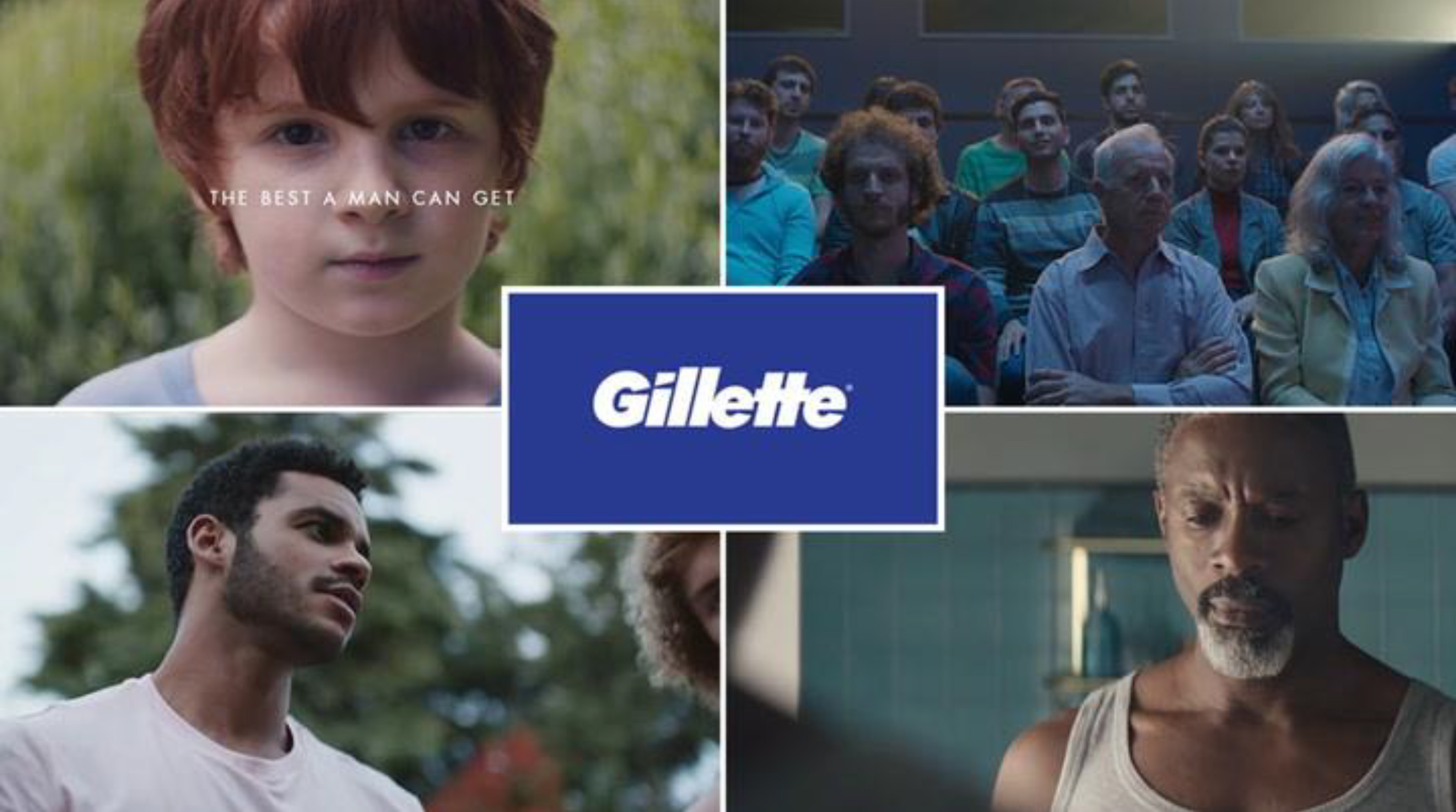
where we took a lot of heat for Gillette “We
Believe”. It was the right thing for Gillette to do. Gillette
has had a campaign called ‘The Best A Man Can Get’
since the 80s. And it was very, very stereotypical. It was
very masculine. In some cases, the work that they did
objectified or even diminished women, not
intentionally, but it did over time. And I really
encouraged them to evolve, "You guys got to
modernize. You got to get a better ... You got to wake
up here."
This is right after the #MeToo movement occurred. And
they came back with an outstanding film called ‘We
Believe’. Which basically said - We believe in men, and
we believe that men can be the best they can be. And
we want to demonstrate that they can be role models,
and that it's not enough to just not be a harasser. You
have to step up and step in and do things.
They demonstrated this with a 90 second film. The
problem was the front half of the film set up the
problem and it showed some very bad behavior by
men. That turned into a storm of great proportion. It was
simultaneously the most liked video and the most
disliked. It actually sparked several groups to come out
and object to it, and it created this amazing storm. And
we spent a lot of time dealing with that.
It turned out 110 million people saw it. The people who
objected to it were objecting to some of the words in
particular, saying that we were depicting men in a
negative way. And it wasn't the intention, but that's the
way it came across and that's what they jumped on. So
how do we deal with that? Well, we really stepped back
and said, "Are our intentions right? Yes. Are we really
trying to do the right thing? Yes. Okay, let's keep going."
And we kept going. And we started getting out there
and we started getting our narrative out there. And we
started demonstrating the good we were actually doing.
We were donating money to men’s and boys’
organizations to help them. And we kept going. And we
made some modifications to the next generations of that
work.
But I look back on that, and what I would say the lessons
of it as well were - first of all, it did change the mindset of
people about Gillette. It did spark some great
conversations, and it actually built our business among
the millennial consumers. But what it helped us do is look
back and say, "Now, what did we do wrong? What could
we have done differently?" Number one, what we could
have done is we didn't have to spend as much time
showing the negative in the film. We could have just
gone right into the better part. That's one thing.
Two, we need to recognize there are trigger words.
‘Toxic masculinity’ and the ‘Me Too movement’
focused on men are trigger words. We needed to be
sensitive to that.
Third, at first, we were like, "We're just rejecting all those
people who reject this." And we said, "No, no, no, no.
We need to listen to all those people who are rejecting
this and understand." And that was, for me, one of the
best learnings I've ever had which is, "No, no, no.
Always listen to someone who has a different point of
view and learn something from that."
So, I am far more respectful now of all views. And I
really think about that with everything we do now.
Because what this was saying is, many men, particularly
Caucasian men were saying, "Hey you know what, we
don't want to be shown this way. We're not all like that."
And you know what? You're right. You're not. So, let's
not depict them in that way.
F I like your learning of facing the negative and
starting the conversation. I think then all of a
sudden a negative can turn into an opportunity.
M And the advice I give to people is; when
you've got something that you think might be
controversial, go and think about, and listen to people
for whom you think it might be controversial so they can
give input.
THE LONELINESS OF LEADERSHIP
F One thing that I've noticed over the decades
is that it can be lonely to be a leader. Do you
recognize that?
M I think it's what happens throughout your
career as you move into increasing levels of
responsibility, you can become further and further
removed from other people. And it's called ‘position
power’. You have power just by virtue of your position.
Whether you really have any power or not doesn't
matter. The position carries weight with it. And
recognizing that is important.
I can remember when I first took this job, my
predecessor was Jim Stengel, who's a remarkable
leader and a fantastic CMO. And the person who I was
working with was concerned about that, "How are you
going to fill his shoes?" And I said, "Well, okay, I'll do my
best." But she said, "It's going to be a tough act to
follow." And I said, "Yeah, it is, but also recognize
something, that this position is what's important. The
individual in it is important, of course, but you're going
to respect the position, and recognize that it's also
fleeting." So, I always try to never make it about me.
You're only going to be in the job for a certain
period. And so the key that I like to think about to help
deal with this, because they say it can be lonely, is
actually turn it the other way around. And actually
make my job about being useful to other people. It's in
service of the people in the organization. It's not about
me. And I have this conversation with some of our
leaders in our company - that we should never make
either the success or failure of anything, or their
company, about an individual.
And certainly, don't do that as a CMO. You're
going to be in this position for a certain period of time.
You're in the chair, and that matters. And with that in
mind, recognize that you have an obligation to serve
others. Because they're the ones that do everything -
they're the ones that do the work. I view this role as just
an incredible privilege to be able to represent the work
of the 5,000 brand builders around the company, and
our partners as well. A coping mechanism I would
suggest is flip it. Flip it and focus on others.
F You never make it about you.
M No. And others will try to make it about you
because it's just a natural, the way humans
work. But if you can just try to never let that come ...
Never read your own headlines, for example, and just
focus on how you can help serve the people in your
organization, you'll be able to deal with it more
effectively.
INNOVATING INNOVATION
F We're now at a very, interesting moment in
time. If we think about how things are different
now, isn't it time that we start innovating innovation
itself?
M Yes. We call it constructive disruption. There’s
so much disruption in the world. And you see it
through digital continuing to grow, but then privacy
starting to come in. You see linear TV declining and
over the top streaming increasing, data analytics and
technology coming, expectations of consumers, brand
building and marketing merging with commerce for
eCommerce. So massive disruption. And the best way
to deal with that disruption is to lead it but lead it in a
constructive way that creates growth and value. You
can disrupt and destroy value, or you can disrupt and
create value and try to build markets. And that requires
a level of innovation on everything we do. So we focus
on trying to reinvent brand building, and that means
innovation. It's innovating in media to ensure that we
can get mass reach of a lot of people, but we want to
do it with precision. And so that requires data analytics
and technology. If you think about reinventing
advertising, the way we're now thinking about how
content is going to be driving commerce as one
example, how we work with our agencies.
And innovation, we've tried to focus on product
innovation to take all the advantages that we have of
the knowledge of our 180 years of knowledge about
our products and operate more like a startup. And so
we went out about five years ago and started to adopt
lean startup and lean innovation capabilities. We now
have about 180 startups that are operating. It's a
different way of innovating that is allowing us to move
on a much faster cycle than we did before. And
iterate, and then fail, and pivot, and fail, and pivot,
and then eventually scale. It's a totally different way of
operating. And I think we're just scratching the surface. I
think the last year probably accelerated things by five
years. And I think the next five years is just going to be
exponential in the amount of change that's going to
occur.
F How do you innovate yourself as a person? I
don't mean just in terms of skills, but as a
M I adopted a mindset several years ago
because I'd been a CMO for a while. And I
said, "I got to keep fresh." And so, the mindset was
“I pretended to fire myself every 18 months and then
start over again”
I chose 18 months, because that's Moore's Law, as you
know, which is that computing power doubles every 18
months. So given the exponential changes that occur, I
thought, "Okay, better be every 18 months." But by firing
yourself, because what I noticed is when you come in
fresh to a job, you are not encumbered by the past.
You just look at where things are. You look at what's
happening, you look at where things are, and you try to
look at what's going. And so I said, "That's a good
mindset to have, because then I don't fall in love with
whatever I worked on before. And I don't view that as
being sacred."
And just instead said, "Okay, I'm going to look at where
are we now and where do we need to go?" And then
look at the past and honor the past, but also be
objective about and discerning about what's working,
what's not working. But then really spend a lot of time
figuring out how you go forward. And then I adopted
with my team, two things. Our job is to win today and
invent tomorrow. So, we constantly think about what
do we have to do to win now? And there's some
fundamentals about brand building that are enduring.
They're like the laws of nature, and especially in our
business. We constantly talk about these. It's irresistible
superiority, and product package, communications,
retail execution and value. It's productivity to fuel
growth. It's who our consumer is, what our brand stands
for, and how we execute across those five vectors.
These are foundational. And they don't change, but
how you do them changes.
These are foundational. And they don't change,
but how you do them changes. So we're constantly
looking about how we need to invent that future. And
that's a way to keep fresh, then it's a constant. The
mode that I'm in along with my team, and frankly, we
really try to make this with every brand builder, is you're
in a constant learning mode. Every day is a new day.
And that's what I love about this job is that today, I'm
learning as much as I learned on the day I started,
back on May 17th, 1982. I'm probably learning more.
That's a way to stay fresh. And it's pretty invigorating
because then you know that it's always going to
change, and you just get accustomed to that. And
that becomes part of the way you operate.
SELF-CARE AS A MARKETING LEADER
F Have you ever gone back to that spiritual
ranch?
M No, but I want to. It was such an amazing
experience because it was people from all
walks of life. And I was raised Catholic. My wife is
Jewish. I'm very, very open to different perspectives. I'll
give you a personal story. My father was a recovering
alcoholic, so he focused on a higher power. If you've
ever studied the “12 steps”, there's a higher power. And
it's really more a higher power of your understanding as
opposed to any one denomination, which is again, a
mind-opening view of spirituality.
And so that there are many paths up the
mountain, and that leaves you with a sense of
openness around how the universe is going to unfold.
And I can't remember who, Toni Morrison or Maya
Angelou said the universe will unfold as it should. And
when you have those kinds of experiences, which by
the way was with my family, that's including my dad,
who was there at the time. That gives you a different
outlook, and if you fully embrace it, that enables you to
embrace whatever comes at you.
F It's interesting. I've just been to a silent retreat
in the South of France for a week. And the
challenge that I find is that it's a wonderful experience,
but so difficult to integrate that mind state into your
daily life.
M I wish I was better at that; I wish I was better at
staying in the moment. That's the part that,
even after my career and life, I still certainly have to
work on that. I will say this, and not to go too far with it,
but every day I essentially pray for the strength to be
useful to whomever I come in contact with. And of
course, I'm thankful for everything in my life. That at
least helps, that little bit of grounding to do.
And another tip. Ariana Huffington is one of our
partners, and she's created this program called Thrive,
which is a great program, with micro steps to help you
kind of deal with things.
And one of the best micro steps she gave me was
determine a time in your day when your day is done,
and then put your phone to bed. And make sure your
phone is not in your room. And she even has created a
little bed for phones that you can put it into. But it was
a good point because, and I think this is particularly
difficult during the pandemic, by working from home,
many people said it wasn't working from home, it was
living at work.
And the boundaries got blurred. And I found that
personally very difficult to deal with. But it's an
important kind of discipline of pick a time when you're
done, because you need the recovery. You can't
recover without having time away from work. Resilience
is driven by recovery. And that's driven by setting
boundaries.
F Things like this, self-care, but even spirituality, is
that something that you bring into discussions
with your teams? Or do you feel that's a private affair?
M Periodically, when it feels appropriate. And
often what I've found is, almost inevitably, a
team member you have will face some difficulty, will
face a personal challenge. And that gives you the
opportunity to show humanity, when somebody has a
tough time, when there's a divorce or a death, or an
illness or a surgery. And that's one of the things that I
love about our company is the fact that we really rally
around each other when that happens.
But that's an example of where you can show
humanity and you can express your values, your
spirituality, and what's important, and those kinds of
things. And then look, every once in a while, for
example, this week one of my dear colleagues who
works with me, Peter Carter, is retiring after 41 years.
And we announced it to his team. We talked about his
replacement. And I started talking a little bit about his
accomplishments and then I choked up and I cried
because he's meant a lot to me, and I've been there
with him through thick and thin, and he's done the
same for me.
And showing that humanity, I'm an easy crier, and
I admit it. But you always feel a little weird about it. But
what you realize is people say, "Wow. You just showed
you're human." And that's part of the problem as a
CMO, you're not viewed as a human in many cases.
You're viewed as a machine. And so periodically, that
expression of humanness goes a long way.
F I'm pulling out two things. One, it's not about
you. The other is don't forget you're human. It's
interesting. They seem almost at odds, but they're not.
You said earlier in the conversation that you pray
everyday for the strength to be useful. Well, you
certainly did in the past hour. I thoroughly enjoyed it.
You've come across as a very, very human leader. And
it's very clear that you don't make it about yourself, but
that you are yourself. Thank you very much for that.
M Thanks, Frank. I enjoyed this time too.


 Download PDF
  Read online