

Skip to content Join the IRG Community

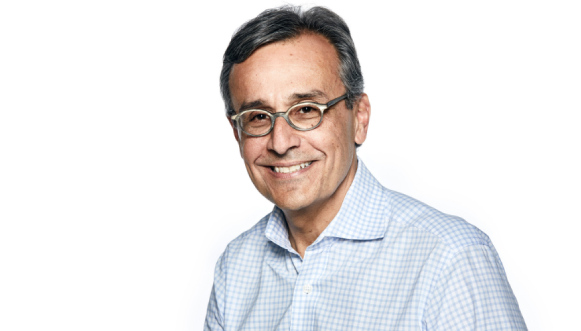
Antonio Lucio

Antonio Lucio, CMO at Facebook sat down with IRG Founder Marc de Swaan Arons for a ‘virtual fireside chat’ about corporate & brand narratives, purpose, and diversity.

Marc de Swaan Arons: “Antonio, It’s a huge honor that you can be part of the Humanizing Growth series offered by the Institute for Real Growth. Let me begin by asking what have been your biggest insights from the last few months?”

Antonio Lucio: “I think we have a combination of factors affecting our world today. Our times are unique – like nothing I have ever lived through before. What’s happening is probably closest to the upheaval during the 1960s when there was a lot of social change and polarization. During that decade, there were student revolts in Paris, student massacres in Mexico City, demonstrations and shootings in the US.

But I don’t think we have seen anything exactly like the present crisis because of the multiple layers of issues and its absolute global scale. I think it’s a really an important moment right now for us to reflect deeply as human beings on what our calling is as people and as business leaders.

It’s time for leadership. Given the pressures that we’re facing, our companies are looking for opportunities for growth. If there’s one word that should describe marketing, it’s ‘growth’ – and for some reason we have forgotten about it. Marketing’s reason for being is to drive growth by building brands that stand the test of time.

As CMOs, we own the consumer interaction and to achieve growth we need to have an obsession with consumer understanding. Recently, I’ve seen consumers change from week-to-week. The issue of COVID in different areas of the world has now shifted to racial injustice. The language required to connect with consumers has changed. I don’t think there’s ever been a bigger opportunity for our function than right now.”

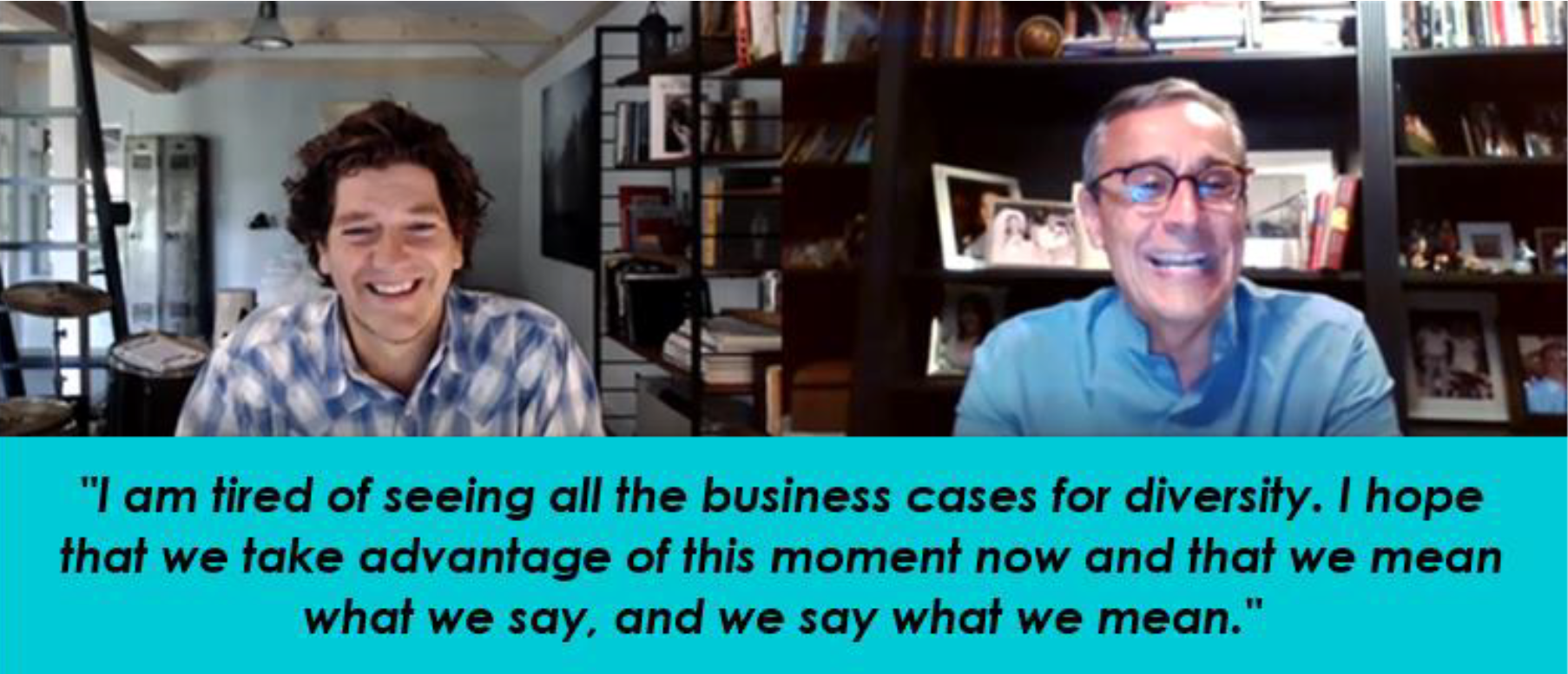
“I am tired of seeing all the business cases for diversity. I hope that we take advantage of this moment now and that we mean what we say, and we say what we mean.”

Marc de Swaan Arons: “We know that 90% of CMOs have their hearts in the right place. They want to do the right thing, but they just don’t know how. Can you talk a little bit about what you think needs to happen and how you started on that journey?”

Antonio Lucio: “There are no shortcuts. Any major transformation that I have been involved with, on both the business and the brand side, requires the same thing –holistic and systemic change. You need to set a very clear vision as to where you’re headed along with very specific objectives, programs, measurements and feedback mechanisms. And then you need to start all over again, year after year after year.

For some reason, we talk about diversity as if it was something other than a major transformation. But it is a business transformation. And the time to do it, given where we are in the world today and the need for racial justice, is now. There are many things that we can do. I know that during my lifetime I personally cannot fix the problem of racism in the world, but I think I have enough time to actually fix it within the context of our industry.

We know exactly what we need to do. I am tired of seeing all the business cases for diversity. Every year we have a new consulting firm that shows that diverse firms actually perform better. If they have diverse people on the board, they perform better. If they have diverse people in senior management, they perform better. We’ve seen these studies over and over again. We’ve all shared the best practices. We all share it in playbooks.

When we see ourselves in this historical moment that we’re living through today, I hope that we take advantage and start to mean what we say and we say what we mean.

It is time to hold each other accountable. Everyone should call each other out because it is critically important that we do. There are things that, as an industry we can do, and we must do. I’ve been a CMO a long time, so I have nothing but empathy and understanding for all the people that are on this call today and the pressures that you’re getting from all sides – from consumers, employees, boards and from CEOs to do something about the situation that we are in. I think it’s your responsibility to hold platforms like mine accountable – to ensure that there is brand safety and to ensure that there is civility.

Why? Because you are the brand stewards and that is probably the most important role that you’re playing today. You must demand that platforms like ours do significantly better. I’m working to do that with a lot of people inside the company. We must do better, but let’s be holistic about this because brand safety and brand values and civility should be applied to everyone. If I were not the CMO of Facebook, I would be saying the same thing. That is one thing that we all need to do. We need to hold Facebook accountable first, because it’s the biggest platform of all. But we need to apply the same pressure to every other platform, whether it is online or offline. It’s really important that we do.”

Step up and lead growth
As a marketing leader your connection to people – customers, colleagues and society– perfectly positions you to help your business recognize the needs of all these stakeholders and create value for them. So now is the time to step up to this growth leadership opportunity.

IRG100 Leadership Program will connect you to invaluable benchmarking, new insights and learning from thought leaders and peer practitioners to help you create the roadmap to unlock your company’s business growth potential.

About the Institute for Real Growth
The Institute for Real Growth (IRG) is not-for-profit and independent, supported by WPP, Facebook, Google, Kantar, LinkedIn, the NYU School of Professional Studies, the Saïd Business School at the University of Oxford, the Exetor Group, and Spencer Stuart.

Watch the video

Listen to the podcast

Read the transcript of the interview

  • Download PDF
  • Marc de Swaan Arons in Conversation with Antonio Lucio

    Friday 26th June 2020

    Marc de Swaan Arons: Thank you Antonio Lucio for joining us. It's a huge honor that you can be part of the Humanizing Growth series offered by the Institute for Real Growth. Let me begin by asking what have been your biggest insights from the last few months?

    Antonio Lucio: I think we have a combination of factors affecting our world today. Our times are unique – like nothing I have ever lived through before. What’s happening is probably closest to the upheaval during the 1960s when there was a lot of social change and polarization. During that decade, there were student revolts in Paris, student massacres in Mexico City, demonstrations and shootings in the US.

    But I don't think we have seen anything exactly like the present crisis because of the multiple layers of issues and its absolute global scale. I think it's a really an important moment right now for us to reflect deeply as human beings on what our calling is as people and as business leaders.

    It’s time for leadership. Given the pressures that we're facing, our companies are looking for opportunities for growth. If there's one word that should describe marketing, it’s ‘growth’ – and for some reason we have forgotten about it. Marketing’s reason for being is to drive growth by building brands that stand the test of time.

    As CMOs, we own the consumer interaction and to achieve growth we need to have an obsession with consumer understanding. Recently, I've seen consumers change from week-to-week. The issue of COVID in different areas of the world has now shifted to racial injustice. The language required to connect with consumers has changed. I don't think there's ever been a bigger opportunity for our function than right now.

    STAKEHOLDER CONVERGENCE

    Marc de Swaan Arons: You talked about consumer obsession and one of the things that we've been doing in our Leadership Program at the Institute for Real Growth is looking at the move away from shareholder primacy and consumer obsession and broaden that vision to a multi-stakeholder perspective. The idea is to realize that companies cannot grow unless they create value for all of their key stakeholders. Is that a way of thinking that you find yourself aligned with and do you see it becoming more prevalent?

    Antonio Lucio: This is not something new. It may be accentuated today, but the trend has been evolving for a number of years.

    One of the things that social media has done is bring about the convergence of all stakeholders – we are all reading the same things, we all have access to the same information. At the start of my career, the PR team was talking to a journalist and had a journalist-type of narrative. The policy team was talking to opinion leaders and politicians, and they had their own narrative. The HR team was talking to employees, and they too had their own narrative. And the marketing team was doing their own thing with their consumers. They all conducted different research, had different storylines and were only loosely tied at the very top level. But today, you cannot afford to do that.

    Today there is a convergence of all the stakeholders as they navigate through the digital world and interact through social media that really requires total integration of the corporate messages to ensure that the narrative is consistent. If you're inconsistent with any of those narratives, you're going to be called out within minutes. As a modern CMO, you have to use your influence to deal with policy and HR along with your clients and consumers to ensure consistency of your purpose and narrative.

    CCO AND CMO COLLABORATION

    Marc de Swaan Arons: : It seems that within B2B companies, it's the CCO that leads the purpose and narrative. But in B2C companies, it’s the CMO that takes the lead. And then there’s Keith Weed (Unilever) and Mark Prichard (P&G) who took responsibility for both.

    At Facebook, you have a very famous comms colleague, Nick Clegg, former communications head for the British Prime Minister. Can you talk a little bit about how that collaboration works?

    Antonio Lucio: There is a high level of collaboration that is required from Nick and I to ensure consistency of the narrative – whether he's talking to the EU or he's

    helping Mark Zuckerberg navigate the US Congress, or when we are dealing with opinion leaders around the world. To do this we work at two levels:

    First there is the corporate narrative and the corporate brand. When Facebook speaks as a corporation, there is complete alignment. What Nick is saying, what Mark is saying, any communication that the corporation publishes across its multiple channels– it’s all completely aligned, and we meet weekly to plan it together.

    However, when it comes to the individual brands or the individual apps like the Facebook app, the Instagram app, the Messenger app, WhatsApp, or even some of our services like Portal or Oculus – our narrative is more directly related to consumer communications. And that’s where the comms role comes into amplify that narrative. There is a very clear distinction between the things that we are doing completely together versus the corporate brand that we lead or the individual brands that they lead with our support. This distinction is critical.

    DEFINING CORPORATE PURPOSE

    Marc de Swaan Arons: You mentioned purpose quite early on. The story that I like to tell about you is when you joined Visa, how you went back to the roots of the brand by going to meet Dee Hock, the founder of the company to find out why he originally created it.

    By returning to the company’s origins, you found the kernels of the positioning of the brand. That’s how you also managed to get the company to rediscover its pride. As a marketer, when you look at company purpose, what is the role of the CMO? Because, of course, the CEO leads the company, but the CMO also has an important role.

    Antonio Lucio: What we have to do is separate corporations that have been around for a very long time from more recently founded companies. I'm working with Mark Zuckerberg, and this is the first time that I'm working in a founder-led company. It has its differences, but overall, I always start with the same approach. Why was this company ever invented? What was its purpose? What was the idea behind the company, behind the founder?

    In the case of Visa, I was fortunate that the founder was still alive and I had the privilege to meet him. I went to Seattle and spent five of the most meaningful hours that I have ever spent with anyone. In the end, the only thing that I had to do was actually take Dee Hock’s words, which were: “I want to create a universal currency for life and commerce.” That was what he was trying to do. When he started the company, if you wanted credit or you wanted to access funds, it was nearly impossible. Each bank had its own approach and issued its own cards. That

    meant you had to go into the bank, meet with a loan officer and he (it was usually a he) would have to pick up the phone and call the merchant etc. It was just incredibly inefficient. He came up with this concept which was a service center for all the banks and one unified brand that would democratize money.

    When I joined Visa, it was going to become a publicly traded company for the first time. It was going to become one unit as opposed to a separation of multiple units. So there was a need for a unified vision. I could have gone down the typical research route, hired a consultant and gone to the board with a beautiful written mission statement in flowery language, only to hear everybody say, “Oh well, I like it” or “I don’t like it.”

    But the moment that I came in with the words of the founder– it wasn’t an Antonio concept and it wasn't a concept that came out of an agency. These were the actual words of the founder. And they were incredibly powerful in bringing the company back together because our assessment then became: “What are the parts of the original vision that we want to keep and what are the things that we want to change?” That was a beautiful exercise that founded our new mission statement.

    In the case of Facebook, it’s very different. Mark is alive and he is going to be around for a very long time. So any questions, any issue related to his particular vision, he's there to answer. But even though Mark is there, the company has not had a consistent narrative and an ongoing dialogue with its multiple stakeholders. Facebook is probably one of the most misunderstood companies in the world and it's our fault for not clarifying that.

    My task and Nick’s has been explaining who Mark is and what the company stands for – whether you agree or disagree with the company is your decision. But at least you understand that when Mark talks about freedom of speech, the need for neutrality or about amplifying voices, he’s saying these things because he believes that they are better for society. These are principles that he very much believes in, and people need to understand where he's coming from so that they can understand the decisions that are being made. Whether people agree with them or not, it's important that a company’s position is made clear. But once again, it goes back to why the company was founded in the first place and what its vision should be. What parts of that vision should be kept, and which should evolve? And then energizing the company around that vision.

    PERSONAL PURPOSE

    Marc de Swaan Arons: : It's really nice how you are able to contrast your experience at Visa and Facebook because probably 95% of our participants are in roles where the founder is no longer there.

    You talked about purpose and of understanding the purpose driving the two founders of Visa and Facebook. Can I ask you a little bit about your own purpose?

    Antonio Lucio: : I believe that people who are grounded in a personal purpose are going to build purposeful brands – that’s integrity. At 44, I was a late bloomer to purpose, and it came out of personal challenges. At the time I was diagnosed with chronic depression and I had to put a pause on traveling. I was the head of marketing for PepsiCo International and was traveling like crazy and feeling jet lagged most of the time – like most of the people in this room.

    I had been running since I was 21 years old. I got out of university running – from Proctor & Gamble to Kraft to PepsiCo, just running, running, running.

    I came up with the idea that my role in life is to create environments where people working together can achieve extraordinary things while finding meaning and wellbeing.

    I was completely off-balance and unable to sleep, I was going through all sorts of physical and emotional challenges and I didn't know why. Then I had to seek help and I understood that it was a condition – chronic depression. I had to pretty much reground myself. The management at PepsiCo were amazingly understanding because I told them: “I can't travel this much anymore. I need time to reground myself. So if there's a job that you guys have that I can do while not traveling as much – great. If not, then I'm ready to move on, because I need to take care of this depression.” Taking care meant medication, therapy, a change of lifestyle, a lot more grounding and less traveling.

    I had been running since I was 21 years old. I got out of university running – from Proctor & Gamble to Kraft to PepsiCo, just running, running, running.

    At that time, I had to think about what I really wanted to do. After a lot of reflection and conversations with people close to me, I came up with the idea that my role in life is to create environments where people working together can achieve extraordinary things while finding meaning and wellbeing.

    If I'm not creating that environment, I'm out of purpose. If people are not working together and I'm not facilitating them to work together, whether it is family or work, I am out of purpose and I don't feel happy. if we're not achieving extraordinary things, things that we didn't think that we could do when we started, whether that's personal or professional, I’m out of purpose. If we're not finding meaning or we're not finding wellbeing, I’m out of purpose. These

    assessments became my guideposts for evaluating relationships, both personal and professional.

    During the last five, six years, my mission has remained consistent. What has to evolve right now? Am I going in the right direction to bring that mission or purpose to life? It has become clear to me within these last three to four months that my reason to live today, my reason for being during this last chapter of my corporate life, is to bring transformational change to the marketing and advertising industry and to make sure that diversity, inclusion and equality are really present around the world.

    That's what I can do. That's what I've been working on as a side job for a very long time. That's where I want to spend most of my time today. Hopefully I can do it within my current company, but if not, over time that's what I really want to do. I can bring a lot of value and experience to this transformational process. I believe that it is needed more than ever, given the historical moment that we're living in today.

    BUILDING DIVERSITY

    Marc de Swaan Arons: I would like you to talk a little bit more about that? We know that 90% of CMOs have their hearts in the right place. They want to do the right thing, but they just don't know how. Can you talk a little bit about what you think needs to happen and how you started on that journey?

    Antonio Lucio: There are no shortcuts. Any major transformation that I have been involved with, on both the business and the brand side, requires the same thing – holistic and systemic change. You need to set a very clear vision as to where you're headed along with very specific objectives, programs, measurements and feedback mechanisms. And then you need to start all over again, year after year after year.

    For some reason, we talk about diversity as if it was something other than a major transformation. But it is a business transformation. And the time to do it, given where we are in the world today and the need for racial justice, is now. There are many things that we can do. I know that during my lifetime I personally cannot fix the problem of racism in the world, but I think I have enough time to actually fix it within the context of our industry.

    We know exactly what we need to do. I am tired of seeing all the business cases for diversity. Every year we have a new consulting firm that shows that diverse firms actually perform better. If they have diverse people on the board, they perform better. If they have diverse people in senior management, they perform better. We’ve seen these studies over and over again. We've all shared the best practices. We all share it in playbooks.

    When we see ourselves in this historical moment that we're living through today, I hope that we take advantage and start to mean what we say and we say what we mean.

    It is time to hold each other accountable. Everyone should call each other out because it is critically important that we do. There are things that, as an industry we can do, and we must do. I've been a CMO a long time, so I have nothing but empathy and understanding for all the people that are on this call today and the pressures that you're getting from all sides – from consumers, employees, boards and from CEOs to do something about the situation that we are in. I think it's your responsibility to hold platforms like mine accountable – to ensure that there is brand safety and to ensure that there is civility.

    Why? Because you are the brand stewards and that is probably the most important role that you're playing today. You must demand that platforms like ours do significantly better. I'm working to do that with a lot of people inside the

    company. We must do better, but let's be holistic about this because brand safety and brand values and civility should be applied to everyone. If I were not the CMO of Facebook, I would be saying the same thing. That is one thing that we all need to do. We need to hold Facebook accountable first, because it's the biggest platform of all. But we need to apply the same pressure to every other platform, whether it is online or offline. It's really important that we do.

    LEADING THE TRANSFORMATION

    Marc de Swaan Arons: Could you talk a little bit about the playbook because CMOs want to know: What is my place? Where do I really start?

    Antonio Lucio: You need to take a holistic view. First, I control what I can control. Even if the rest of the company is not performing – success begets success. If you’re doing great, the other functions will align themselves over time.

    This means that the marketing team needs to be diversified – particularly in the senior roles. You should invite your agency partners to set their own targets and diversify, especially in senior roles with female and people of color as their priority. Not at the junior level, that's easy to do, but in senior roles. That's where you can impact the communication.

    Then you need to go into the production side of the house, behind and in front of the camera to ensure that you have representation there as well. Next comes adequate representation of the society in which you're participating around the world. The reality on the ground also needs to be in your communication.

    Naturally, you need to have measurements for all this. Within the US, we use the GEM score from the ANA along with the CIIM. At HP (I don't have enough data for Facebook yet) we were able to establish a direct correlation between higher GEM and CIIM scores and work that actually performs better. That's kind of the playbook. It needs to be led from the top. You drive your team composition, nobody else. But as a CMO, you also drive the requirements that you're making through your agency partners.

    Last year at Cannes, we had our five new partners and we said, “Okay, you want our business? This is what we need. We want to have the most diverse group of people in creative and strategy roles driving our business. And we'll keep score across the totality of the value chain.” We evaluate this diversity on a quarterly basis to ensure that we're making progress. That's the playbook right there.

    REALISTIC COMMUNICATION

    Marc de Swaan Arons: The need for diversity within teams is clear, but what about the brand content? The impact that brand communication has on society can be strong. What are your guiding principles in this area?

    I think for many years as marketers, we've had this total market focus, which means that we create ‘the average of the average of the average’ to create this single message that is directed to this hypothetical consumer that has nothing to do with the real consumers that are consuming our product.

    Antonio Lucio: : It starts with an obsession for consumer understanding and understanding the dynamics of the different groups that are present in a society. I think for many years as marketers, we've had this total market focus, which means that we create ‘the average of the average of the average’ to create this single message that is directed to this hypothetical consumer that has nothing to do with the real consumers that are consuming our product.

    It starts with consumer understanding which then translates into the actual brief. If you then have a diverse group of people across the totality of the value chain, the output is going to be significantly better. I've seen that happen, and I've been able to measure dramatic results when we were able to rid ourselves of stereotypes and depict consumers the way that they wanted to be depicted. I have to say that this has become critical in countries like the US, the UK, and France – countries that have a history of racial conflict. Understanding those dynamics and how to address them is no longer a ‘nice thing’ to do. It's a must. The brand and its content must be present in the culture in a relevant way.

    CHANGING ATTITUDES THROUGH BRAND COMMUNICATION AND ACTIONS

    Marc de Swaan Arons: At what point does the brand go a little bit against what the current thinking is, for example, what beauty looks like or what I should be aspiring to? When does the brand turn away from playing the game that perpetuates systematic racism? How do you even address a question like this?

    Antonio Lucio: When you're talking about this obsession for consumer understanding, you see today that the world has moved towards hyper nationalism. The pendulum has shifted from global to local and from local to community. I think that, at this moment, there is nothing more important than brands being able to connect with those local consumers on those particular

    terms. Nowadays, some brands are trying to project a global holistic view of the world that is not relevant whatsoever.

    As marketers, we have significantly more power than we think we do. There are three things that I think we need to double down on. First and foremost, we all have in our product portfolios, brands, marketing approaches, services and value chain issues that we should deal with. We have step forward and acknowledge that some brands are tied to the history of slavery, and we should eliminate them. But we also have multiple other categories that have had a history of prejudice or perpetuating stereotypes

    We also have brands, both in food and in industrial goods, where the supply chain is not clean. We are clear where we stand for values with regard to the Black community in the United States and in Europe, but we forget about those values when we talk about Africa and emerging markets. We have the power to actually address those issues holistically, just the same way that we have the power to tell Facebook and all the other channels in the world to “Get your act together.” We have the power internally to do that.

    The next thing is we have the power to drive the total ecosystem in terms of diversity, inclusion and equality. It's sickening to me that for many years as marketers we have engaged in cultural appropriation from Black, Hispanic or other world cultures when some of our senior leadership teams don't even have one Black member. Not one. And we’re there telling our brands to do one thing while internally we are doing something completely different. It's time that we take this seriously. And then the third thing is to make a commitment that when we're putting communication in the world that it is a representation of the people that we serve without prejudice, without stereotypes, just people the way that they want to see themselves.

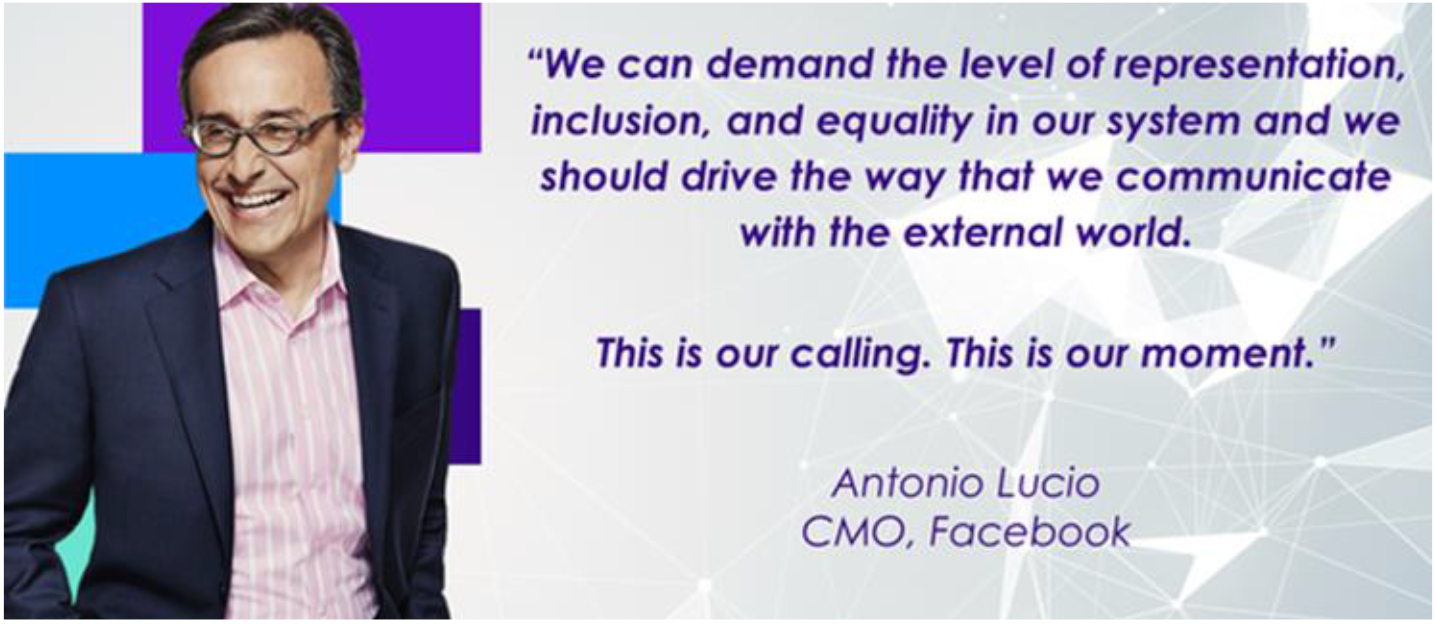
    We can do these things. We can demand brand safety. We can demand having the right product portfolio and the right supply chain. We can demand a just level

    of representation, inclusion, and equality in our system and we should drive the way that we communicate with the external world.

    Whatever time I have left in my corporate life, wherever I am, that's what I want to work towards, because that is something that we control. if we don't do this – shame on us, shame on me, shame on Antonio Lucio. That's how strongly I feel about this. This is our calling. This is our moment.

    Marc de Swaan Arons: In my conversation with Paul Polman, he said “You have no excuse. No one needs to give you space, you need to take the space.” What you're very clearly saying is that we, in marketing and communication, have an enormous impact in terms of shaping how people feel and think. And that impact can be a potential weapon for good, depending on how you wield it.

    Can we keep counting on you to help lead the other leaders, the younger leaders, the upcoming CMOs? To keep learning about the strategies that worked well for you and those that weren’t so successful?

    Antonio Lucio: Forever. I am deeply proud of our craft. I love what we can do. I think this is the opportune moment.

Never miss a webinar

Would you like to stay up to date on future IRG webinars?
Leave your email address to receive notifications