
Skip to content Join the IRG Community

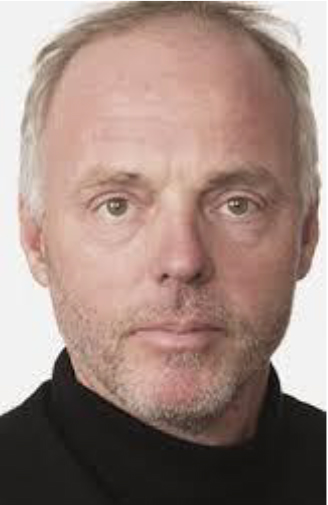
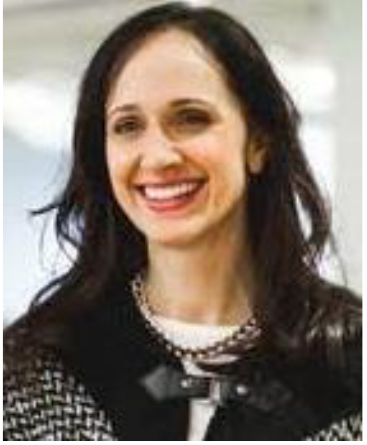
Jodi Harris, Miguel Patricio
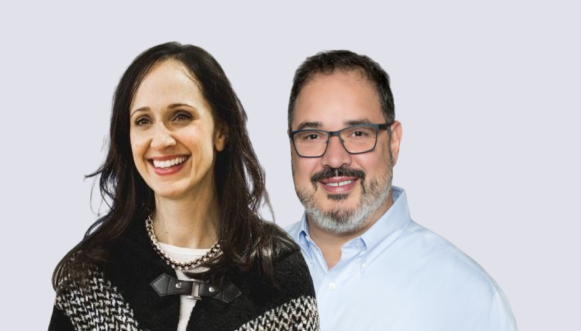

Miguel Patricio, CEO at Kraft Heinz and Jodi Harris, Global VP Marketing, Culture and Capabilities at AbInBev sat down with IRG Founder Frank van den Driest for a ‘virtual fireside chat’ about culture, capabilty, and empathic leadership. Here are a few quotes from the conversation.

Frank van den Driest: “I’m particularly pleased to welcome not one, but two guests for this session. Miguel, how do you see yourself as a leader? I’m asking because the trajectory that you made: climbing the ranks in marketing – being the CMO of the world’s largest beer company to becoming the CEO of the Kraft Heinz group – is inspiring to our viewers and to many CMOs. What is your secret sauce?”

Miguel Patricio: “I think it is hard to talk about ourselves as ‘leaders’ but I will try to answer the second part of your question, which is unfortunately related to the fact that we don’t have too many CEOs that come from the marketing part of the business. I don’t know why that is. The first thing you need, of course, is ambition. But on top of ambition, it’s really about believing that marketing is a key part of the business and being business-driven. Before becoming CEO, I was the head of two very important zones, North America and the Asia Pacific, and before that I was in marketing. But I wanted to manage a business and a zone and that gave me the experience to manage a big business and the necessary qualifications to become a CEO one day.”

“I think, in a consumer goods company, marketing is a must for any CMO to become a CEO. It is the natural path. Because marketing is the part of the company that really thinks and understands the future, that sets and drives the strategy of the company. Marketing is a big part of the work of a CEO in a CPG company. Even at ABI, for a long time, I was the only person with a marketing background on the leadership team. Today, half of the leadership team members all are from marketing. I think this has been an evolution.”

“My next battle is to get Kraft Heinz in the top three of creative companies”

Frank van den Driest: “During your stint at ABI, did you pave the way? Were you a role model for the board to see that we need more marketers on our boards? Or was it more that you inspired more marketers to strive towards becoming board members?”

Miguel Patricio: “I think both. I inspired the board, and I encouraged my people to have the ambition to get there. I think the company has really evolved. Another sign of that, and something I feel proud of, is that 10 years ago, we were afraid of creativity. ABI was a very efficient company, but being efficient is the opposite of being creative. Because to be creative, you have to take risks. We were risk-averse and so we launched a big program on creativity, which really helped us to progress. Today, there’s all these misunderstandings about our culture. But the truth is, according to Cannes, the number three company in creativity in the world is ABI. Number one is Burger King and number two is Nike. But that didn’t happen overnight. Five years ago, ABI was not even in the rankings. Now my next battle is to put Kraft there as well.”

Frank van den Driest: “Jodi, How do you think consumer behavior will change after COVID-19 and how will that impact your business? What insights and strategic adjustments have you done so far?”

Jodi Harris: “Interestingly, a lot of changes in consumer behavior that we’re seeing right now had already been slowly changing over the past few years. Of course, many more new behaviors are emerging as well. There are a couple that I can talk about. One is how people are socializing – we’re seeing many more intimate gatherings; people are meeting one-on-one even on Zoom or the Houseparty app. The level and depth of conversation that they’re having is much more intimate and meaningful, and we’re trying to understand the role that we can play in bringing people together, albeit at a distance.”

“We’re also monitoring very closely what’s going to happen in bars and restaurants. As governments and cities are starting to reopen, people are very hesitant to go back to socializing like they once did, especially in massive parties and clubbing. And we’re actually seeing a lot of that behavior being mimicked at home. In China, there’s a new phenomenon called e-clubbing. At ABI, we’re highlighting different DJs and people are gathering and drinking responsibly. So, we’re seeing smart drinking become a really big space for us to continue championing. We’ve taken that live-streaming idea and we’ve now scaled it across several of the other markets. In Brazil, we have a brand called Brahma, which basically broke the internet a couple of weeks ago because of a live-streaming event that they hosted by tapping into nostalgic music artists and acts and just giving people a reason to reconnect.”

About Miguel Patricio
Miguel Patricio is the Chief Executive Officer of The Kraft Heinz Company. Prior to Kraft Heinz, Miguel spent 20+ years at Anheuser-Busch InBev (AB InBev), where he served as part of the Executive Leadership team in various positions, driving organic growth and industry-leading margins. Miguel was the Global Chief Marketing Officer at AB InBev from 2012-2018. In this role, he developed and implemented a strategic playbook for global brands Corona, Budweiser and Stella Artois, accelerating organic sales growth which represented more than one-third of AB InBev’s organic growth and accounted for more than 20 percent of AB InBev’s 2018 year-end global revenues. Prior to that, he was AB InBev’s President of Asia Pacific from 2008 to 2012 and President of North America from 2006 to 2008. Before his career at AB InBev, Miguel held a variety of leadership positions at other global consumer packaged goods companies including Philip Morris, The Coca-Cola Company and Johnson & Johnson. He holds a degree in Business Administration from Fundacao Getulio Vargas in São Paulo.

About Jodi Harris
Jodi Harris is vice president of consumer strategy & insights for Anheuser-Busch, a wholly-owned subsidiary of Anheuser-Busch InBev. In her role, Jodi leads all aspects of U.S. consumer-centric strategy across marketing and sales for a broad portfolio of brands – most notably America’s best-selling beer, Bud Light, and iconic King of Beers, Budweiser – as well Michelob ULTRA, Stella Artois, Busch, Bud Light Lime Lime-A-Rita, Goose Island, Estrella Jalisco and a host of regional brands.

Watch the video

Listen to the podcast

Read the transcript of the interview

  • Download PDF
  • Frank van den Driest in Conversation with Miguel Patricio and Jodi Harris

    May 8, 2020

    Frank van den Driest: I'm particularly pleased to welcome not one, but two guests for this session, Jodi Harris, Global VP, Marketing Cultire & Capabilities- ABinBev and Miguel Patricio, CEO- Kraft Heinz.

    Jodi, let me start with you. Like me, you've been intrigued by what's happened during the past couple of months since COVID-19 hit us. What, for you, is the most significant insight/learning that you have discovered during these times?

    Jodi Harris: The one thing that I've learned is how incredible our own strength and resilience is as human beings. I think it's very easy to feel helpless inside, which at times we do. That’s part of being a human as well. But what’s really exciting is seeing the silver lining and taking this opportunity to do things we've never done before and to champion and help people in need.

    Jodi, let me start with you. Like me, you've been intrigued by what's happened during the past couple of months since COVID-19 hit us. What, for you, is the most significant insight/learning that you have discovered during these times?

    Frank van den Driest: Miguel, few will argue that a crisis is typically the accelerator of change. There's one particular trend or shift that we are very closely monitoring and that's the shift from the Milton Friedman approach which suggests: “There's one and only one social responsibility for a business and that's to engage in activities that increase profits for shareholders.” We seem to be moving towards an approach that is much more about long-term value creation for all stakeholders, not only the shareholders. Do you recognize this shift and what do you think of it?

    Miguel Patricio: I absolutely recognize that shift. Right now, my number one concern is with the safety of our teams. We are one of the industries (food) that have become absolutely indispensable at this time. We have 80 factories around the world and, from the beginning of this crisis, our number one responsibility has been to our teams. I’m very glad to say that morale in our factories and within our people has never been higher. Firstly, because they feel a big sense of purpose, and secondly because the company has put their safety ahead of everything else.

    We just announced our quarterly results, but I didn't talk to the media because I thought our financial results were less important at this time. I think the most critical issue is our people and our consumers.

    Efficiency is Key

    Frank van den Driest: One of your big shareholders is 3G, the investment firm that is known for aggressively managing costs, introducing zero-based budgeting (ZBB) and having a brutal focus on the delivery of financial results. That sounds very far from what we just talked about. What's the conversation you're having with your shareholders about this?

    Miguel Patricio: I think there's a common misunderstanding about ZBB. ZBB is not just about cost-cutting. Those companies that looked at ZBB as a cost-cutting opportunity had problems, not in the long term but in the midterm. Kraft Heinz was one of them. If you cut too much, your costs actually start increasing. ZBB is essentially about efficiency. The consequence of efficiency is cost reduction because you are doing things better every day. What we want is for every single employee to look at the company as if they owned it and to make the best decisions for the business. That's the best way to invest back into brands. If you have a very efficient business, then you can invest back into your brands and consumers.

    Cultivating a Culture of Real Growth

    Frank van den Driest: Jodi, we talk about the philosophy around growth and the role of the corporation. To what extent does the definition of real growth (long term, multistakeholder-oriented growth) determine the culture and capabilities program that you lead at ABI?

    Jodi Harris: I think like many companies, there has always been an obsession at ABI to be number one - number one in market share and in preference. That behavior is often what drives marginal growth, especially in stagnant categories and, unfortunately, beer is one of those. It leads to behaviors that are risk-averse or shortterm oriented, safe and bureaucratic. This is one of the things that we continuously fight against each day as a large CPG company. But when you set a trajectory that’s about leading growth for the category and the industry, then that sets a different tone for your people.

    As Head of Culture and Capabilities, our customers are our colleagues. We need to make sure we build the right capabilities to grow. We've learned a lot in a short period of time.

    Firstly, it's about operating with the growth mindset and making sure that we have the infrastructure that follows that. What does the team need? What resources do we need to either create or build to help our team grow? How can we address and remove their barriers, just as we would if we were building a brand program and addressing consumer and human truths? The second is around attracting and engaging strong talent, as well as partners. Our partners are equally important in the mix here. They need to be focused on growth and growing together. There’s a sense of collaboration and creating an environment where people feel empowered, feel heard. We try to create a place where creativity thrives and helps to drive that momentum.

    Lastly, it’s about being really obsessed with the consumer - innovating our portfolio, building internal systems that allow for a deeper understanding of people and their needs and addressing them faster than anybody else. If you don't open your mind to different perspectives, you’ll never learn and learning equals growth. We've cultivated that culture in the marketing organization because we believe that we are the gatekeepers to the consumer, to the outside world.

    The Journey from CMO to CEO

    Frank van den Driest: Miguel, how do you see yourself as a leader? I'm asking because the trajectory that you made: climbing the ranks in marketing – being the CMO of the world’s largest beer company to becoming the CEO of the Kraft Heinz group – is inspiring to our viewers and to many CMOs. What is your secret sauce?

    Miguel Patricio: I think it is hard to talk about ourselves as ‘leaders’ but I will try to answer the second part of your question, which is unfortunately related to the fact that we don't have too many CEOs that come from the marketing part of the business. I don't know why that is. The first thing you need, of course, is ambition. But on top of ambition, it’s really about believing that marketing is a key part of the business and being business-driven. Before becoming CEO, I was the head of two very important zones, North America and the Asia Pacific, and before that I was in marketing. But I wanted to manage a business and a zone and that gave me the experience to manage a big business and the necessary qualifications to become a CEO one day.

    I think, in a consumer goods company, marketing is a must for any CMO to become a CEO. It is the natural path. Because marketing is the part of the company that really thinks and understands the future, that sets and drives the strategy of the company. Marketing is a big part of the work of a CEO in a CPG company. Even at ABI, for a long time, I was the only person with a marketing background on the leadership team. Today, half of the leadership team members all are from marketing. I think this has been an evolution.

    Frank van den Driest: During your stint at ABI, did you pave the way? Were you a role model for the board to see that we need more marketers on our boards? Or was it more that you inspired more marketers to strive towards becoming board members?

    Miguel Patricio: I think both. I inspired the board, and I encouraged my people to have the ambition to get there. I think the company has really evolved. Another sign of that, and something I feel proud of, is that 10 years ago, we were afraid of creativity. ABI was a very efficient company, but being efficient is the opposite of being creative. Because to be creative, you have to take risks. We were risk-averse and so we launched a big program on creativity, which really helped us to progress. Today, there's all these misunderstandings about our culture. But the truth is, according to Cannes, the number three company in creativity in the world is ABI. Number one is Burger King and number two is Nike. But that didn't happen overnight.

    Five years ago, ABI was not even in the rankings. Now my next battle is to put Kraft there as well.

    CMOs as Super-connectors

    Frank van den Driest: I want to talk more about creativity. Jodi, one thing that struck me about your title (VP of Culture and Marketing Capability) is the word ‘marketing.’ Because I would guess that anything to do with culture would be across all functions and then anything to do with capability for marketers would definitely involve at least collaboration with other functions. How narrow is your remit? How broad are you allowed to go with it?

    “The role of marketing is really the role of the super-connector.

    We are the gateway to the consumer”

    Jodi Harris: It's quite broad, actually. Marketing is a key priority of our business strategy. That means leading growth by addressing people's needs with brands people love, but that also means results. We need to make sure results are impacting not only the short term, but also the long term. We talk a lot about that in the program. The role of marketing, as Miguel and I alluded to before, is really the role of the super-connector. We are the gateway to the consumer. Our job is to also connect the multiple disciplines within the organization to help them see the future and to help them understand for whom we are creating these products and services. This can help us to grow as a business. My team members are incredible partners with our sales team, the supply team, the logistics team, even the legal and corporate affairs team.

    I think what's really important to note is that the consumer is changing. Their needs and behaviors, especially right now, are accelerating. That means that we have to specialize in upskilling our people within marketing in a different way than the rest of the organization. We have to be two steps ahead. We do work very closely with other departments to leverage leadership competencies and technology systems with our solutions group, but we've got to really radiate out and challenge the organization to think differently and to go back to that growth mindset. My dream would be to broaden this, but we've got to start somewhere and generate the impact. We've been piloting this for two years in the US business. Now we're rolling this out globally and as a result, we've seen our employee engagement increase significantly, and we're seeing collaboration across multiple disciplines that we've never seen before.

    Inspiring Creativity

    Frank van den Driest: I'm interested in the role of leadership and creativity. How do you build a culture in which you reframe failure as an opportunity to learn? I think in many cases, one of the biggest blockers to creativity is shame and fear. I think

    there's a real role for leadership there. Can you talk about that from a personal point of view, where you have failed?

    Miguel Patricio: I have failed many times and would need more than an hour to talk about my failures! I think the most important role of a leader is to inspire the troops. Inspire people to go after different things, and part of this inspiration has to be about reducing the shame and fear.

    I'll give you an example. Last week I was in a call with one of our countries and they want to pursue a path on something that I think is wrong, but I didn't tell them not to do it. I told them to go for it, and let's continue to talk. I expect them to either to end up agreeing with me or changing my mind. You kill creativity by saying no. I always say, “Go ahead, change my mind.” Not because I’m insecure, but because I'm open all the time. I think that to talk about creativity, you really have to inspire your people and whoever is around you. To reduce the shame and the fear, you have to do it on a consistent basis.

    Frank van den Driest: In what way do you expect creativity to reignite growth at Kraft Heinz?

    Miguel Patricio: After this meeting, I'm sharing a strategy for the future with the team in the US. Creativity is a very important pillar of that, as we have to build it from scratch. But I think it's absolutely doable. It’s not rocket science; what’s important is patience. At ABI several years ago, we had a meeting with all the marketing leaders and our agencies, and I brought the CEO in. It was a week-long meeting to reflect about why we had so many cool brands (Budweiser, Stella Artois, Corona, etc.) but were terrible regarding creativity. We came out of that meeting with four things to do. First, we were afraid of being creative, because our leaders didn't like creativity. As marketing leaders, we had to promote people from within or to go to the market to change that. Second was that we were ‘safe.’ We had ‘safe’ agencies, so we changed agencies. The third was our processes. We were so process-oriented as a company that the processes were killing creativity. And the fourth was that we were not rewarding creativity. So we built a program that we call ‘Creative Acts’ that has been a way to reward people for being creative.

    I think that at Kraft Heinz, it's not going to be that different. We have these four problems as well, and we need to fix them. We need to inspire our people and to reduce the shame and fear and to build capabilities and to change the processes.

    Frank van den Driest: That’s really interesting. On this topic, I read that you have stopped innovation projects at Kraft Heinz at this moment in time. Why did you do this?

    Miguel Patricio: I believe that in a moment like this, consumers or customers do not want complexity. Stores are dealing with huge complexities right now. They have less people working because many are in quarantine and, in certain segments, volumes have increased dramatically. Stores, therefore, want to reduce the complexity, so we reduced our number of SKUs considerably. For that reason, at the moment, they

    don’t want innovation launches. That doesn't mean we don't think there's a role for innovation at the moment. It is a time to be creative, but the difficulty we have right now is that our R&D teams are having to develop products from their kitchens and homes because they are not in the labs. That concerns me in the midterm.

    How COVID-19 has Changed Consumer Behavior

    Frank van den Driest: How do you think consumer behavior will change after COVID19 and how will that impact your business? What insights and strategic adjustments have you done so far?

    “A lot of changes in consumer behavior that we're seeing right now had already been slowly changing over the past few years”

    Jodi Harris: Interestingly, a lot of changes in consumer behavior that we're seeing right now had already been slowly changing over the past few years. Of course, many more new behaviors are emerging as well. There are a couple that I can talk about. One is how people are socializing - we're seeing many more intimate gatherings; people are meeting one-on-one even on Zoom or the Houseparty app. The level and depth of conversation that they're having is much more intimate and meaningful, and we’re trying to understand the role that we can play in bringing people together, albeit at a distance.

    We're also monitoring very closely what's going to happen in bars and restaurants. As governments and cities are starting to reopen, people are very hesitant to go back to socializing like they once did, especially in massive parties and clubbing. And we’re actually seeing a lot of that behavior being mimicked at home. In China, there's a new phenomenon called e-clubbing. At ABI, we're highlighting different DJs and people are gathering and drinking responsibly. So, we're seeing smart drinking become a really big space for us to continue championing. We've taken that live-streaming idea and we've now scaled it across several of the other markets. In Brazil, we have a brand called Brahma, which basically broke the internet a couple of weeks ago because of a live-streaming event that they hosted by tapping into nostalgic music artists and acts and just giving people a reason to reconnect.

    Miguel Patricio: Right now, we’re concerned with our employees, not only the ones that are on the front lines, but the ones that are at home, especially with regard to mental health. We started producing content ourselves and for our people. Yesterday I cooked for my team and I had 3,000 people cooking with me. I think right now, this is critical. People really appreciate that we are bringing external speakers to talk about different things to keep them entertained and provide the human touch that is so critical at this moment.

    The CMOs Role in Digital Transformation

    Frank van den Driest: I'm really interested in the role of the CMO in digital transformation. In many companies, it's CTO led, sometimes it’s the COO, and neither one brings the kind of human-centricity that a CMO would. Can you talk about that process in ABI?

    Jodi Harris: I’ve actually been very involved. I think that digital has enabled us to move closer to what's happening out there with consumers, the public and society, and it's helping us learn a lot faster. There's a huge upside to this. In the US, we have a consumer panel of around 6,000 people that we tap into daily. Then you couple that with data (our partners are huge in this), and we’re learning that data has become a enormous asset for getting closer to the consumer. It's really marrying the data-driven approach with empathy. When a company can do that, well, that's powerful.

    Creativity at All Levels

    “The idea that companies are either efficient or creative shouldn't exist. I want to build a company that is very strong on both sides of the brain”

    Miguel Patricio: I want to complement what I was saying about creativity before, because I was talking from a marketing angle, but I think that the ultimate goal of a company is to bring creativity to all areas of the company with the exception of accounting, safety, and quality. I think that everybody can be more creative. The idea that companies are either efficient or creative shouldn't exist. When I look at CPG, normally I see companies that are very efficient or very creative. I think that's the big task for companies in the world, to be strong in both. That's definitely what I want. I want a creative company, but I want an efficient company as well. As a CEO, I want to build a company that is very strong on both sides of the brain.

    The Role of the CGO

    Frank van den Driest: We’ve seen an interesting pivot of appointing a Chief Growth Officer above the CMO and then later changing back. How do you view the growth responsibility of a CMO, and could you see it making sense to appoint a CGO above a CMO?

    Miguel Patricio: In my mind, the CGO is the evolutionary result of a CMO. Growth needs to be led by the CEO, but alongside a right-hand person who has a marketing background. I see companies that have marketing on one side and strategy on the other. That doesn’t make sense to me, it weakens the role of marketing within the company. For me, having a CGO makes it clear that we as a

    company are seeking growth and that this person is helping me, as the CEO, define the strategy to get there.

    Final Guiding Principles

    Frank van den Driest: Do you have guiding principles that are aligned with the purpose of the company that provide direction and give people the freedom to move fast?

    Jodi Harris: At AB InBev, it's called “Dream, people, culture.” They are the principles by which we live by as a company. One of the key benefits is collaboration. Our company is unique in that we are a big global CPG organization, but we really operate internally and externally at the local levels with our communities and our partners. Never before have we seen local and global levels working together in concert to achieve amazing programs at the speed of light. I think one of the silver linings coming out of this crisis is the best practices that we're generating. It’s not like case studies written on a PowerPoint presentation. It's shared learnings that keep us rolling.

    Frank van den Driest: It’s very much what we’ve been doing today. I want to thank you both for being open and addressing all the questions, sharing what you have learned and also being honest about the challenges you still see ahead.

Never miss a webinar

Would you like to stay up to date on future IRG webinars?
Leave your email address to receive notifications