

Skip to content Join the IRG Community

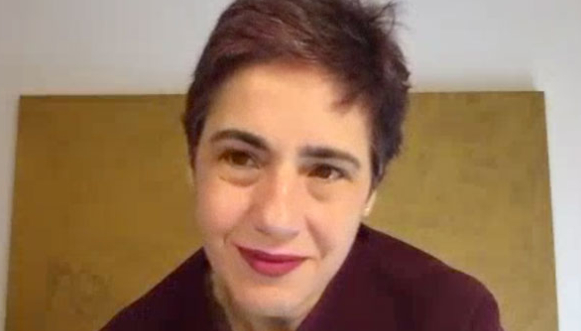
Silvia Lagnado

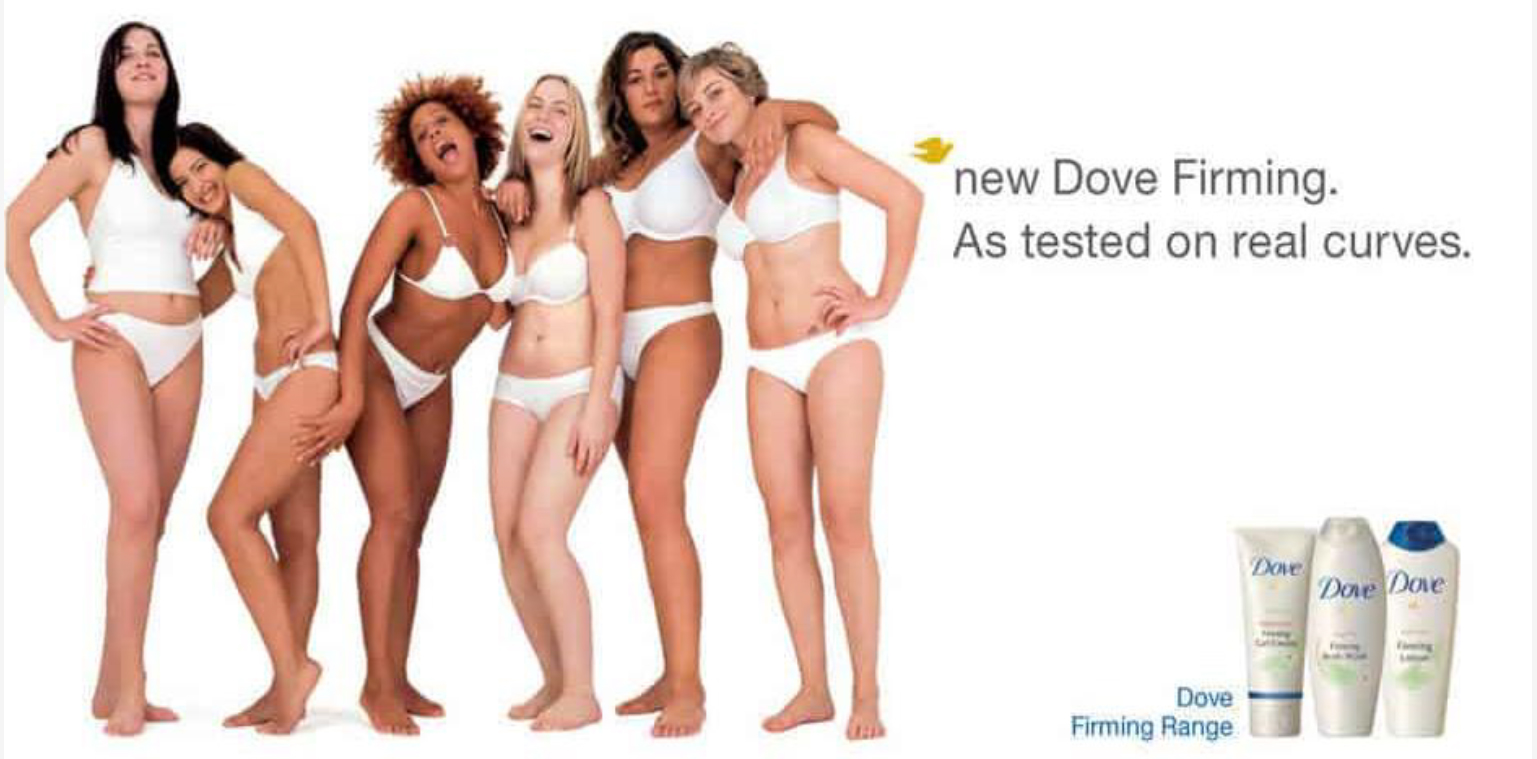
Back in 2000 Sylvia Lagnado was appointed as Unilever’s very first global brand director on Dove, one of its most important brands. She was instrumental in starting the worldwide Dove Campaign for Real Beauty, which was recently awarded the “Best Campaign of the Past 20 Years” by the PRWeek U.S. Awards. Sylvia then went onto become the Chief Marketing Officer of Bacardi and then the CMO of McDonald’s Global. She is now the Chief Sustainable Growth Officer at Natura & Co.

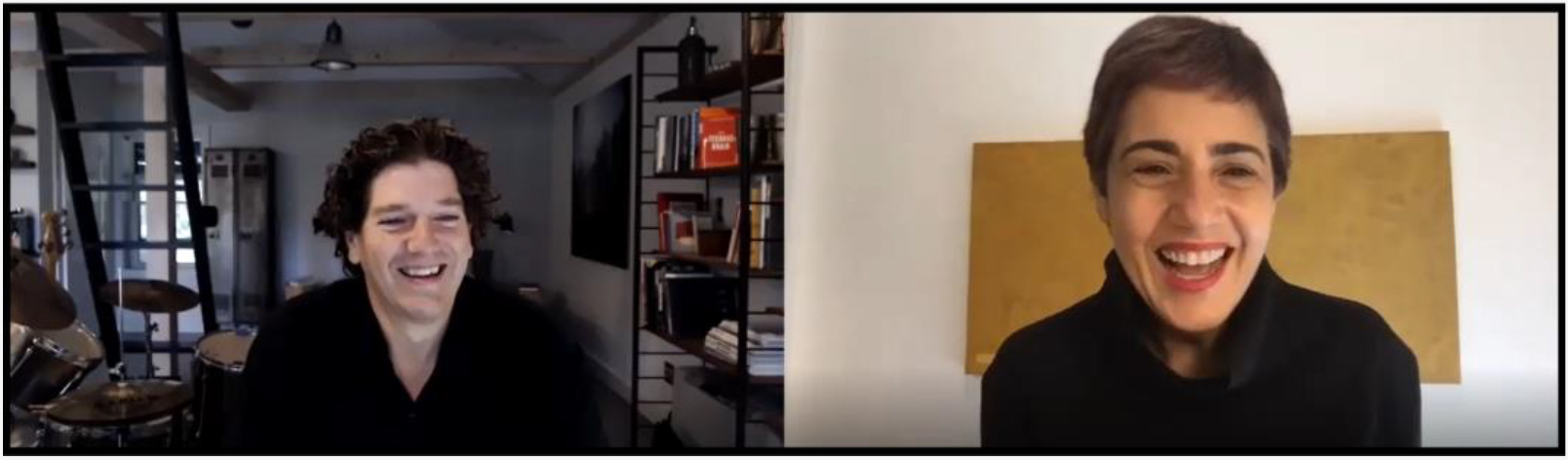
As part of the Humanizing Growth Series, Sylvia sat down with IRG Founder Marc de Swaan Arons for a ‘virtual fireside chat’ discussing what it takes to inspire the organization to drive sustained purposeful growth.

Marc de Swaan Arons: Dove probably put ‘Purpose’ on the global marketing map. All conversations lead back to Dove Real Beauty as it was the first huge global campaign. What do you consider to be your purpose, and how closely was it interlinked with Dove’s purpose?

Silvia Lagnado: I’d say two beliefs strongly guide me. Firstly, what I think is right, fair and true is the choice I’ll always make. I’ve had moments in my career where that cost me, but I’ve also had moments in my career where that was the breakthrough. I found that it’s better to stick with your principles because it helps you to stay at peace.

My other belief is in being content. I practice being happy with what I have. Granted, it’s partly easy because I’m so lucky- I have so much. But I also practice contentment when things are about to shake me or make me very unhappy. I do this by changing as I’m very comfortable with change. Part of the reason I’m very comfortable with change is because I always go back to the state where I’m feeling relaxed and happy and content with what I have. These are the two attitudes that guide me.

Marc de Swaan Arons: Can you talk about how you created a purposeful brand at Dove for all types of women in a world where executive committees weren’t diverse?

Silvia Lagnado: It does start from the search for the truth and the need to be authentic on a personal level. I had worked with the Dove brand before I took over the leadership of the brand globally. The testimonial campaign had been very successful, but it had started to become wallpaper.

So, we went on a search for a new refreshed positioning that was true to the brand’s history, but that one would have more resonance. That’s when we found and fell in love with what would become the Campaign for Real Beauty. The idea was to become a beauty brand- from the soap shelf to the beauty shelf- which we needed to do because we wanted to be successful in health care and skin care, etc. That’s where courage comes in. You convince yourself that something can work, not that is going to work, but that it can work.

I just became obsessed that we had to make it happen. A lot of people thought that it was crazy, that there’s no way you can debunk stereotypes and beauty and be a beauty brand. There were a few people to convince. So we started to play some dirty games like ‘grab them by the heart.’ This is the one story I have to tell everybody.

The tactic came out during a brainstorming session. The question was: What can we do to convince senior people to get them on board? Somebody had the idea- Why don’t we make a film of the daughters of these senior ‘pale-male-stale’ men? Why not ask their daughters what they like about their bodies and what they don’t like? It turned out to be a stunning super-rough film that featured their daughters without them knowing. We used that film quite strategically and tactically in meetings to open up the conversation about positioning and intent.

Marc de Swaan Arons: These senior executives are intellectually judging the concepts that are being presented for a new positioning for one of their key brands using just one side of their brain. Suddenly there’s a film featuring the people they love most, talking about the aspects of their bodies that they don’t like. I’ve been told by many people in the room how tears ran down people’s cheeks. It’s a fantastic example of courage.

“We can’t build brands the way we used to. There is so much more to learn and more experts to work with”

Marc de Swaan Arons: You’ve been the global CMO of Bacardi, McDonald’s, and now Natura & Co. How do you see the role of a CMO?

Silvia Lagnado: So much has changed but, at the core, very little has changed. I think the role of the CMO is to remember that companies and brands get built by stories and products that manifest the story. The stories are coherent and address a need or inspire people to use the product for their own affirmation, their own needs, functions and definitions of who they are.

I think that is at the heart. And for me, obviously, the world is now more complicated primarily because of technology. You can’t build brands the way we used to. The response that you get is more important than the stimulus that you create. Media is incredibly complicated, and if you don’t use data well, you fall behind because someone else gets better sites where there’s behavioral or psychological insights based on the data. There’s so much more to learn and more experts to work with. But the heart of what matters remains – the theory about how brands and businesses are built and our practicing that theory.

About the Institute for Real Growth
The Institute for Real Growth (IRG) is not-for-profit and independent, supported by WPP, Facebook, Google, Kantar, LinkedIn, the NYU School of Professional Studies, the Saïd Business School at the University of Oxford, the Exetor Group, Salesforce, and Spencer Stuart.

Watch the video

Listen to the podcast

Read the transcript of the interview

  • Download PDF
  • 1

    Silvia Lagnado in conversation with Marc de Swaan Arons

    July 17, 2020

    Marc: Today I am joined by Silvia Lagnado. Before we start our conversation, I want to give you a brief background of her impressive career. In 2000, Silvia was appointed as Unilever’s very first global brand director on Dove, one of its most important brands. She was instrumental in starting the worldwide Dove Campaign for Real Beauty, which was recently awarded the “Best Campaign of the Past 20 Years.”

    Silvia then went onto become the Chief Marketing Officer of Bacardi and then the CMO of McDonald's Global. She is now, not Chief Marketing Officer, but Chief Sustainable Growth Officer at Natura & Co. We will touch upon the knowledge and experience she gained along her career journey. But perhaps we should start with where we find ourselves now. You've been observing all the recent events from Brazil, a country in the news a lot. As you look at what has happened during the last three or four months, what are your most profound observations and most important learnings?

    Silvia: It's been incredibly intense. I took on a role that was meant to have a medium to long-term outlook. My role as Chief Growth Officer is kind of in fashion, and my boss, the CEO of Natura & Co, wanted to have a CGO on board. We decided to call the role ‘Sustainable Growth Officer’ because Natura (the founding company for the group,

    acquired Aesop a few years back, then the Body Shop and this year completed the acquisition of Avon) was founded with this deeply Page 2 of 13 rooted belief that it is possible for brands and companies to make a difference - it’s almost not just consumer-driven but rather humanity-driven. And the founders of Natura had this dream that they could make a dent in the world in a positive way either by fixing or having an impact on big issues - like the stressful relationship that many women have with time. Take, for example, what happens to children upon birth. If mothers massage their infants after they are born, it can have an incredible impact on the future direction of the child.

    Another example is the impact we can have on the Amazon forest. This is a massive topic of passion for the group as we do a ton of business in product terms, but also activities protecting and supporting the Amazon. So it's a group that is formed with the idea of making a difference in the world. And through Natura’s recent acquisitions, we were looking for like-minded companies. I came to the role of Sustainable Growth Officer to work out how we could sustain that philosophy so that the company could evolve and grow and maintain its ideas in everything that we do.

    But back to your question… Suddenly I arrived in São Paulo. And one of the things that I have to take care of – beyond ongoing topics like what's going to happen to technology and digital in the group, to brands, and to sustainability – is internal and external communications. When I took the global role at Dove, you helped me so much to see the importance of internal communications and I learned a ton, but in terms of external communications, I really hadn’t dealt with any of it since I’d been in marketing for so many years. And I had zero experience internal communications in a time of crisis. I was terrible at it, and I had to put in so much effort! So, I was exhausted and tired but also challenged and busy and doing things that I had never done before. But the most important thing - that was such an amazing surprise - is that I work in a company where it's for the good of everything. Everybody is meant to come in every day with their heart, with their good intentions, It's part of the culture. It's part of its DNA. It's just been incredible to see how much is possible to get done despite all the complications and crises.

    How, in just days, it is still possible to innovate, strategize, launch, and change things. I guess my biggest learning has been how much is possible – the speed and the quality and the intensity. People just seem to show their best selves. I've been amazed how caring and compassionate people have been. It’s been incredible and enjoyable – even joyful – to discover how much we can do together. I think that's been my biggest learning.

    Making a Difference in the World

    Marc: A lot of our IRG participants have shared similar stories about how (during the pandemic) they’ve been able to achieve in a matter of weeks, accomplishing things that usually take 10 years to complete. This is something to explore because it sounds like we have now a window of opportunity.

    Marketers are the company’s conduit to the outside world. We have first-hand knowledge of the opportunities that are available to the company through our deep understanding of consumers. But people inside the company have to be willing to listen. And that's very often not the case, either because they have other priorities or other stakeholders that they think are more important. Now suddenly we seem to be in a world where, for most companies, the senior leaders are again listening and saying, well, everything's been shaken up. What are the new priorities? It strikes me, that they may actually learn from a company like Natura, which has for such a long time – maybe always been – focused on that. You were a board member of Natura before you actually decided to step into an executive role again. Can you talk about why Natura and briefly about the history?

    Silvia: Before this role, I’d been on the board of Natura for about five years. With the acquisition of Avon, we’re now the largest personal care company in Latin America - ahead of all the other big players in market share and value market share. It’s always been big and well-known in Brazil and increasingly so in Latin America.

    The company was founded 50 years ago by Antônio Luiz Seabra, an incredible man who said, “I don't want to talk about EBITDA and I don't want to talk about share. I want to talk about the difference we're going to make in the world.” That was fifty years ago. Natura was founded to make a difference. In 1969, the company was already obsessed with its impact on the planet, on the environment and society. What the founder said to me when I spoke to him a couple of days ago is that, when he was in New York City and saw the Dove Billboard Campaign for Real Beauty, he felt profound happiness. He said, “I feel so strongly about that mission, that I don't care who does it. If a competitor does it, fine. If I cannot get out of Brazil, out of Latin America to do it, and someone can do it globally, fine.” That view extends to our entire planet.

    We make sure that we buy our ingredients straight from the local Amazonian people. We try to help those communities make more money than they would make from chopping down trees, and, in that way, we help to preserve the biodiversity of the region. If that’s our choice, then that's what we're going to do.

    Its about finding new ingredients that have beneficial properties that we can buy and they can sell. This strategy will keep the forests standing as opposed to being chopped down. It's very special. We all wish that we that we could be leading our lives like that professionally and personally. And I just couldn't resist when the offer came as I always wanted to join them in Brazil. They always had this idea, they’re very humble, but they had this idea that it could go beyond Brazil and Latin America.

    As part of that ambition they bought Aesop a few years back, which is a phenomenal company with incredible principles, incredible values. And when the Body Shop came up for sale, which had been founded by Anita Roddick, this amazing woman we all admired and adored, we wanted it. We shared that spirit of fighting for a more beautiful, fairer world. And Avon also has a lot of synergies. As a company, it has this incredible commitment to women -- to fighting breast cancer, standing up against domestic violence, and promoting women's independence. So that's who we are now as well.

    2

    INTERLINKING PERSONAL AND 2 COMPANY PURPOSES

    Silvia: I’d like to go back to the personal level and unpack a little of your journey. Can we return to the moment that ultimately led to the billboard in Times Square and your role at Dove? Because Dove probably put ‘purpose’ on the map. As you said, Natura was doing it, but Dove put it on the global marketing map. All conversations lead back to Dove Real Beauty. It was the first huge global campaign. Could you also talk about you and your own purpose? How closely was your purpose interlinked with Dove’s? What do you consider to be your purpose?

    Marc: I’d say two beliefs strongly guide me. Firstly, what I think is right and fair and true is the choice I'll always make. And I've had moments in my career where that cost me, but I’ve also had moments in my career where that was the breakthrough. I found that it’s better to stick with your principles because it helps you to stay at peace.

    My other belief is in being content. I practice being happy with what I have. Granted, it's partly easy because I'm so lucky - I have so much. But I also practice contentment when things are about to shake me or make me very

    unhappy. I do this by changing as I'm very comfortable with change. Part of the reason I'm very comfortable with change is because I always go back to the state where I'm feeling relaxed and happy and content with what I have. These are the two attitudes that guide me.

    The Power of Courageous Storytelling

    Marc: Groucho Marx once said, “Those are my principles and if you don't like them, I have some others.” All kidding aside, we're talking about real consequences. Could you talk about how you actually created a purposeful brand for all types of women in a world where executive committees weren't diverse. Talk a little bit about the engagement strategy, the courage it took.

    Silvia: It does start from the search for the truth and the need to be authentic on a personal level. I had worked with the Dove brand before I took over the leadership of the brand globally. The testimonial campaign had been very successful, but it had started to become wallpaper.

    So, we went on a search for a new refreshed positioning that was true to the brand’s history, but that one would have more resonance.

    That’s when we found and fell in love with what would become the Campaign for Real Beauty.

    The idea was to become a beauty brand - from the soap shelf to the beauty shelf -which we needed to do because we wanted to be successful in health care and skin care, etc. That’s where courage comes in. You convince yourself that something can work, not that is going to work, but that it can work.

    I just became obsessed that we had to make it happen. A lot of people thought that it was crazy, that there's no way you can debunk stereotypes and beauty and be a beauty brand. That's not how the beauty category works. It works with aspiration. There were a few people to convince. So we started to play some dirty games like ‘grab them by the heart.’ This is the one story I have to tell everybody.

    The tactic came out during a brainstorming session. The question was: What can we do to convince senior people to get them on board? Somebody had the idea - Why don't we make a film of the daughters of these senior ‘pale-male-stale’ men? Why not ask their daughters what they like about their bodies and what they don't like? And it turned out to be a stunning, little, superrough film that featured their daughters without these guys knowing. We used that film quite strategically and tactically in meetings to open up the conversation about positioning and intent.

    Marc: We talk about courageous and inspiring storytellers. But imagine this setting - the executive committee of a corporation with $50 billion in revenue and more than 200,000 employees. The senior executives are intellectually judging the concepts that are being presented for a new positioning for one of their key brands using just one side of their brain. And suddenly there’s a film featuring the people they love most, talking about the

    aspects of their bodies that they don't like. I've been told by many people in the room how tears ran down people's cheeks. It's a fantastic example of courage.

    Creating a Global Brand Across Countries

    Marc: I want to zoom out a little bit to your role, not just as a personal leader, but as a CMO, or in this instance, a global brand leader. You've got lots of countries trying to bring to life what you have defined as a core purpose for a brand. They're trying to bring it to life with local relevance but, at the same time, maintain a global consistency that leverages and builds on the strength of the brand.

    Almost every global brand that I've worked with over time has had these very difficult periods when the local teams are inspired by the words, but they just can't get it right. You’ve got a year or two when different countries are doing different things. Real money is being spent on campaigns and many of them fall flat on their face until finally someone says, “Eureka! We've got it.”

    How did you, as you started to build the global community, build that sort of confidence in the whole group while they were figuring this out, but weren’t necessarily on the right path? How do you bring people along on the journey?

    Silvia: As an engineer by training, my strategy tends to be to do a ton of homework and talk to a lot of people. I'm always curious to hear as many points of view as possible. I see many people not asking enough questions, because they don't want to get confused and they can't deal with multiple diverging views. Somehow my brain can deal with that and then say: OK, I've heard all that, but it is not what I think. If your brain doesn't work like that, and a lot of people's brains don’t, then you need to hang out with people whose brains work that way.

    I do think it's really important to listen and to be curious. To hear why it would work and why it wouldn't work, and then to always have a point of view. Once I have a point of view, then my conviction kicks in and I'm unstoppable.

    “We can’t build brands the way we used to. There is so much more to learn and more experts to work with”

    THE ROLE OF THE CMO

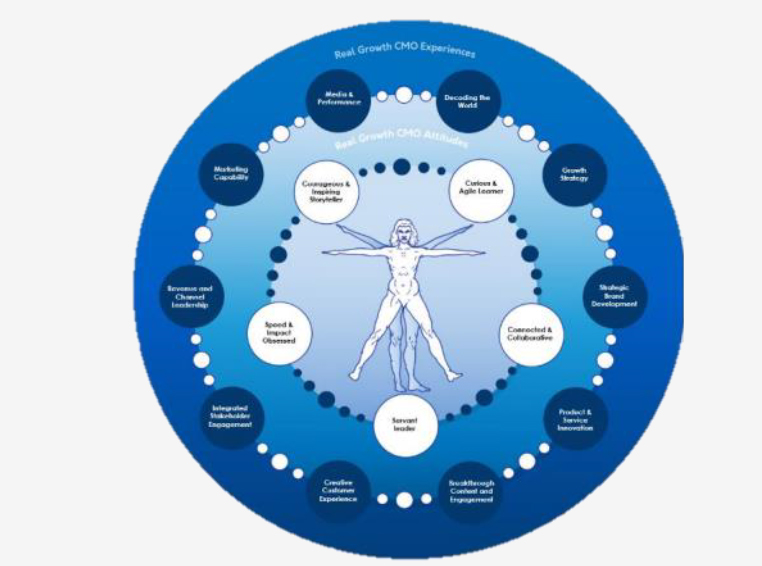
    Marc: Listening to you now, I see that you have beautifully brought together aspects that we have captured in IRG’s ‘The da Vinci Growth Profile.’ You've been the global CMO of Bacardi, McDonald's, and now Natura & Co. How do you see the role of a CMO? How has it evolved? How is it evolving? What the role of the CMO?

    Silvia: So much has changed but, at the core, very little has changed. I think the role of the CMO is to remember that companies and brands get built by stories and products that manifest the story. The stories are coherent and address a need or inspire people to use the product for their own affirmation, their own needs, functions and definitions of who they are.

    I think that is at the heart. And for me, obviously, the world is now more complicated primarily because of technology.

    Future CMO Opportunities

    Marc: Do you think, with companies desperately trying to understand the new COVID reality and the place that they should claim and play, that there's a bigger role for CMOs now and in the future?

    Silvia: I'm sure everybody's gone through the same process. Initially, at least for us, COVID was just about crisis management. I think most companies did the same thing and put people first. I think everybody was touched and scared. It’s a crisis that unites everybody and helps us to confirm that what matters most is our people.

    I wouldn't say that I had a bigger role than everybody else in bringing humanity back into the equation. I think we all did. And I don't think anybody was saying, “Oh, the CMO, the marketing people were the ones responsible for bringing the humanity.” I would say that in a way, everybody took the same role in terms of asking: “What about the people?” It wasn’t H.R. alone doing it. It was everybody doing it.

    You can't build brands the way we used to. The response that you get is more important than the stimulus that you create. Media is incredibly complicated, and if you don't use data well, you fall behind because someone else gets better sites where there's behavioral or psychological insights based on the data. There’s so much more to learn and more experts to work with. But the heart of what matters remains – the theory about how brands and businesses are built and our practicing that theory.

    In the second phase, at least for us, we said, “OK, so what about the future? What are the trends? What's going to be different?” This second phase was a phenomenal and incredibly exciting space for everybody - and science and marketing were coming in with that point of view or strategy.

    Then we had people coming in and telling us how the work was going to be different. We had to answer questions like: Are we going to open a new warehouse to pick up ecommerce orders? Close the stores and open more social-selling tools? How is the world going to be different? It's very exciting. In most companies, the CMO and the Insights team now sit center stage and that's a really nice opportunity.

    4

    BUILDING A PILLAR OF 4 COMPANY DIVERSITY

    Marc: We are still very much facing COVID around us. But then in a number of markets and especially in the US, we've seen the discussion of inequality and racism flareup. Diversity questions are right back on the agenda. In many ways, this was a very natural next step. Inclusivity is something that I believe hits your agenda right at the moment – I’d love to hear you to talk about that.

    Marc: At that time, we were just finalizing our ‘Commitment to 2030 on Sustainability’ - the pillars that represent our commitments are incredibly aggressive. One is net zero carbon and protecting the Amazon, another is full circularity of our products and packaging within 10 years, but the middle one is the people pillar and we called it: “We will defend human rights and be human-kind.” At the time we were having discussions about the targets and metrics and we had just decided to go further than we had initially thought, especially on inclusion and diversity. This company already has an incredible percentage of female employees. We’re already 50:50 across the company and very close to equity of pay for women. There is a gap to close, but we're going to close that very quickly.

    On diversity, Natura had already accomplished incredible work with disabled people and had set a target to employ 10 percent of the workforce with disabled workers. We have already gotten very close to that target. To set further diversity targets we decided to use those metrics outlined for B-Corps (Natura was the first public company to become a B-Corp). B-Corp certifications define the diversity metric in very ambitious terms. To get the high score, you have to have 30 percent of your people from underrepresented groups. And we decided to make that our goal.

    We also decided to set an even more difficult goal. We would like to see the same 30 percent from underrepresented groups to enter management within ten years. We consider underrepresented groups to be whatever groups are relevant in the particular country.

    Marc: Stories like yours and many of the other stories that we've had the privileged of hearing during this series are about how you, as a company, find your story and purpose around human-centricity. Without a doubt, it’s inspiring to hear how each of your brands is doing just that. I want to say a big thank you to everyone and especially to you, Silvia. Thank you very much.

Never miss a webinar

Would you like to stay up to date on future IRG webinars?
Leave your email address to receive notifications