THE MEANING OF GROWTH
F Hello, Ramon. Where are you and can you
describe in one word how you feel at this very
moment?
R I'm in Connecticut, with Maria, my wife. We’ve
been in our home here, for quite some time.
I feel quite optimistic - that's how I would describe my
mind state today. I think the reality is that society is
evolving very quickly to close to normality here in the
US. But I've been traveling already a little bit in the last
few months, and I see light at the end of the tunnel in
our associates and in our people everywhere. And I'm
hopeful people have reflected over this past 18 months
and that they are moving to better spaces and willing
to make a difference.
F Let's start talking about Humanizing Growth - if
you hear these words, what comes to mind?
What are your spontaneous associations?
R Let me start with growth. Growth is essential to
what we do as organizations. Our wealth
creation is linked to growth and if you look at the
consumer goods industry, there was a phase, maybe a
few years ago, where some investors favored what I
would call non-growth models, cost reduction models.
Fortunately, everybody has realized that growth is the
essence of what we do in business and is the only way
to have a sustainable company that creates jobs and
has societal impact. So, growth is essential.
I like the way we're qualifying growth through the word
‘humanizing’ in the sense that how you create growth
can be done in multiple ways. How you distribute the
wealth that gets created through growth can be done
in many ways. I think the concept of humanizing,
putting human beings in the center of the value that
gets created through growth and the role that
companies play in society is a very good way of
describing what I would consider as an important move
in the way investors look at organizations.
It's been an important pivot in the last 10 years or so,
but most importantly in the last few years. Both in
pivoting to growth and pivoting to a type of growth
that makes a positive impact on societies beyond the
more conventional way of measuring companies'
success, which was financial performance. I must say
financial performance continues to be a critical metric
of any organization, especially public companies like
ourselves.
I'm not saying by any means that we are not
responsible for generating outstanding financial
performance and that must be a critical pillar of our
accountabilities as leaders of organizations. However,
we must also have a broader mission. How do we
catalyze the energy of our associates, the power of our
brands, the financial resources we have, how we invest
our capital in transforming societies for the better?
KEY STAKEHOLDERS
F When thinking about that type of growth what
are the stakeholder groups that come to mind
most spontaneously for you?
R The most important one to me is my own
associates. We are an organization that has a
large human footprint - we're almost 300,000 PepsiCo
associates around the world. And then our ecosystem
of associates, including our bottlers, if you add those,
our ecosystem is in the 600,000 to 700,000 people. That's
not including distributors or farmers. Making sure that
our associates are developed. That they are given the
opportunity to be themselves. That they're given the
opportunity to grow. That we upskill them. That we give
them the chance to realize their full potential. To me
that is my number one priority and my biggest
responsibility.
Of course, I cannot deny that I respond to shareholders.
I wish this were Laguarta Inc, then it would be an easy
life - I would just have to deal with my wife and my sons.
But I have a much more complex ownership structure,
which means that I have to respond to them with good
returns. Otherwise, everything else I dream for this
company is not going to happen. Fortunately, our
corporate values are really linked to that broader
societal impact, but we only have the right to do that if
we deliver very good financial returns.
Then more and more communities are relevant to
everything we do. We've always been a company that
has been rooted in the communities just by the type of
product we develop and the supplier base that we
have. We're a big farming company. We're a big food
company - our food business is bigger than our
beverage business so we're very rooted in agriculture.
We have a lot of links to farmers. And with farming, we
really go to the roots of society. The people that grow
our food, the people that are in contact with nature
that are really the ones that are I always love to go and
talk to. I like the way farmers think and how they value
nature and how they value the basics of life. To me our
communities, especially the farming community, and
obviously our suppliers and customers are the other set
of stakeholders.
Those are three. Obviously, governments - we're a
meaningful size in many markets in many countries
around the world. We are the largest consumer goods
company in the US, for example, or in Russia or South
Africa. Big markets where we're very large and the
governments always pay attention to us. And we have
a responsibility to improve the society along with those
governments. Ensure that the rule of law is well
established, especially in some of the emerging
developing markets.
So, we have other responsibilities along with just the
financial or business development metrics that you
would think of a company of our size being
accountable for.
F Isn't it with these stakeholders a little bit like
with children where you try to divide your
attention evenly, but sometimes the loudest gets most
attention? Or you just think afterwards, oh, I maybe
should have paid more attention to him in your case.
Do you recognize that? Is that like a continuous
balancing act?
R
You're exactly right. You adjust your language,
you adjust your thinking, and how you can
add value to each one of your sons. They're all different
and they all have different needs and your empathy to
each of them is different, depending on the state of
their life and problems they’re facing or opportunities or
whatever. So, you clearly adjust
I would say with different stakeholders you also have to
adjust. You have to change your language. You have
to try to understand what they're trying to do and how
you can serve their needs. And you are an aggregator
of those different needs in hopefully an inclusive
business strategy that can serve the needs of its
different stakeholders. That's the complexity reality of
my job and all the leaders that we have in the different
business units. It's trying to aggregate those different
needs. Sometimes conflicting, sometimes not really
conflicting but diverging a little bit. And try to
aggregate them into a single business strategy that
delivers as much as possible to the needs of all the
stakeholders.
You're never going to have them 100% happy. The
tensions exist. The reality is that everybody's going to
pull you in a different direction. You need to be able to
stay firm to your vision, pragmatic on your adjustment
to the needs in every moment. And the journey is never
going to be this straight line. Anybody that thinks that a
straight line is the closest way to destination is mistaken
because maybe you'll never get there. You need a
clear North Star that guides you with your values and
where you think the company should go.
Now, how do you adjust to those different stakeholders
throughout the life of the company, the life of your
tenure, your leadership time? That's the art of
management. The art that makes you, in the end,
successful or less successful and happier or less happy
at the end of your tenure. That's how I think about it.
There's never a right or wrong. There are always
different ways to do the same thing, styles, priorities
that might get you there at the same time. The
complexity of our roles as leaders is to take what could
be very conflicting needs and converge them into a
business strategy that is accepted by everybody and
that everybody feels like, hey, these guys are doing
85% right. Of course, if you can get to everybody
thinking you are 95% right, you're doing extremely well.
But to have somebody thinking you're doing 0% right
and another one 100% right, that's probably not the
right balance. You're most likely not going to get to
your destination.
F We have done some research in the past two
years at the Institute in terms of the
importance of different stakeholder groups. You
haven't mentioned consumers but being PepsiCo, you
probably have consumers also very much at the heart
of your focus. But what we've seen is that pre-COVID
most of the attention went to shareholders and
consumers. And then COVID hit, and it's shifted
dramatically to employers, colleagues, and
communities as prime focus stakeholder groups. Did
you recognize that shift when the pandemic hit?
R For sure, we had to run our businesses in very
difficult circumstances during the pandemic. It
made us a bit more internally focused, ensuring the
wellbeing of our people and that they were engaged
and protected. I think we became a bit more human
as companies and our leadership priorities had to
change. And that's how I try to communicate to our
people - that we must be much closer to our people
from the human dimension during these times. We
needed to understand it not so much as business
leaders but as human beings, because our colleagues
were all going through different personal circumstances
and that was critical.
Obviously the same for communities. We operate in
communities that were badly hit and we reacted
immediately. We're very distributed in our
manufacturing and our warehousing and sales
structures. And we are part of communities in many,
many different cities around the world. And we try to
always support those communities and be part of those
communities.
We significantly increased our foundation money. We
increased employee donations and available funds to
immediately provide food. In the US, for example, you
would be surprised, but a lot of children in less favored
communities, their main meal was at school. So, one of
the things we discovered early on is that those children,
because they were at home now versus going to
school, didn't have anything to eat. We felt
immediately that our role was to support those children
and through the foundation already have a lot of
infrastructure. So, we leveraged that infrastructure. We
got to a lot of households, and we provided the main
meal to children during the early phase of the
pandemic until society changed.
We were quite agile and quite focused in what we
thought was the main responsibility we had to our
communities and to our people. Obviously, consumers,
have always been at the center. I didn't mention
consumers earlier because, in a consumer goods
company, they are obviously our number one. They
vote with their wallets whether we are going to be in
existence or not. They're not a stakeholder, they are the
reason for our existence.
CONSUMER CENTRICITY
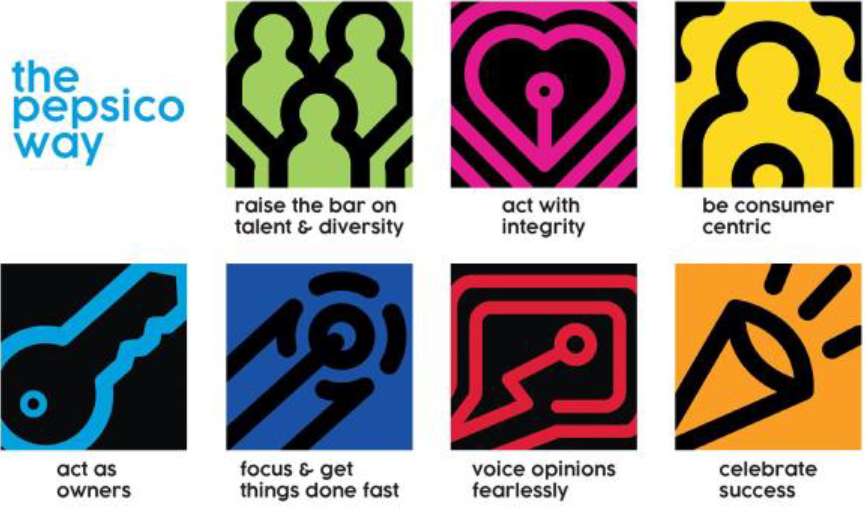
But we also became more consumer centric. The
PepsiCo Way is a set of behaviors that we created for
ourselves about three years ago. One of them is being
more consumer centric. Sharpening our understanding
of consumers in a more granular way, in a way that we
can really understand the human side of consumers
and the functional needs of consumers - that is
strategic capability that we want to develop even
more.
We studied consumers before the pandemic. But
during pandemic, there were so many shifts in
consumer decision making and loyalty to brands or
even occasion changes. The way they consumed our
products changed dramatically because of new
habits. We became closer to consumers and that's a
skill or a capability that we're taking with us postCOVID.
F You mentioned earlier that you really liked to
engage and talk with farmers and learn from
them. And I assume that the same is true for consumers.
How do you, and I mean you, Ramon, personally, how
do you listen to consumers?
R It's an interesting question. We have a normal
practice where whenever we go to any
market we visit consumer households and spend time in
the house with consumers. I find that quite enlightening.
Obviously I've lived in quite a few markets in my life. So,
I've already developed the ability or the skill to
recognize that consumers are quite different around
the world and that we need to learn about the
consumer in their culture and environments. Visiting
consumers is always a very helpful way to understand
the realities of what they eat, what they drink, how they
live, what they think, what are their dreams, and what
are their fears.
This is something that we have as a practice in the
company. I like to do it every time. I try to also
personally experiment with a lot of the things that are
happening around us in terms of new digital services,
products.
I try to go to the supermarket, buy our product. You buy
your own products. You buy competitor products. And
you do your own sampling sessions with your family and
your friends and so on.
I like to stay close to the reality of our products and our
consumers. But, in the end, you must rely on the teams
that are closer to the field. In terms of how we want to
be as a company, it is a challenge in executing this
vision. But we want to be an extremely locally
empowered company that is very close to local
consumers and that activates from brand activation to
innovation to the way we talk to consumers, to the way
we sell our products, in a very local way. And that's
hard to do for the 200 markets that we operate in. But
we think we're building the infrastructure, the
capabilities, and the agility of our supply chain to be
very local. And that I think is an advantage for us longterm if we can execute that.
DECENTRALIZING PEPSICO
At the same time, we're trying to be as integrated as
we can on the things we can do across the company
so that we don't de-leverage ourselves. We leverage
the scale of the company on the how we do things. On
what we do, we're trying to be as consumer centric
and local as we can. And we have an advantage
versus other industries in the sense that our supply chain
tends to be very local.
That allows us to be, even though we're a very large
global company, to be a very local company at the
same time in the way we operate, the culture of our
organizations locally, and how we become closer to
consumers.
That is one of the organizational constructs that we're
trying to create because I think the world is becoming
more and more local. And this is driven by political
reasons, but also consumers are going back to their
cultures as a way to feel better and more empowered.
The challenge for large companies is how we keep the
edge versus local companies that obviously are much
more flexible. How do we leverage our global scale at
the same time becoming extremely competitive at the
local level? And that is one of the big management
challenges of this century.
F You took the reins at PepsiCo a good three and
a half years ago. What is the most important
intervention that you did to deliver on that vision of the
What is local and the How is global?
R There are a couple of things we did here. Our
company has always been quite decentralized.
We've never been a company that was centralized in
the way some other large consumer goods companies
have been.
R First, we developed the capability for deep
consumer understanding at a local level.
Second, in terms of leadership, we're pivoting more to a
general management structure but that is
geographically based. That general manager is
accountable for the end-to-end generation of value in
that market. We think that the next S-curve of growth
and cost reduction will come from an end-to-end view
of the company. We felt that we there was a risk of
losing a lot of opportunities by siloing the company too
much as we had in in the past.
We went into more of a general manager organization
type. That general manager obviously has some
framework to operate and some boundaries that
he/she needs to be operating within. There's a lot of
things that we're making untouchable for a general
manager in terms of what we think are the long-term
value creators and differentiators, especially the way
we handle data, systems investments, culture, obviously
compensation. There are some critical things that the
general manager must leverage using the PepsiCo
system. But we're empowering them much more at the
local level, and I'm talking the 20 top markets, I'm not
talking every market around the world.
The top 20 markets are empowered to run the business
end to end, to take a bit more risk locally, to be closer
to the local consumer, innovate in the way that they
can make a difference locally. Remember that we're in
food, food is very cultural and understanding the
kitchen logic of every country, understanding the
consumer occasions in every country really give you a
lot of insights into how to develop good foods and
good beverages to compete in the market.
F Especially with these markets now more
empowered, don't you miss it being so close
to your consumers?
R I do. I grew from the very bottom of the
company. My first job was marketing manager
- I joined the company as a marketing manager in
Spain. But quickly I went to Greece as general
manager and I thought that was probably my best job.
My best job was when I was in a small country, like
Greece, where I was really empowered to transform
that business and we had a great team. And I loved
the culture and the empowerment I had. And because
it was small enough, nobody really cared about
Greece. So, I had the time of my life transforming that
market. So, I miss it. When you're far away from the first
line, you miss something, especially if you grew up in
that system.
That's why before COVID I spent a lot of time traveling.
Traveling because although you get a lot of reports,
and we have a great information system. So, that's fine.
You can run the company. But you cannot feel the
company from headquarters. You need to stay close.
You need to visit the factories. You need to talk to the
employees in the factories, the sales teams.
You need to feel the temperature of the company, the
passion for the mission. Are we really connecting with
our customers or not? You need to visit those
customers. They need to give you feedback on what's
going on with your company, where are your service
challenges, where are your opportunities, what's wrong
with your quality, what's wrong with your employee
motivation? All that is critical to run a global company
that is competitive.
So, I'm very passionate about visiting the markets and
our general managers know that I will go and see them
and spend quality time with them in the market. And I
will give them a hard time. But at the same time, I will
support them, and I will try to be as empathetic as
possible with the challenges and try to be a good
coach to them, help them develop, and run a great
business. That's the way you compensate for being
away from the daily management of the business.
MANAGING POST-COVID
F The last year and a half must've been doubly
challenging for you - being both not in a
country and only working from home?
R Well, we've learned to compensate. And I
think I'm sure a lot of people on the call found
that. We had the technology available, but we didn't
use it.
I also never had previously, for example, a couple of
forums that we have today in the company that are
extremely valuable to me. We created this top 200
senior managers forum in the company. And we were
meeting maybe twice a year physically in New York or
somewhere else in the world. Now we have monthly
calls, a couple of hours. We interact. It's extremely
helpful for them to understand what's going on the
global level to really become owners of the company.
Leaders of the food company versus their individual
markets or functions. And for me and for my leadership
team, to make sure they understand the priorities, they
understand the decisions we're making, some of the
capital allocations, some of the investment allocations
we're making and the why. And it's made the company
closer more than ever before.
In a way, yes, you're missing some of the trips. In
another way, you have opportunities that were there
for us, but we were not taking advantage of - I’m now
meeting my general managers around the world one
on one, maybe a once a quarter. Before I was meeting
only a few of them. Obviously I cannot be on the road
all the time. But using the technology has given me also
the ability to connect with them more as one- to-one
where you see how they are, the energy level, are they
going through some tough times or not, what are the
key business challenges they're facing or personal
challenges. And it gives you an opportunity to see the
company, to connect with your top leaders in a one-toone way in a way that I don't think we're going to go
back again. We're going to use this in the future.
You're still going to have your trips. But we will be able
to pull the company together in different ways. We're
doing town halls of 30,000 people. We were not doing
that before. Previously we were not conscious of the
technology and how it would allow us to really create
unique forums where you can be so inspiring and
energizing to your full company. And I think it's making
us a better company, it's a powerful new way of
leading that is going to make us better leaders.
F Briefly back to what we talked about,
engaging with farmers, with consumers, and
so on. You also use technology... When's the last time
you engaged with a consumer, a household? And I
realize that visiting them in person may not have been
possible.
R The last time I talked to a consumer was in
Mexico 10 days ago. I was able to go. I was
there with our Mexico team in Central Mexico. I was
able to go to households already. So, we're back to
real life. Here in the US I've been traveling quite a lot.
Last time I was with farmers was in Iowa about three
weeks ago. I'm very interested in the importance of
building a sustainable food system. And what
companies like ours are trying to do is get involved in
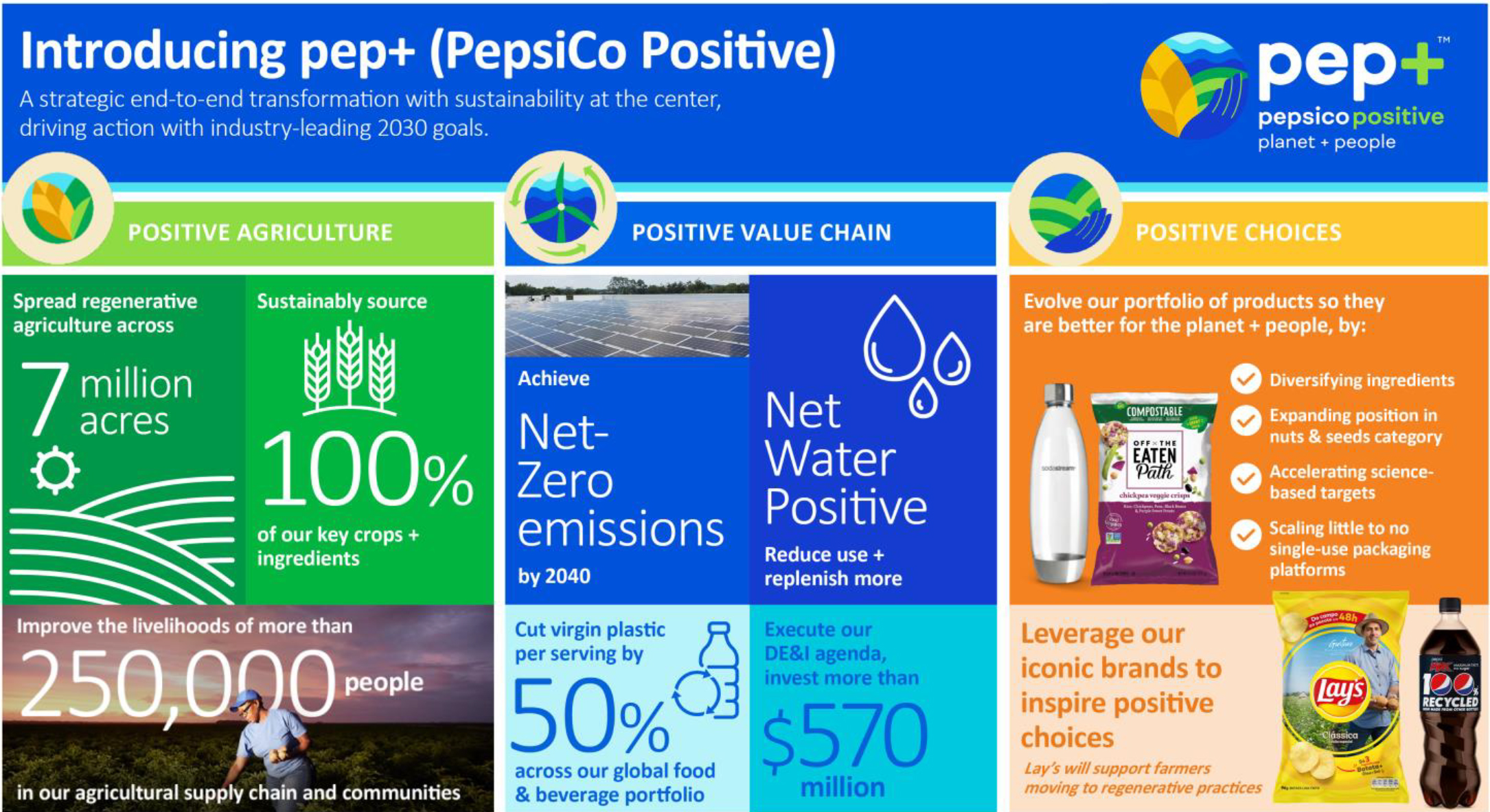
the concept of regenerative agriculture
Obviously, there are other dimensions on how we
create a sustainable food system, including packaging,
including how do we eliminate waste for the system,
and how we create more nutritious products. There are
multiple dimensions of how we need to build a holistic,
better food system. And there's a lot of effort,
government effort and large companies and NGOs,
and we're working together to create a set of
incentives and commitments for all of us to do better.
There's one element that links to the farmers, that
connects with several of our key brands that is worth
talking about, which is this idea of regenerative
agriculture. And the truth is that through the search for
volume and better output in the agriculture system, we
have lost a lot of the diversity. Diversity in terms of the
number of species that get grown. We've degraded
the quality of soil around the world through our farming
practices, the use of fertilizers, the use of land in
general. And there is an urgent need for us to go back
to farming practices that are sustainable for the long-term.
If we recuperate the quality of soil, the nutrients in the
soil we will prevent the world eventually becoming a
desert.
That is something we're extremely committed to and
that I'm very passionate about. And that's why I'm
going to see these farmers to understand the
challenges that they have to make it happen. From the
business perspective, their P&L, where they need help
and I think that's a role that large companies like ours
we can put together... We can help the governments
change subsidies and make changes.
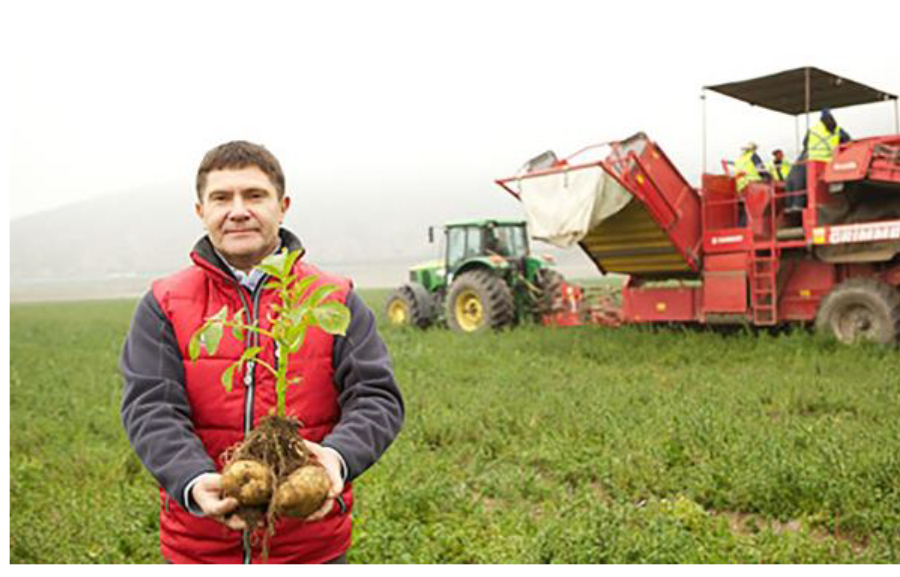
For example, connecting humanizing growth and
brands, Lays is one of the largest food brands in the
world. It has a lot of connectivity with farming through
the potatoes that are the basis of the product. And
we're trying to connect Lays with the farming
community in a different way. Connecting through the
way that Lays talks about the potatoes, the ingredients,
the connection with the farmers who grow the
potatoes and how we celebrate those farmers.
And then helping elevate the need for sustainable
farming and regenerative farming through a brand like
Lays, which has maybe 500 million consumers a day
across the world. That brand has the power to elevate
awareness and hopefully create commitment,
because awareness is one thing, commitment is a very
different one - towards the big changes are necessary
in society.
HUMANIZING GROWTH
You were asking about humanizing growth and the role
of brands. I think this is a great example of how a brand
like Lays, a global brand, can really have an impact on
the farming communities and their livelihoods and most
importantly their long-term viability.
This is how we're thinking about the role of our brands
and how we link the role of our brands with the mission
that we have as a company. And addressing the
potential risk that our company faces if the world
suddenly cannot grow potatoes because of climate
change and degraded soil quality. It’s an integrated
program and it's the way we're thinking about how we
drive growth. We want Lays to be a preferred brand
globally, but how that brand can drive growth and
societal change through its brand power and
consumer engagement.
At the education level, I have several examples.
Understanding the sustainable food system. We need
to explain it much better. We need to make the
consumer understand what it is. Even things like
recycling for our beverage brands. If you think about
Pepsi in Europe, for example, we're 100% recycled and
we're really leading with that message now. Even
though we're a challenger brand in many markets in
Europe, we're leading with that message. Maybe the
European consumer is more aware of the need to
recycle.
Even here in the US, we will have to educate
consumers. The high value of plastic and how, as a
society, we need to recoup this high value material to
turn it into new products and we cannot just throw it
away. It's a huge waste for society, from the economic
value point of view and then obviously it has
environmental consequences as well. But it's a real
waste. If this was your asset you would never throw it
away like we're throwing plastic into the environment. It
has a lot of value for us as society. All these things are
spaces where brands can play an amazing role of
educating and leading by example.
We have this thriving business in SodaStream. Some of
our colleagues in Europe probably know the brand
better. In the US, it is less developed. But that brand is
part of our commitment to change consumption
models in the world that will lead us to a better society
in the long-term. From the CO2 reduction, from plastic
reduction, from consumer personalization - you can
make your own combinations at home.
That's the ultimate desire of any consumer - to have your
perfect customized product. With SodaStream you can
do that at home in a way that involves no transportation
of liquids, no plastic. It's just an amazing business model
and consumption model that we're pushing.
There is a humanizing angle to this in the sense that we
are allowing consumers to make their preferred products
at home. If you think about humanizing in a much
broader sense, the kind of society we want to live in,
these consumption models will drive a very different
society. Imagine that we can really convince consumers
to make their drinks at home. We're thinking about the
equivalent for a snack. What would be an equivalent
where we can help you create your own snacks at home
- that would eliminate a lot of the movement of goods
and the packaging needs and all that. Those are
fundamental leadership responsibilities that we have as
companies.
F I wanted to ask you about your prioritization or
choices, I saw, for example, in this conversation
when you talked about engaging with farmers, I saw a
light in your eyes. And the same when you talked about
soil. So, that's clearly very close to your heart. Are there
other things or interventions, decisions that you've pushed
because you felt personally also really strongly about it?
R Listen, at the end of the day everything you do,
you're going to do it because you believe in it. If
not, you're not being an authentic leader.You cannot
run a company or do these kind of jobs where you're
24/7. I mean it 24/7. That's your life. You're basically
working. You cannot do this and feel good at the end
of the day or when you take a pause and reflect. You
cannot do this if you're not doing this from your inner
values. You really need to be authentic here.
For me, there is a passion. I've always been developing
people. I'm very passionate about human beings and
how we're creating better people through the means
of the company, the opportunities we have for them to
grow, to upskill them, to give them more responsibilities.
And they can create wealth for their families. Just a
small example, one of the most exciting things for me
as a leader is when I go to our factories in developing
markets and you talk to an operator in the line and say,
"Hey, how long have you been with PepsiCo?" "10
years, 15 years. And thank you very much because you
helped my family. You helped my sons go to college.
Or you helped me put my kids through education." That
is the most fulfilling thing that you can have. When
people tell you, "Thanks to your company, I've been
able to do this," to me this is meaningful impact in the
world.
There is building a better planet for our kids. There is
farming, the land that we basically take food from.
There is the huge issue of gas emissions. We're all
committed to that. We, as a company, made the
commitment to be net zero by 2040, a huge effort. This
has to come from inside, otherwise the financial tradeoff you have to make - if you don't believe in it, you're
not going to do it.
In our case and my case, there's also an important
transformation about the perception and the reality of
the products we sell. I don't think our consumers
connect our brands with the products that we grow.
People don't connect Lays with potatoes. People don't
connect Doritos with corn. And I want our consumers to
understand that, and I want to give consumers the best
tasting product with the best nutrition. Can we make
Lays with less sodium? We've been in this journey for
many years. We continue and we're going to take risks
in that. Can we make Pepsi or Lipton or Starbucks,
some of our big brands, with less sugar? I'm sure we
can. We're developing amazing non-sugar versions of
our best products because the technology we've been
working on for many years now allows the consumer to
basically trade-off between products, sugar or nonsugar at zero taste sacrifice.
How do we make the best tasting products? Because
our consumers really vote with their tastes unfortunately.
They are very smart. When we change the product,
they get it right away. So, taste is paramount. But then
how can we make, maintaining that excellent taste,
products with better nutrition, lower sodium or less
sugar?
There are few pillars that I'm passionate to drive - our
associates' development, the environment, the
nutritional profile of everything we sell - that come from
within. If I think about the day I leave the company,
somewhere in the next decade, I'd love to look back
and say I've made a difference. That this is not only a
great performing company financially, but we've made
a difference in our culture, in how people feel, and
obviously the profile of what we sell including these
new consumption models. That is the energy that you
need internally to get up every morning and go for it
and inspire your people. You have to be resilient and
optimistic in this world because if not obviously the
organization will take a hit. And so that's our
responsibility we carry in our bags.
THE ROLE OF MARKETING
F You started your career in marketing. I was
going to ask you a lot of questions about your
expectations for marketing. But by all the stories you
said, it's very clear that you have a very clear
expectation also in terms of just what you were talking
about, product quality improvement, lower sugar, et
cetera. Marketing will need to deliver that. And you will
be on top of them, right?
R Marketing is the intelligence that drives the
growth. And so they need to be the architects
of growth for the company. And being those architects
of growth requires end-to-end understanding,
understanding not only the consumer but what else is
behind the organization to drive growth in a responsible
way, in a way that is connected to the values of the
leaders and the associates of the company, and the
company we want to be.
And without a good vision from the marketing team,
not only consumer vision but the full architecture of
growth for the company, then there's a lot movement
but no traction. We don't know where we're going. I'm
really committed to this journey.
Thank you. Thank you, Frank. And thank you,
everybody. And all the best to all of you and stay
passionate with your vision and your values. Thank you.
Bye-bye.
F Thank you, Ramon.


 Download PDF
  Read online