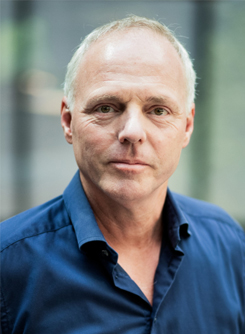
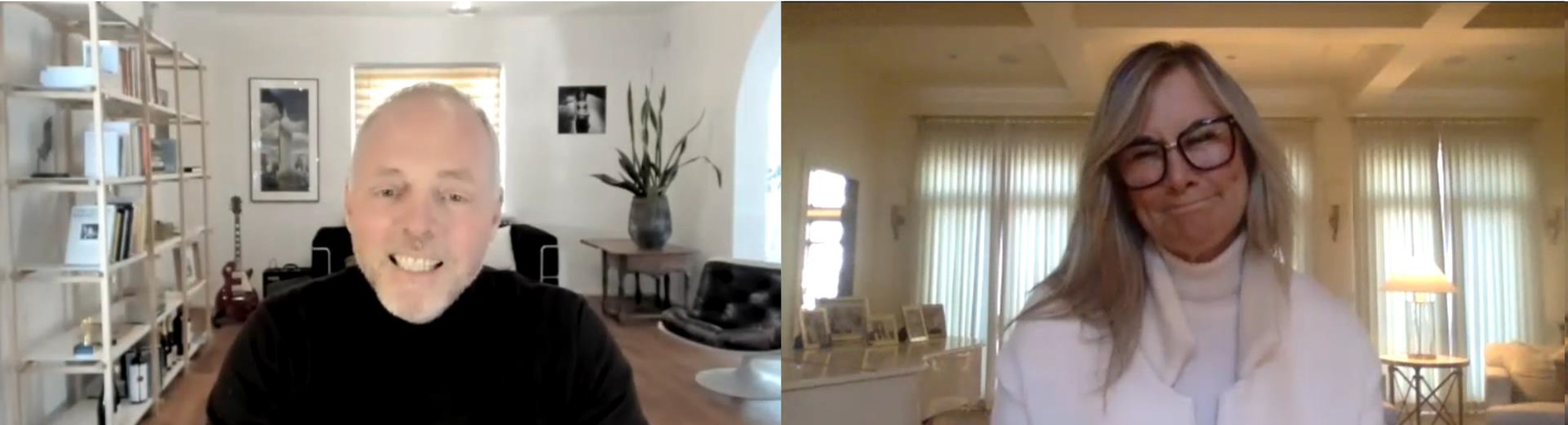
F My name is Frank van den Driest, and I am
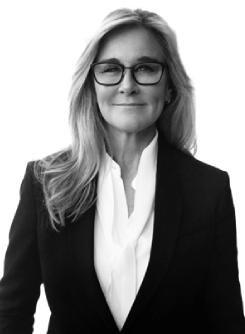
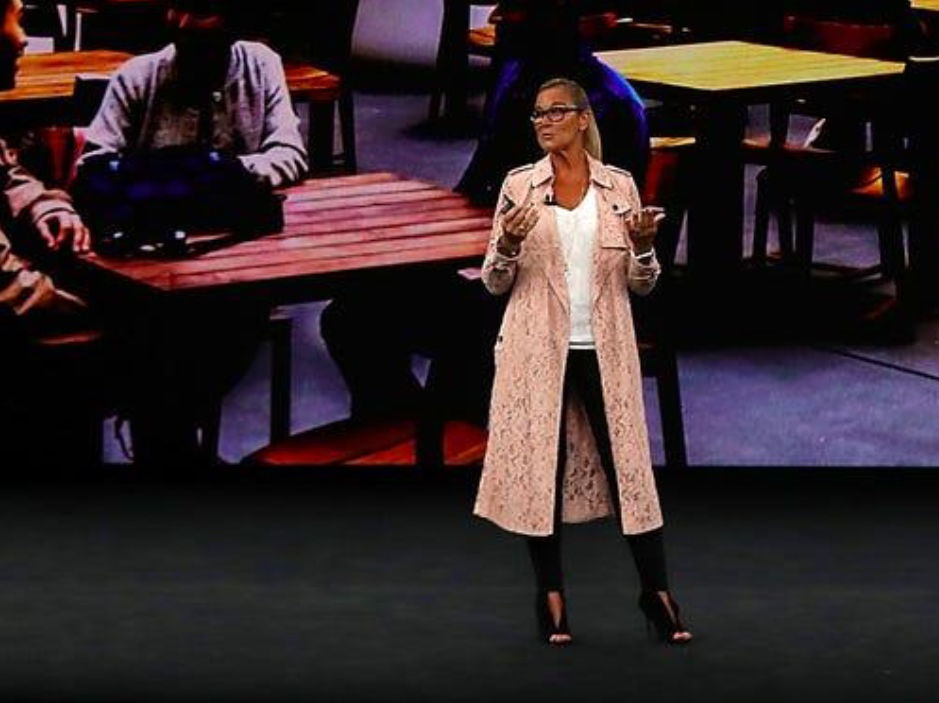
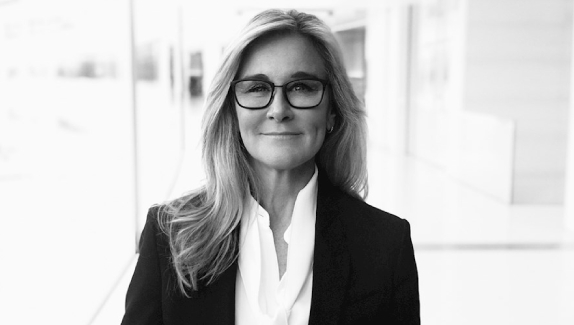
extremely proud to welcome Angela Ahrendts
to the IRG’s Humanizing Growth series. Angela is the
former CEO of Burberry and former SVP of Retail and
Online at Apple. She is currently Chair of Save the
Children and serves on the boards of both Airbnb and
WPP (the world's largest marketing conglomerate).
A very warm welcome, Angela.
In the next hour, there are three topics that I'd like to
cover. To start with, your journey, then leading change
and finally, I want to talk about your expectations of
marketing.
Let's start with your journey. You grew up in New
Palestine, Indiana, right?
DEVELOPING A PURPOSE AND VALUES
A I did. Tiny farm town.
F You then moved to New York to work in
fashion. After stints at brands like Donna Karan
and Liz Claiborne, in 2006 you moved to London to join
Burberry. then in 2014, you moved from London to
California to join Apple. So, from Indiana, to Burberry in
London, to Apple in California, did the teenager
Angela have a sense that one day she would be
working for brands like Burberry and Apple?
A It's funny. Once I left university and I was at the
airport getting ready to move to New York, my
mom said, "Well, when will you be back?" Just
instinctively, I said, "When I become the president of
Donna Karan, mom. Then I'll know that I've made it and
I'll come home." And so, literally, fast forward, I don't
know, 13, 15 years and that happened, and my mother
called me and said, "So are you coming home now?"
I think when you're young, you have a dream. Then
somewhere along the way, that dream becomes
bigger and you become a part of that dream, and
your life takes on a life of its own. So, no, I didn't dream
as big or as blessed as my life has become.
F Did you have a sense of purpose as a young
girl?
A Yeah. I was raised with a sense of
purpose. When you're from a very big family in
the heart of the Midwest, it’s very family, very values
oriented ... I lived in a little neighborhood where there
was a church on each end of the street and every
summer the picnic tables would line the street. You
would have pitch-in dinners as the sun would set.
Life was about people. Life was about giving and
caring and loving. My parents would always say, "To
whom much is given, much is expected." My dad used
to always say, "You need to give 60 and take 40, and
then you'll really be happy." I was raised with all of this
in my mind. So, purpose and deep ... I always called it
my Midwestern core values… it's embedded. It's in my
DNA.
My dad used to always
say, ‘You need to give 60
and take 40, and then
you'll really be happy’
BUILDING GLOBAL BRANDS
F What was the first time, going from Indiana to
New York, to London, to the West Coast, that
you realized you could make an impact on a global
scale?
A You learn so much along the way. I was so
fortunate when I worked in New York. The
corporation was Liz Claiborne, but we acquired five to
six small companies a year. We acquired Juicy
Couture. We'd buy a company at $50 to $60 million,
write a business plan to get it to a billion in five years.
Then we'd buy another one. We bought Lucky Brand. In
one year, we bought five tiny west coast brands.
When you work with founders, visionary founders, that
have a dream, and you're with this big corporation
that's operationally geared, you learn. It was the
perfect role for me because you get to work with so
many visionaries, but you also needed to rapidly scale
their business and let them focus on what they're
brilliant at.
I learned a lot in dealing with complexity and taking
these businesses international and building teams of
people that were culturally compatible with them to
make them successful. Because it is all about people
and all about teams and putting people in place that
they trusted. They had to trust me. I was their partner.
Together we had to build an amazing team for them or
getting to that billion would never happen.
And so, I learned a tremendous amount there for a lot
of years. When I got the call to Burberry, I turned it
down at first because I thought it would be boring. I
thought it would be too narrow. A single brand? I'm
dealing with 22 brands and incredible founders! I really
loved what I was doing in New York.
F What made you eventually say yes to
Burberry?
A It was interesting. I am loyal to a fault; I loved
my team, and I loved the founders. I loved my
job in New York. I had three children under the age of
10 and I finally had work-life balance. I loved my boss.
Everything was perfect. And so, I said no a few times
over the course of a year because I didn't dream it
could get any better than what I had. I was so fulfilled
and learning and growing.
Then one day, my predecessor at Burberry calls up and
I think was disappointed that I had declined the offer.
She got aggravated at me and said, "Do you not
understand how few women CEO jobs there are in the
world?" I think there were like three at that point. She
said, "Just think about that. You have an opportunity.
This isn't just Burberry. This is bigger than that. This is ... "
And so, she put a whole different angle in my head. I
felt almost a greater responsibility
A
That was the catalyst. That was the turning
point. It wasn't for ego. It was more - if you did
it and if you were successful, that would empower
more women. That would help more companies
understand that there should be many more women
CEOs.
F You mentioned you were working with a lot of
visionaries in New York before going to
Burberry. How does it work? Because you're a visionary
leader. Then you work with all these people with their
vision. How many visionaries can you have together
and still be effective?
I was the conduit. They usually had such a clear vision.
They were unbelievable. I was told that my job was to
protect them from the big corporation, but then it was
to find those links so that we could plug in and make
them more efficient and make them stronger, more
prepared to scale. You were buying their vision and you
were buying them to execute their vision. But hopefully
one plus one plugged together would get you to four,
five, six.
A To me, in a federation, in a Unilever, a P&G,
any big conglomerate, every brand needs a
visionary. Every company needs that chief creative.
Then, of course, you need a great CEO and a great
CFO, but I think that you need an incredible creative in
any company today, because they're the ones with
the instincts that can look around the corners and warn
everyone what's coming and how you must pivot and
evolve. But without that creative having a seat at the
table, I fear that brands won't keep pace and
companies won't keep pace.
THE VALUE OF LISTENING AND LEARNING
F What is your approach to working with these
creative and visionary people and keeping
their strengths while at the same time also pursuing your
own vision?
A The most important is listening. I've always said
you have to look backwards before you can
ever look forward.
Take Burberry as an example. When I started and it was
their 150th anniversary. You look back. Why did he
found the company? When was the famous check
found and what was the purpose of it? You do all your
homework, all the way up to now. Now Christopher
Bailey's there. What's your vision? What do you see?
Then you have your offsite with your hundred
executives. What is our purpose? Why are we doing
this?
We came out of it saying the company's been around
150 years. Why are we doing this? Because we're going
to be here for this next, let's say, 10 years and our job is
to keep this institution strong, relevant so that it can last
for another 150 years. That just lifted everyone up and
united them around something bigger.
It's no different. You go into Apple. You watch and read
everything that Steve did. Why did Steve create retail?
Why didn't he give anyone commission? He told them
their job was to tell customers things they didn't know.
The sales team's job was to educate customers on the
products. He said their job was to enrich lives
So maybe we're supposed to continue to educate,
continue to enrich lives. Then how do we create an
experience to make sure we're doing that? In a datadriven world, how do we now start to measure those
qualitative things that no one's ever tried to measure
before?
THE MARKETING MINDSET
To me, it's listening and feeling and connecting the
dots. I've always said I'm a marketer at heart. I've never
been a CMO, but my degree, everything, is in
marketing, and at Burberry, I had a marketing lens on
everything.
As a marketer your job is to connect the dots between
the history, the purpose, the customer, the culture. I
mean it's connecting so that this company, this
institution - these are living, breathing, powerful things
that make an impact. As a CMO you're right in the
center of that. It's your job to connect all of those dots.
Really all that I've done is connect the history, dream,
and have a vision for the future. But not just me, always
with the senior team, everyone united in deciding. But
you have to keep the DNA, you've got to keep the
thread as you refine and evolve the purpose.
CAREER HIGHLIGHTS
F At the end of your Apple stint, what was your
career highlight up until then?
A Probably the two biggest highlights were the
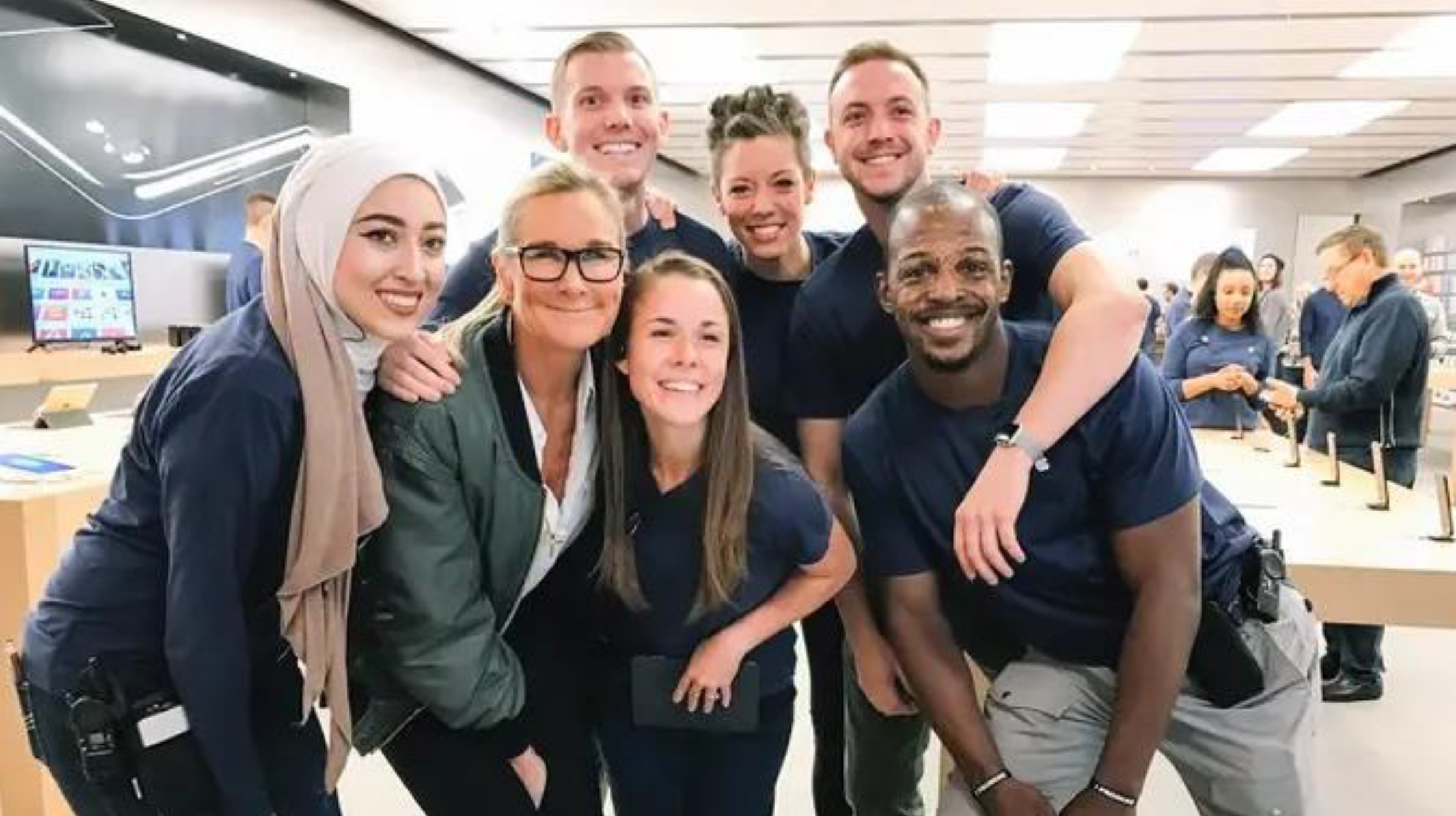
turnaround of Burberry and the powerful team
that we put together. Not only the fact that we
doubled the business in five years, but the fact that we
had just told the board we would do it again - literally
shortly before I left to go to Apple.
When you unite a team and that team is just going 80
miles an hour, it's incredible... you can accomplish
anything, and that's just such a beautiful, wonderful
feeling. I say doubled the business, but also, we put 1%
of our profits into the Burberry foundation. And so, we
were also impacting children's lives.
At Burberry we said how many lives can we touch and
transform by the power of our performance? We had
five soft strategies and those soft strategies enabled the
hard strategies - enabled the revenue and the profit.
But it was those soft strategies that created the culture
and united the team.
Burberry was just a culmination of everything coming
together and being 100% accountable. But I learned
ironically that the more authentic I was, the more the
teams leaned in.
The more vulnerable I was in 2008, when the world was
collapsing, and we were in the middle of building a
new headquarters. I called the top 100 together, and
said, "We're going to have to decide what we stop,
basically we need to cut £50 million out of the business
over the course of the next three to four months.” I
mean Armageddon was happening.
I got teary eyed. I said, "Look, I've never done this
before, but I know we can do this. Our goal is to come
out stronger. So let's agree. We don't want to cut
anything consumer-facing."
But I was vulnerable. I was hurting. And they leaned in
even more. I learned these lessons that unless you go
through those things, you don't learn.
MOVING TO APPLE
F AWhat on earth did Tim Cook tell you that you
left it all behind? I think you even had to leave
your children in London and then move all the way to
the West Coast.
A Well, and do realize that I was coming up on
year 10 at Burberry. I've always said that after
10 years, do you lose your objectivity? It's a tricky
timing. And so, I was coming up on year 10.
When I finally ended up meeting with Tim, I will tell you,
he's an incredible human. He's a very deep man and
he's a man of peace. I felt that immediately. I felt a
very natural connection. I mean for the size of that job
and what he does, he's an incredible human.
But that said, I had a great job and an amazing team,
and we were on fire. So it was the biggest decision of
my life. One day, he just said, "Look, what would it
take?"
They had a separate store structure from a digital
structure. I said, "If you want to combine all of that so
that you have one customer experience, and you want
to overlay that with your philanthropic efforts, meaning
that if you want to do something that is even more
responsible, for communities, etc. then that would be
something I would seriously consider." From there, the
conversation pivoted.
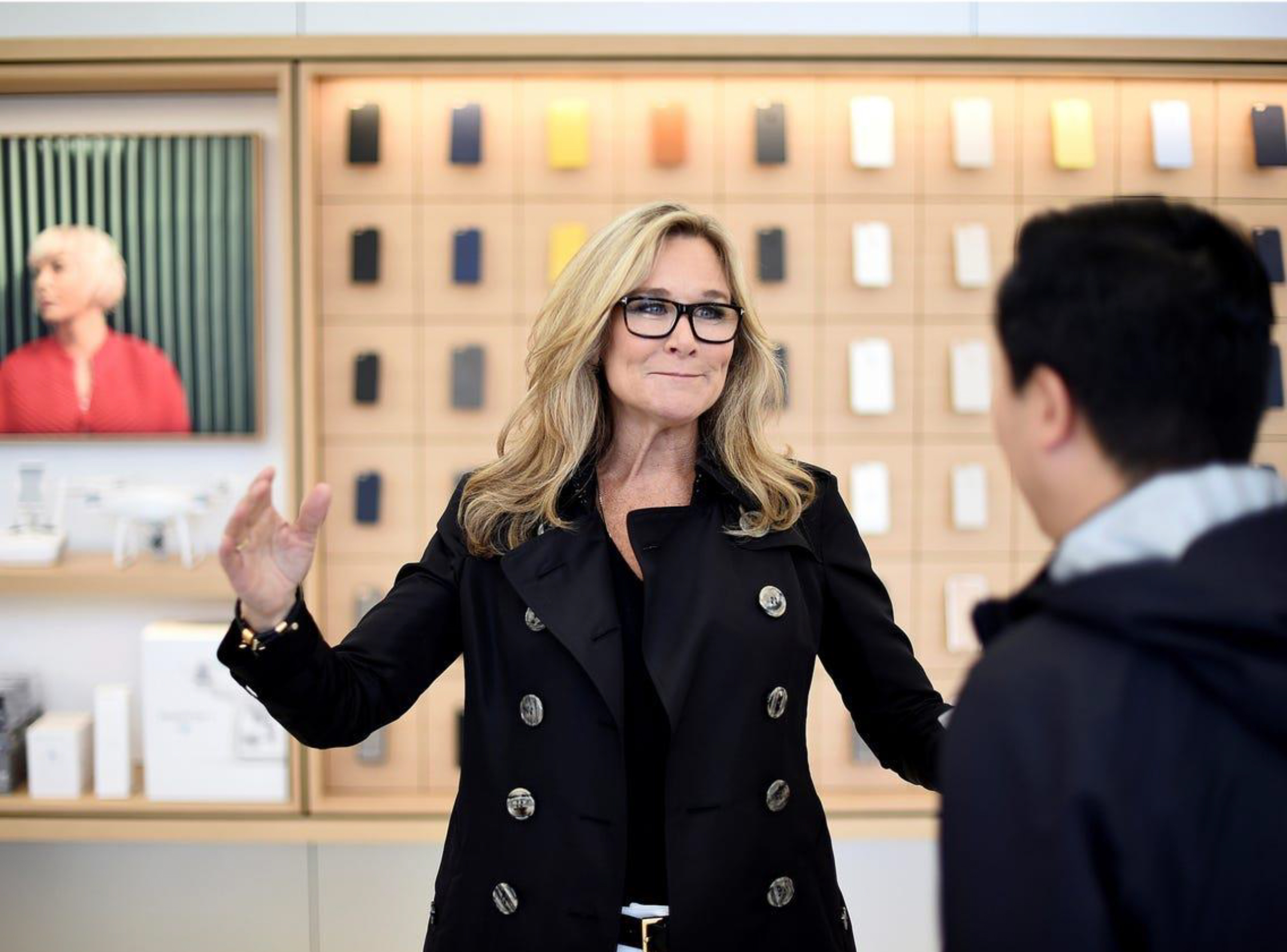
And so, I took Apple as a calling. I went in, I really
wanted to pick up where Steve left off. I never met him,
but I had such admiration for what he built and why he
built it and how he did it. Tremendous respect for it.
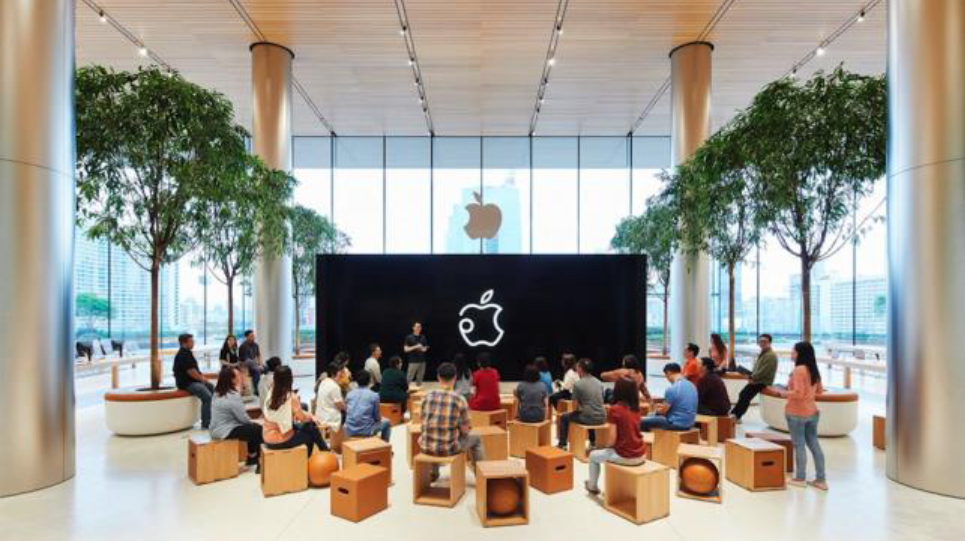
We had to create a whole new in-store experience.
That experience could actually be the way that Apple
gave back to the community. It could tie in education.
It could tie in enriching lives.
It was so interesting to me because Apple has
hardware and Apple has incredible software, but I
would go into the stores and the hardware, the design
of the store was great, but there was actually no
software in the store. There was not an intentional
experience other than maybe at the Genius Bar. But
other than that, it was a place to buy something. But
you could buy it cheaper, faster online.
That's when we really went on a mission to come up
with what should the software of the store be. Maybe it
should have a direct connection to what everyone was
already doing on their devices, and they would trust
Apple to teach them?
If it's the number one camera in the world, then how do
we bring that into the store? Maybe we can have
photography classes and teach people how to do that
better, and what apps and software to use? Down the
road, maybe that becomes a career for them?
The same thing with music, there's Apple Music, and
everyone's doing that on their phone. They own Garage
Band - they own all this software. How do we bring that
into the stores and teach kids about music, how to
compose music, how to…? So, we said this is the software
of the store - all educating, all classes.
And so, by the time I left, they were teaching 80,000
classes a week. In the first year, they taught 3.5 million
kids the basics of coding.
I always said that the retail store should be the lightning
rod. That it should be where the best of Apple comes
together in the greatest 3D experience, if you will. Online
is very 2D. You can go there for deep learning. But you
go into the store for human interaction and to learn and
to connect and to be inspired and to unlock your
creative thinking.
First, If you want to go deeper, then we always said
that's where the app came in and the app should be
the greatest 4D experience - more immersive, using AR
and the new technology.
So, each one of them had a purpose - dot com, the
best 2D, deep learning. Physical retail, 3D, human
connection, different type of inspiring education. Then
the app was where we would use all of the new
technology. That was how we approached it.
HUMANIZING GROWTH
F I want to talk to you about humanizing growth
and leading the change towards humanizing
growth. One thing you told me earlier is that at
Burberry, you decided very early on you were stopping
all conversations with investors on a local level, and the
cut down the time spent on investors globally to twice
a year. Is that correct?
A Yeah, as the CEO. But we had a very amazing
head of investor relations. We had a very
powerful CFO. I just had to balance my time, because
when you're in a turnaround or when you're in a highgrowth business, everyone has a very specific role, and
you have to divide and conquer.
I said Christopher should do all the fashion press.
Stacey, the CFO, should do all the business press. I
didn't even do any local press. I said twice a year,
when we do our half yearly, then I will do international
press only because we are a big global business.
F I'm mostly interested in the investors, because
the investors push many other CEOs to be
there every quarter, not only globally but also in all the
key markets. You didn't do that.
A No, I did the first year as we were getting the
strategy and the vision out. But I was also very
clear and I said we're playing the long game. I'm not
playing a quarter-by-quarter game. I'm not going to do
it. We had a five-year strategy. We articulated very
clearly what we were planning on doing. Some will
work, some won't work, but there's a brilliant CFO. They
will update you on everything quarterly.
But I also I think the most frustrating thing for me with
investors was they only looked at the numbers and the
numbers were only the outcome - they're only the
outcome of a great strategy. They don't ask about
culture. They don't ask about your leadership team. So,
what we started to do was I said “if I'm going to meet
with investors twice a year, we're going to do it the way
that I'd like to do it”.
We started creating videos and I made the investors sit
there and watch a three-minute video before I would
have a conversation with them on the numbers. It had
our music and it showed everything around the world
that we did. It was all the way from distribution and
shipping to new stores, to new categories, to Burberry
Acoustic online. It was a video highlighting all of the
achievements of the team. Oh, by the way because
we did this, now let's look at the numbers.
F How did they respond to that?
A Ironically, I had to fight with my own team at
first. They're like, "Well, why are we doing this?"
But once they saw the reaction, because it just started
the meeting out on a whole different level, and then
the investors were like, "Wow. We had no idea." Well, of
course you didn't have any idea because you're not
reading all of the little details. You're not reading a 300-
page annual report to see everything that happened.
I just thought it was vital to share the journey in a way.
The interesting thing is we ended up using those investor
videos to the 11,000 employees around the world. They
ended up even getting out because the employees
would share them with family and friends. The irony is
these videos that we had created for one stakeholder
were tremendously relevant and inspiring for all
stakeholders.
F You're on the board of a number of
companies. Why isn't every CEO doing what
you did? It sounds so logical. Why do all these CEOs
give in to that pressure to focus on the next quarter?
A It's a combination of things. I think that
probably most CEOs were not CMOs or were
not merchants. Most of them come from finance or
operations. And that's more their comfort zone. That's
not a negative. They're running gigantic corporations.
I think it all depends on the CEO and it depends on
your vision for the company and the state of that
company. I realized that we were a turnaround, so we
really had to pivot, and we had to do it with such
clarity.
Every company is different. But it's also how the CEO is
wired and what's important to them. That is how I
communicate – through storytelling and the narrative.
We're humans, right? We're humans. We look each
other in the eyes. We listen, the inflection in our voices,
music, I mean things that move us and inspire us. And
so, we were able to create those things.
Honestly, it was a huge part of the turnaround of
Burberry, leveraging every single medium that we
could. Of course, we were on the brink of Twitter and
Facebook, our timing with all of that opening up as
well. But we were one of the first to really create
incredible content and leverage all those mediums
that were relatively free at that point. We were just
amplifying and taking full advantage of everything that
we could.
It's different at every company. What I did at Apple, I
learned at Burberry, I did a video every week at
Burberry to 11,000 team members. YouTube was really
taking off; it was three thoughts in three minutes or less.
We shot it from an iPhone.
Then I go into Apple and they're telling me, "Oh, you
need to send an email." When I started, there were
55,000 employees on my team. I thought, "Send an
email?" Then they would translate it into 30 languages.
I'm like, "No, no, no, no, no. No. I have a better idea.
We're going to use a phone and we're going to ... "
It really threw them, though, because Apple had not
really done that before. I started the same thing. I
started doing videos and I started talking to the 55,000.
That started to build the connection. Then when you
would go into a store, they felt like they knew you. It
was very authentic. It was like I'm talking to you. I would
always thank them, and I would always share with them
things we were working on or important new platforms
we were building for them, etc.
Within six months, we said, "We're going to do a huge
crowdsourcing exercise. We want all of you to play.
We're going to ask you one question. Over the next
couple of months, you're going to help us create the
new in-store experience." We asked every employee
all over the world, "What do you feel Apple should be
doing more of in your community?" They would get
together, and you can imagine thousands of things
came in. Then we'd send it back out and they'd
sharpen it.
But they were working together. The stores were
working together. By the time it was all done (after a
couple of months), we edited it down to eight things
that they felt Apple should be doing more of in their
community. That helped shape and inform a whole
new in-store experience. So they were on the journey
with us. They were helping create it.
To me, companies need to be flatter. I don't believe in
a hierarchy. I believe that they know more than I know.
They're working with customers. It's their community. We
said at Apple, we're going to turn ourselves upside
down and we're going to turn ourselves inside out.
Upside down because you're going to help shape the
strategy and inside out because we need to do a lot
more for the communities.
F What's the biggest blocker to focus on the
long term and the value creation for all
stakeholders?
A I think the biggest blocker, honestly, is just
short-term reporting. But the onus is also on
boards.
At Airbnb, I remind Brian Chesky almost every week that
it's his job to dream. They're public now. There are great
people that can handle all the quarterly stuff. But
there's only a couple of founders that are going to
dream of what the future is and where it needs to go
and what has to happen ... that's how they'll win. It's a
real balancing act between encouraging the leaders
to keep innovating and moving forward while, of
course, behaving responsibly as a big public company.
F If you want to drive more humanized growth,
do you lead by example from the front or stay
in the background and empower others?
A It's a combo. It's actually not an either-or. You
have to lead from the front, but you have to
empower others. I think everyone wants to be led.
Everyone wants to know where we're going and why
we're going there. Then you step out of the way, and
you empower the teams to move forward. I don't think
it's perfectly one or the other.
F More focus on internal stakeholders or more
focus on external stakeholders to drive
humanized growth?
A More focus on internal to start, always.
F In bringing along others, use the carrot or use
the stick?
A Always the carrot.
You're in the human business and you have to
unite humans to make a greater impact for humans. I
mean it's not rocket science. Then you have to behave
like a human, not a robot. You have a heart. Your
teams have a heart. They want to feel you. It's not just
what you say, it's how you say it.
I'm just constantly amazed that leaders don't
understand that. People want to be led and they want
to trust you, they want to feel you, and they want to be
a part of a team. They want to be a part of something
bigger than any single individual thing.
I long for the day when it's a people and impact
statement rather than a profit and loss statement, when
we reward companies for promoting and hiring, not for
laying off. You lay off thousands and your stock price
goes up - Is that great for the community?
But we're getting there. I believe that companies have
a much bigger responsibility to play. It is not just about
profit anymore. This is all coming out in ESG, etc.
F You're on the board of WPP, in your board
role, do you talk a lot about ESG?
A Yes, absolutely. On every board. We used to
talk about CSR and now it's been rebranded
ESG, and that's fine. There's a lot of talk on the
environment and everyone's created their sustainability
committees.
From a governance standpoint there's a lot of traction
there and people know what the marching orders are. It's
interesting - the S in the middle is the one that's still not
perfectly clear. I think diversity and inclusion is going in
there, which is wonderful.
But now as I sit on the chair of Save the Children, I think
the companies need to report so much more in there.
E.g., How are you partnering with NGOs? You're doing all
of this on the environment, but you've already helped
destroy it. What else are you doing under the S? How are
you leaning in and how are you contributing, whether it's
financial or human capital? What are you doing under
the S to make an impact? That too, can be measurable.
THE ROLE OF MARKETING
F Doesn’t marketing specifically have a
tremendous role, almost a responsibility, to step
up specifically on that?
A Absolutely. To me, it's almost a gift. It’s what
marketers need to focus on. It's what customers
want to hear. They want to know what you're doing.
How are you making an impact? That's been a huge part
of Unilever's success over the years. But there are not a lot
of Unilevers that have been leaning in like that and
partnering like they have, to make an impact.
F Is now a good time to be a marketer?
A It's probably the greatest time in history to be
a marketer. But I you have to get a bit out of
your lane, because marketing has gotten so broad. I
don't even really like the word marketing. To me, it's
building a lifelong relationship with every stakeholder.
That is your job. And that includes internal, the culture.
That's communication. That's marketing. That's internal
marketing.
With this whole stakeholder approach, if CMOs decide
to broaden their thinking and think of their job as
building this incredible relationship with each one of
those stakeholders, then I personally believe, that the
future CEOs will be the world's greatest CMOs. I really
do, because it is about humanizing, connecting,
building a relationship, and the CMO should be able to
do that better than anybody in the company.
But, again, they've stayed in their lane. You report to
the CEO. But what are you doing with all of your peers?
The more you broaden your own horizon, and you look
at all those stakeholders as your responsibility, then
you're setting yourself up on a path to be an incredible
CEO, because those left brain, right brain skills are what
will be needed to drive great companies as they look
ahead and as they drive for results. It's that real
balance and CMOs are one of the few that have that
mind or are wired like that, but they have to broaden
and step up.
F If I look at the CMOs that I consider to be
really successful - they have a strong financial
and especially business acumen. They're real business
leaders. So, it is about the real in-depth business
understanding, the drivers underneath the choice for a
specific business model and at the same time broaden
that scope with all the stakeholders, be the voice of all
these different stakeholders. That's a great opportunity
and a great challenge at the same time. But it can be
done, and we need more of them, right?
A I think so. The world's moving fast, and
innovation and technology and all that's
enabling.
You need a real balance of right brain and
left brain, those instincts and that innovation and
creativity and empathy, but, to your point, combined
with that operational and financial expertise. You need
that real balance.
One of the reasons I love Airbnb is that Brian and Joe
both graduated from the Rhode Island School of
Design. They're creatives. They're visionaries. They have
high empathy. That's why the whole concept was built
around ‘belonging’. Then you build a team around
them, Brian's taught himself the other side of the
business. But he uses his instincts first.
Isn't that what Steve Jobs did? Otherwise, I don't know
how you stay on the forefront if you're not really looking
out and feeling where the world's going.
F What has become of the dreams that you
mentioned you had as a teenager?
A I'm just incredibly grateful because my life has
been beyond my wildest dreams. I didn't
dream this big. I'm just a girl from a small town in
Indiana. But I let purpose overtake me and I let people
and their partnership and their trust inspire me and
teach me.
Everything I've done has been because of people.
None of it is me. I'm not good enough. I'm not smart
enough. I've been honored to really partner with
incredible people that have enabled me to dream and
have been a part of that dream. Then, together, we've
been able to do incredible things.
Now with Save the Children, I dream I can make an
even bigger impact. I dream that I can use all my gifts
and my skills and just shift focus and do it in an even
bigger, different way now.
F Yeah, it's really there's almost like a paradox in
you. On the one hand, you're this small but
rooted, very human person. On the other hand, a big
dream and purpose. I think the fact that you connect
these comes across as a great way to lead.
Thank you for sharing.


 Download PDF
  Read online